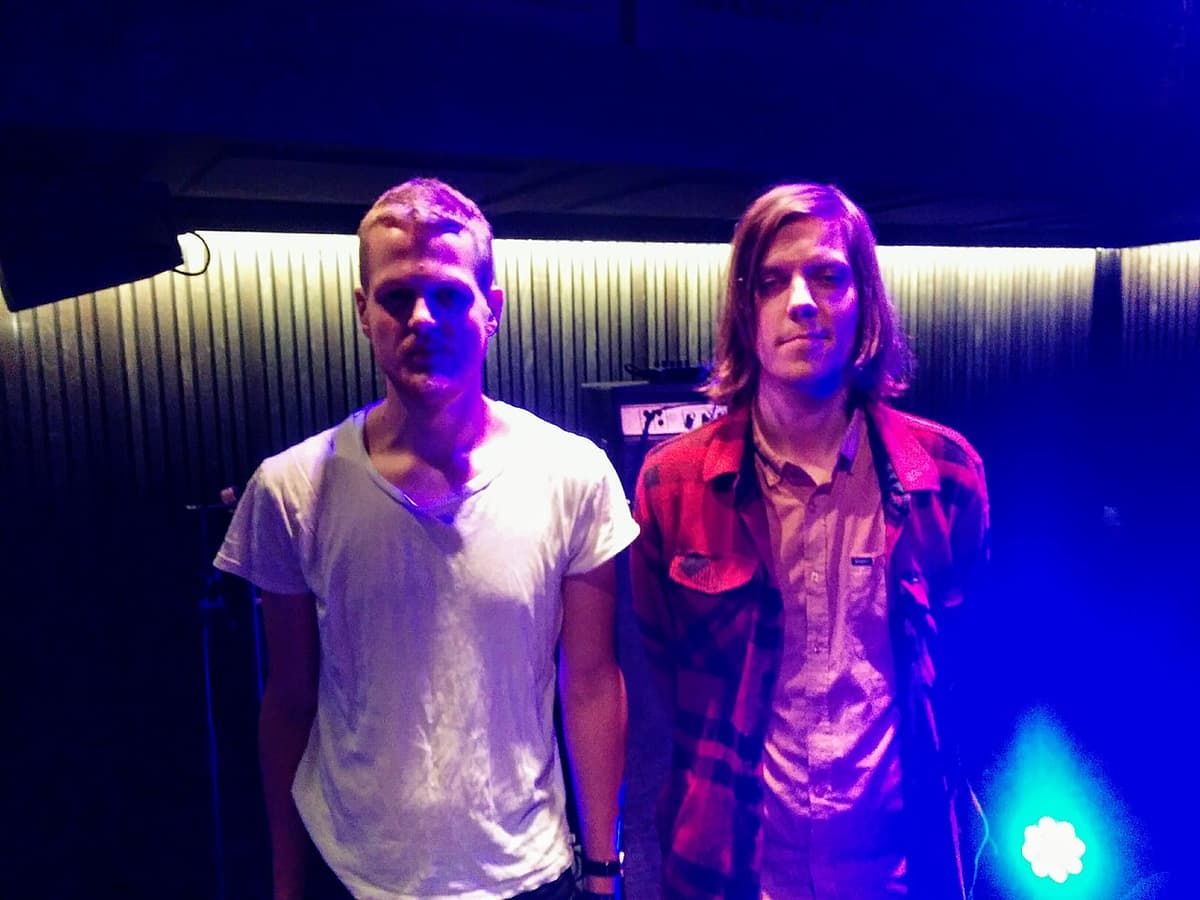
NYOS is a Finnish-based instrumental duo consisting of British guitarist Tom Brooke and Finnish drummer Tuomas Kainulainen. Formed in 2014 in Jyväskylä, they have become a pivotal bridge between the European math-rock and post-rock scenes.
Their sound identity is defined by Brooke's use of multiple loop stations to build massive, multi-layered guitar architectures that bypass the need for a bassist, paired with Kainulainen's hyper-active, polyrhythmic drumming. Their career arc shows a steady evolution from the raw, noise-inflected textures of 'Vltava' toward the more melodic, almost celebratory maximalism found in their later work like 'Celebration' and 'Waterfall Cave Fantasy, Forever'. Critically, they are praised for their 'one-take' live energy and their ability to make complex time signatures feel danceable. They occupy a unique space in the scene, appealing equally to fans of the heavy atmospheric builds of Russian Circles and the technical quirkiness of Town Portal, while maintaining a distinctively bright, Finnish psychedelic edge.


Shares restless, energetic, intense (moods); math rock, post-rock (subgenres)
Shares layered_dense, live_recording, analog_warmth (production style); post-rock, math rock (subgenres)
Shares math rock, post-rock (subgenres); instrumental_only (vocal style)
Shares math rock, post-rock (subgenres); instrumental_only (vocal style)
Shares math rock, post-rock, noise rock (subgenres); instrumental_only (vocal style)
Shares math rock, post-rock (subgenres); instrumental_only (vocal style)
Shares math rock, post-rock, noise rock (subgenres); restless, energetic, intense (moods)
Shares post-rock, math rock (subgenres); instrumental_only (vocal style)
Shares math rock, post-rock (subgenres); restless, intense, triumphant (moods)
Shares math rock, layered_dense, post-rock, noise rock (signature)
Cassette uses generative AI to enrich its catalog. How we use AI →