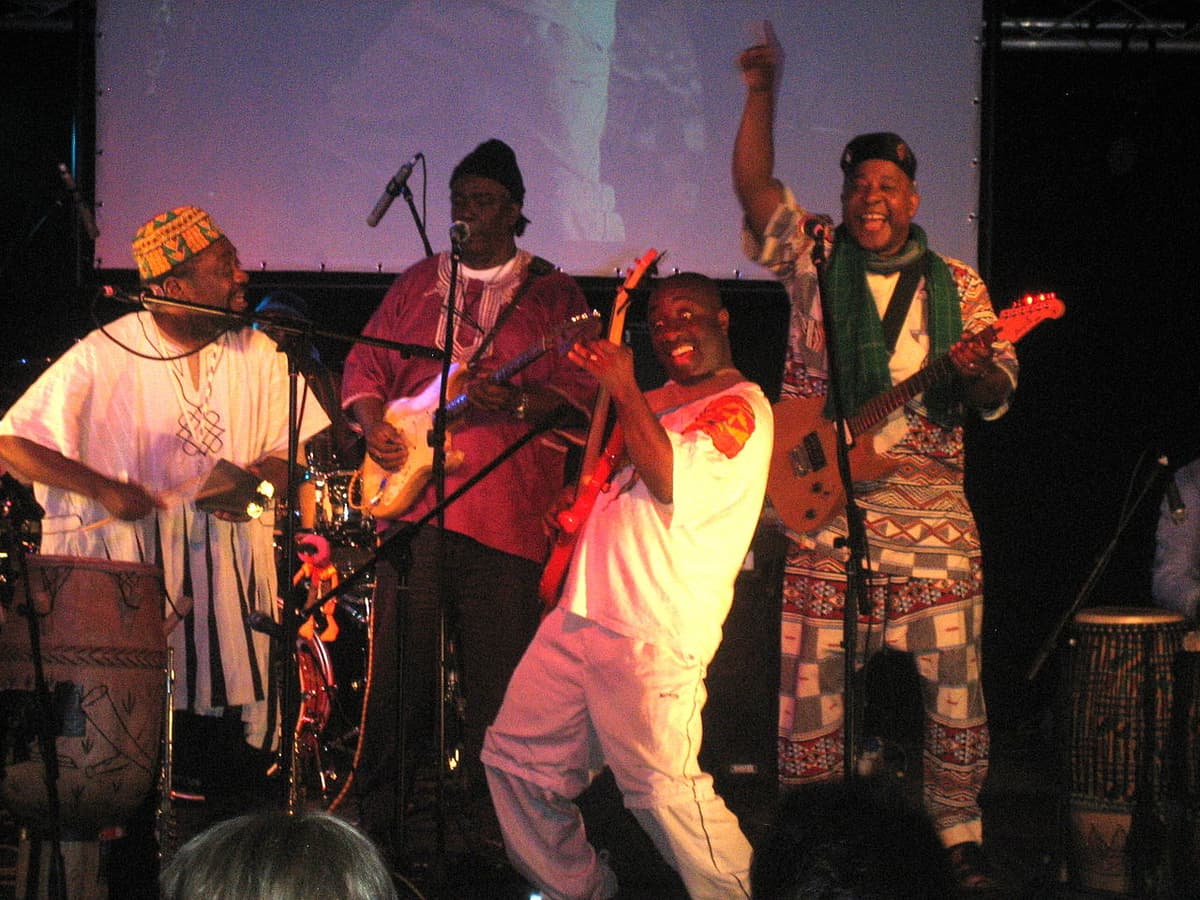
Osibisa
Explosive West African highlife meets London psych-rock. Polyrhythmic percussion and soaring brass sections designed to radiate pure, unadulterated happiness.
Explosive West African highlife meets London psych-rock. Polyrhythmic percussion and soaring brass sections designed to radiate pure, unadulterated happiness.
Osibisa sounds like a sunburst captured on tape. It is the sound of highlife's rhythmic complexity colliding with the heavy, amplified energy of 1970s London rock. The music is anchored by a 'criss-cross' rhythmic philosophy where multiple percussionists weave a dense, interlocking carpet of sound that feels both ancient and futuristic. Over this, bright horn stabs and psychedelic guitar licks create a sense of constant, upward motion.
What makes them truly distinctive is their ability to bridge the gap between communal African folk traditions and the technical polish of progressive rock. While their peers in the Afrobeat scene were often focused on long-form political grit, Osibisa leaned into a celebratory, almost fantastical aesthetic. This was famously mirrored in their iconic Roger Dean album covers, which suggested that their music belonged to a lush, utopian world where the groove is the primary law.
Start with their self-titled debut or 'Woyaya'. These albums capture the 'Beautiful Seven' lineup at their peak, offering a perfect entry point into their blend of chanting vocals, jazz-inflected solos, and the kind of rhythmic drive that makes standing still physically impossible.
Osibisa is a Ghanaian-Caribbean Afro rock band founded in London in the late 1960s by four expatriate West African and three London-based Caribbean musicians. Osibisa was the most successful and longest lived of the African-heritage bands in London, alongside such contemporaries as Assagai, Chris McGregor's Brotherhood of Breath, Demon Fuzz, Black Velvet, and Noir, and was largely responsible for the establishment of world music and Afro-rock as a marketable genre. The original band that featured on the first three studio albums was universally known as the "Beautiful Seven", also a song on their album Woyaya.
Cassette uses generative AI to enrich its catalog. How we use AI →


