Paul Winter
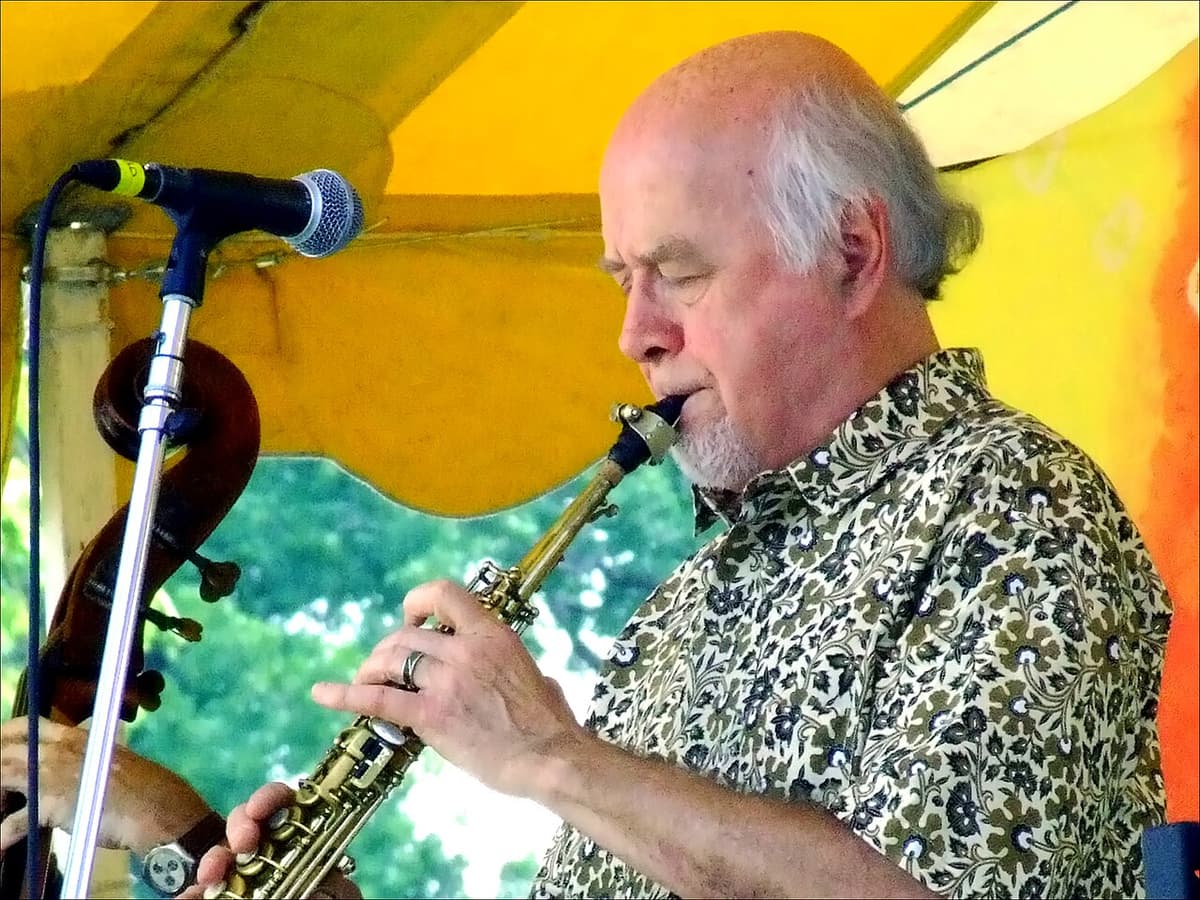
Soprano sax melodies echoing through deep canyons and vast cathedrals. A serene dialogue between human instruments and the voices of the wild.
Soprano sax melodies echoing through deep canyons and vast cathedrals. A serene dialogue between human instruments and the voices of the wild.
Paul Winter is a pivotal figure in the evolution of contemporary instrumental music, bridging the gap between 1960s jazz and the emergence of the New Age and World Music movements. Originally a straight-ahead jazz artist who led the first jazz group to play at the White House, Winter's trajectory shifted following a State Department tour of Latin America, which ignited his interest in global rhythms and non-Western scales.
By the late 1960s, he formed the Paul Winter Consort, an ensemble that eschewed traditional jazz lineups for a 'chamber' approach featuring cello, English horn, and classical guitar. His sound identity is inextricably linked to 'living music,' a philosophy that emphasizes improvisation, environmental acoustics, and ecological consciousness. Winter is a pioneer of field-recording integration, famously recording in the Grand Canyon and the Cathedral of St. John the Divine to utilize their seven-second decay. His work is critically regarded as a sophisticated precursor to New Age, maintaining a level of harmonic complexity and improvisational integrity that distinguishes him from more commercial entries in the genre. He remains a significant influence on artists seeking to blend environmental activism with musical performance.
Cassette uses generative AI to enrich its catalog. How we use AI →