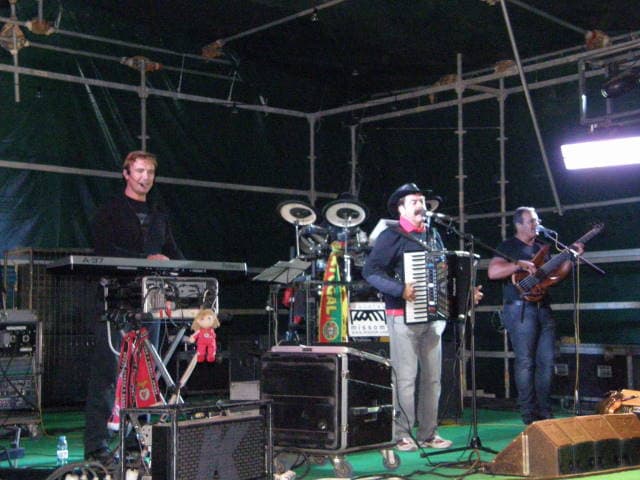
Quim Barreiros
High-energy Portuguese folk-pop fueled by virtuosic accordion and cheeky double entendres. The ultimate soundtrack for a rowdy village festival or a backyard grill-out.
High-energy Portuguese folk-pop fueled by virtuosic accordion and cheeky double entendres. The ultimate soundtrack for a rowdy village festival or a backyard grill-out.
Quim Barreiros is the undisputed king of Pimba, a uniquely Portuguese genre that sits at the intersection of traditional folk, tropical rhythms, and comedic performance. His music is defined by a relentless, upbeat energy that practically forces a room to move, anchored by his own skilled accordion playing. It is the sound of a rural summer festival, full of life, sweat, and communal laughter.
What truly sets him apart is his lyrical mastery of the 'double entendre.' On the surface, his songs describe mundane activities like fixing a garage or cooking cod, but his clever wordplay and delivery transform them into raunchy, humorous metaphors. This blend of technical musicality and subversive wit has made him a cross-generational icon who can headline both village fairs and massive university festivals.
To understand the phenomenon, start with 'A Garagem da Vizinha' or 'Bacalhau à Portuguesa.' These tracks showcase the quintessential Quim experience: a driving rhythm, a catchy accordion hook, and lyrics that make the older generation wink while the younger generation dances.
Joaquim de Magalhães Fernandes Barreiros (born June 19, 1947, in Vila Praia de Âncora, Portugal), known professionally as Quim Barreiros, is a Portuguese Pimba music writer, singer and accordion player, more known for his double entendre songs. Among his biggest hits are Bacalhau à Portuguesa [Portuguese Style Cod] (1986), A Garagem da Vizinha [The Neighbour's Garage] (2000) and A Cabritinha [The Little Goat] (2004). He started his career before Emanuel, being one of the first, if not the actual first, documented case of pimba.
Cassette uses generative AI to enrich its catalog. How we use AI →


