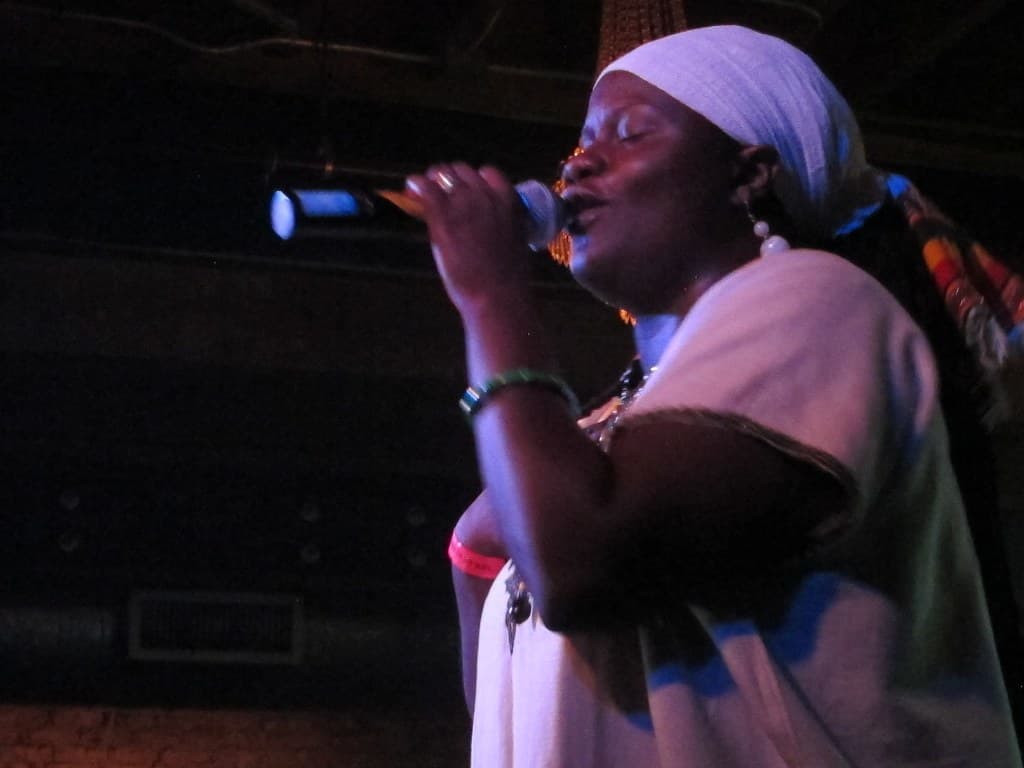
Sister Carol
Deep, authoritative dancehall chatting meets roots consciousness. Heavy basslines and sharp social commentary that feels like a warm, rhythmic embrace.
Deep, authoritative dancehall chatting meets roots consciousness. Heavy basslines and sharp social commentary that feels like a warm, rhythmic embrace.
Sister Carol brings a commanding, matriarchal energy to the dancehall space. Her music is built on the foundation of 'rub-a-dub' - that specific era where the heavy, organic rhythms of roots reggae began to tighten into the more aggressive, repetitive grooves of early dancehall. Her voice is a rich, resonant instrument that doesn't just sing; it 'chats' with a rhythmic precision that feels both educational and celebratory.
What truly sets her apart is the 'Mother Culture' persona. While many of her contemporaries leaned into the 'slackness' or hyper-masculinity of the 80s dancehall scene, Sister Carol maintained a strict focus on social consciousness, black pride, and spiritual uplift. The production is characterized by warm analog saturation, prominent bass-heavy riddims, and a live-band feel that bridges the gap between the studio and the sound system.
Start with 'Black Cinderella' to hear her at the height of her powers. It perfectly captures her ability to weave complex social narratives into infectious, danceable grooves. It is the definitive entry point for anyone wanting to understand how reggae can be simultaneously a party and a protest.
Carol Theresa East (born 15 January 1959, Kingston, Jamaica), known by her stage name of Sister Carol, is a Jamaican-born American reggae recording artist. She has used many other stage names, including Black Cinderella (also the name of her record label) and Mother Culture.
Cassette uses generative AI to enrich its catalog. How we use AI →


