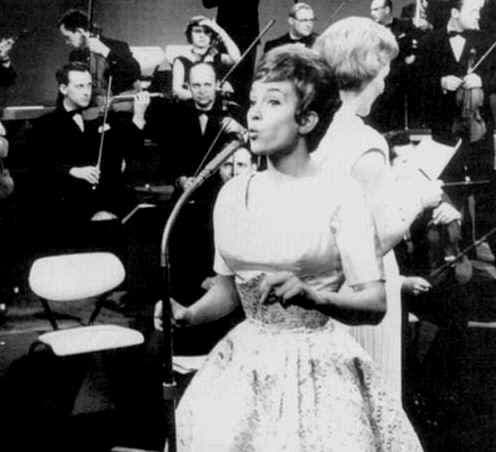
Siw Malmkvist
Effervescent mid-century pop and schlager delivered with theatrical flair. Warm, brassy arrangements and multilingual charm for a nostalgic, sun-drenched afternoon.
Effervescent mid-century pop and schlager delivered with theatrical flair. Warm, brassy arrangements and multilingual charm for a nostalgic, sun-drenched afternoon.
Siw Malmkvist embodies the golden era of European pop, where the line between the stage and the recording studio was beautifully blurred. Her music is a vibrant tapestry of lush orchestral arrangements, swinging brass sections, and a vocal delivery that feels both intimate and grand. It is the sound of a more optimistic time, characterized by bright melodies and a sophisticated sense of play.
What truly sets Siw apart is her incredible versatility and linguistic dexterity. Whether she is singing in Swedish, German, or Italian, she maintains a consistent persona: the charismatic storyteller who can shift from a heartbreaking ballad to a cheeky, up-tempo number without missing a beat. Her background in musical theater shines through in her phrasing, giving every song a sense of narrative purpose and emotional clarity.
For those new to her vast catalog, the 'Guldkorn' collection offers a perfect overview of her Swedish hits, while 'Danke für die Blumen' captures her massive impact on the German schlager scene. It is music that feels like a warm embrace, perfect for moments when you need a dose of pure, unadulterated charm and a reminder of pop music's timeless capacity for joy.
Siw Gunnel Margareta Malmkvist (born 31 December 1936) is a Swedish schlager singer and actress popular in Scandinavia and West Germany (today's Germany). She represented Sweden in the Eurovision Song Contest 1960 and West Germany in the Eurovision Song Contest 1969. She had a number one hit in West Germany in 1964 with "Liebeskummer lohnt sich nicht" ("Lovesickness Is Not Worthwhile"), and on 18 July 1964 she became the first Swede to have a hit on the US Billboard Hot 100 chart, when "Sole Sole Sole", a duet with Italian singer Umberto Marcato, entered the chart, peaking at No. 58. Malmkwist is notable for having recorded in more than 10 languages, including Swedish, English, Finnish, Norwegian, Danish, Dutch, French, Italian, Spanish and particularly German.

Shares traditional pop, vocal jazz, chamber pop (subgenres); orchestral arrangement, analog warmth, studio polished (production style)
Shares traditional pop, vocal jazz (subgenres); orchestral arrangement, analog warmth, studio polished (production style)
Shares traditional pop, vocal jazz (subgenres); studio polished, analog warmth, orchestral arrangement (production style)
Shares orchestral arrangement, analog warmth, studio polished (production style); traditional pop, vocal jazz (subgenres)
Shares orchestral arrangement, analog warmth, studio polished (production style); traditional pop, vocal jazz (subgenres)
Shares traditional pop, vocal jazz (subgenres); orchestral arrangement, analog warmth, studio polished (production style)

Shares orchestral arrangement, analog warmth, studio polished (production style); traditional pop, vocal jazz (subgenres)

Shares orchestral arrangement, analog warmth, studio polished (production style); traditional pop, vocal jazz (subgenres)

Shares orchestral arrangement, analog warmth, studio polished (production style); traditional pop, vocal jazz (subgenres)
Shares traditional pop, vocal jazz, chamber pop (subgenres); orchestral arrangement, analog warmth, studio polished (production style)
Shares theatrical schlager phrasing, mid-century orchestral pop, multilingual vocal delivery, vocal jazz (detail)
Shares sunday morning, traditional pop, vocal jazz, soprano (signature)
Cassette uses generative AI to enrich its catalog. How we use AI →
