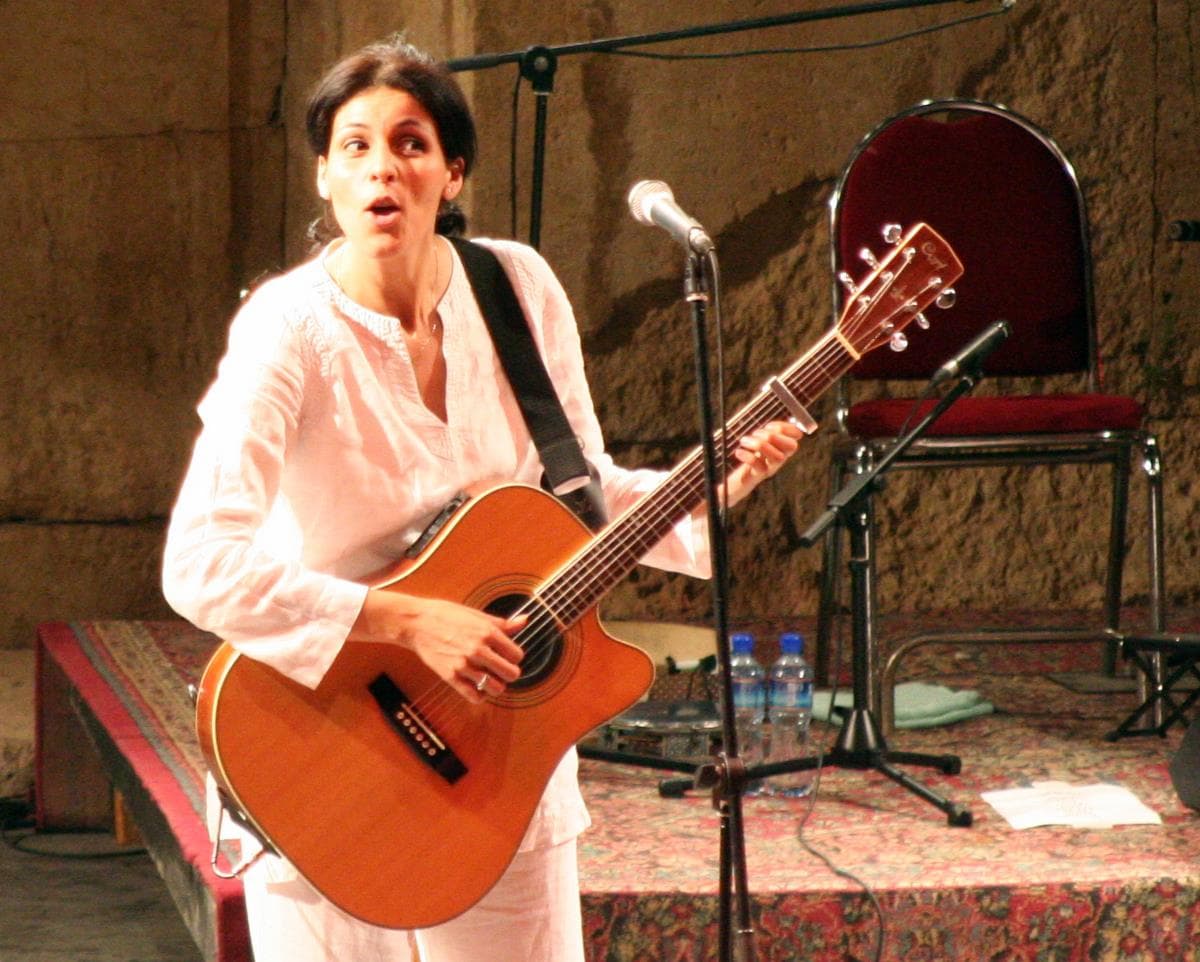
Souad Massi
Intimate acoustic folk that bridges the gap between Algerian roots and Western singer-songwriter traditions. Warm, melancholic, and deeply personal.
Intimate acoustic folk that bridges the gap between Algerian roots and Western singer-songwriter traditions. Warm, melancholic, and deeply personal.
Souad Massi creates music that feels like a whispered secret shared in a crowded room. Her sound is anchored by the steady, rhythmic pulse of her acoustic guitar, a foundation that feels as much at home in a Nashville cafe as it does in an Algiers courtyard. There is a profound stillness in her work, a sense of space that allows her breathy, emotive vocals to carry the weight of displacement, longing, and quiet resilience.
What truly distinguishes Massi is her ability to weave disparate cultural threads into a single, seamless garment. She effortlessly glides between Algerian Arabic, French, and Kabyle, often within the same verse, making the linguistic shifts feel like natural emotional transitions rather than stylistic choices. Her melodies often carry the haunting, minor-key gravity of Portuguese fado or the dusty yearning of American country, yet they are always grounded in North African rhythmic sensibilities.
For those new to her world, the album Deb is the essential entry point. It captures her at a creative peak, balancing lush arrangements with the raw, stripped-back intimacy that defines her best work. It is music for the introspective hours, perfect for listeners who value emotional honesty and cross-cultural curiosity over genre conventions.
Souad Massi (Arabic: سعاد ماسي; born August 23, 1972) is an Algerian Berber singer, songwriter and guitarist. She began her career performing in the Kabyle political rock band Atakor, before leaving the country following a series of death threats. In 1999, Massi performed at the Femmes d'Algérie concert in Paris, which led to a recording contract with Island Records. Massi's music, which prominently features the acoustic guitar, displays Western musical style influences such as rock, country or the Portuguese fado but sometimes incorporates oriental musical influences and oriental instruments like the oud as well as African musical stylings. Massi sings in Classical Arabic, Algerian Arabic, Egyptian Arabic, French, occasionally in English, and in the Kabyle Berber language, often employing more than one language in the same song.
Cassette uses generative AI to enrich its catalog. How we use AI →


