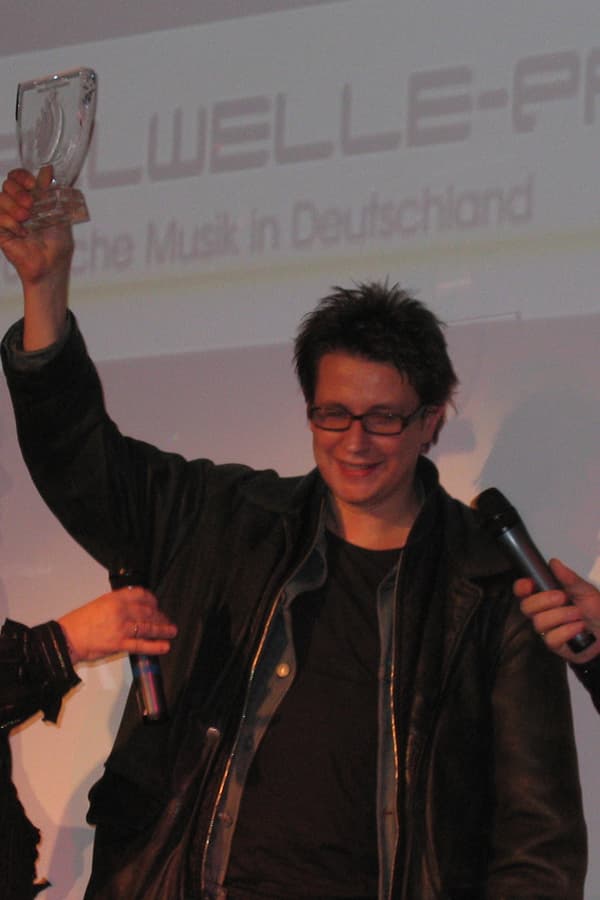
Spyra
Hypnotic Berlin School sequences meet modern urban field recordings. Warm, pulsing electronic landscapes for deep focus and late-night city wandering.
Hypnotic Berlin School sequences meet modern urban field recordings. Warm, pulsing electronic landscapes for deep focus and late-night city wandering.
Spyra creates a world where the mechanical and the organic breathe in unison. His music is built on the foundation of the classic Berlin School, utilizing hypnotic, interlocking synth sequences that feel like the inner workings of a clock. However, he breaks the retro mold by injecting modern ambient textures and found-sound field recordings that ground the cosmic sounds in a tangible, urban reality.
What truly distinguishes Spyra is his background in sound sculpture and installation art. You can hear it in the way he treats space; his tracks don't just play, they inhabit a room. There is a tactile quality to his percussion and a liquid warmth to his analog pads that makes the music feel physically present, rather than just a digital signal. It is sophisticated, patient, and deeply immersive.
Start with 'Future of the Past' to hear his mastery of the long-form electronic journey. It captures the bridge between the 70s pioneers and the 90s chillout movement perfectly. If you prefer something more atmospheric and textured, 'Invisible Fields' offers a more nuanced, sculptural approach to sound design.
Wolfram Spyra (born 12 December 1964) is a German composer of ambient music. Spyra was born in Eschwege. He began his career in the early 1990s constructing 'soundscapes' and installations around Germany. He has collaborated with a wide range of visual artists, musicians, producers and DJs, including Pete Namlook as the duo Virtual Vices, and with Robert Rutman as a member of the Steel Cello Ensemble. Spyra has released several albums, starting in 1995 with Homelistening Is Killing Clubs. Spyra's focus is on instrumental electronic music, seamlessly blending interesting samples, synthesizers, percussion and other elements together in unique ways. While sometimes experimental, most of his music has a certain accessibility in terms of the rhythmic and melodic components. Though frequently associated with the retro or Berlin School sound pioneered by Klaus Schulze and others, he uses modern ambient electronica elements extensively, creating his own rich sound that defies easy categorization.
Shares ambient techno, downtempo (subgenres); contemplative, mysterious, dreamy (moods)

Shares ambient techno, downtempo (subgenres); analog warmth, layered dense, studio polished (production style)
Shares contemplative, mysterious, dreamy (moods); instrumental only (vocal style)
Shares ambient techno, downtempo (subgenres); mysterious, contemplative, serene (moods)
Shares ambient techno, downtempo (subgenres); analog warmth, layered dense, field recordings (production style)
Shares ambient techno, downtempo (subgenres); instrumental only (vocal style)
Shares ambient techno, downtempo (subgenres); instrumental only (vocal style)
Shares ambient techno, downtempo (subgenres); instrumental only (vocal style)
Shares ambient techno, downtempo (subgenres); contemplative, mysterious, serene (moods)
Shares ambient techno, downtempo (subgenres); instrumental only (vocal style)
Shares modular synth, ambient techno, instrumental only, serene (signature)
Shares modular synth, field recordings, ambient techno, instrumental only (instrumentation)
Cassette uses generative AI to enrich its catalog. How we use AI →


