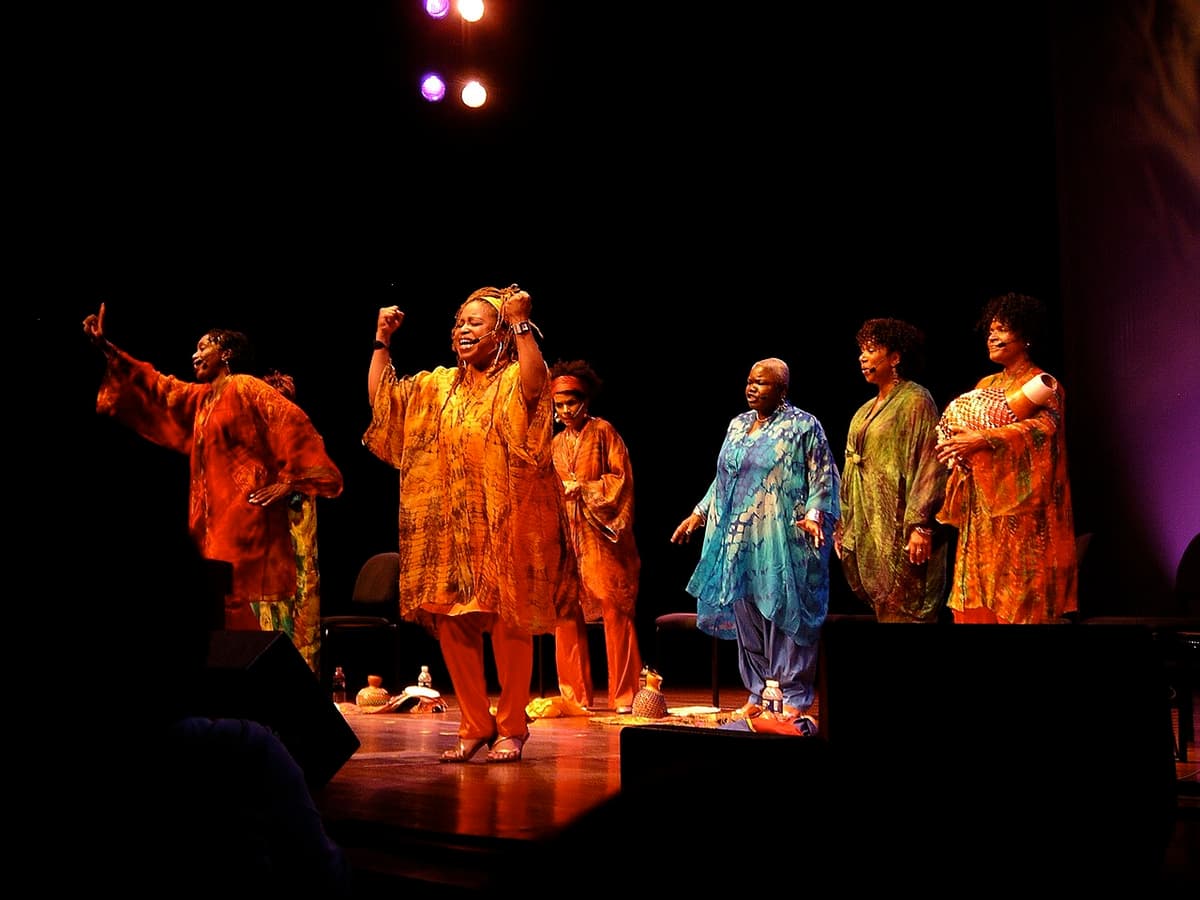
Sweet Honey in the Rock
Powerful, all-female a cappella that turns the human voice into a full orchestra. Deeply spiritual, politically charged, and harmonically rich music for the soul.
Powerful, all-female a cappella that turns the human voice into a full orchestra. Deeply spiritual, politically charged, and harmonically rich music for the soul.
Listening to Sweet Honey in the Rock is a physical experience. Without a single guitar or synthesizer, they create a wall of sound that feels more substantial than a full rock band. Their music is built on the foundation of the African-American vocal tradition, using complex five-part harmonies, deep bass hums, and sharp, rhythmic handclaps to create a sonic landscape that is both ancient and urgent. It is music that vibrates in your chest, demanding your full attention through its sheer technical mastery and emotional weight.
What truly sets them apart is the seamless integration of the sacred and the secular. They can transition from a traditional spiritual to a biting critique of systemic injustice without losing a shred of musicality. The arrangements are masterclasses in vocal counterpoint, where voices weave in and out of each other, creating textures that range from the smooth sweetness of their namesake to the grit of a field holler. It is a sound defined by collective strength rather than individual ego.
Start with the album 'Breaths' to hear them at their most iconic. It captures the essence of their mission: using the most basic human instrument to tackle the most complex human problems. Whether they are singing about motherhood, freedom, or environmental justice, the result is always a profound sense of communal healing and empowerment.
Sweet Honey in the Rock are an all-female, African-American a cappella ensemble that started in 1973. They are a three-time Grammy Award–nominated troupe who express their history as black women through song, dance, and sign language. Originally a four-person ensemble, the group has expanded to five-part harmonies, with a sixth member acting as a sign-language interpreter. Although the members have changed over five decades, the group continues to sing and perform worldwide.
Cassette uses generative AI to enrich its catalog. How we use AI →


