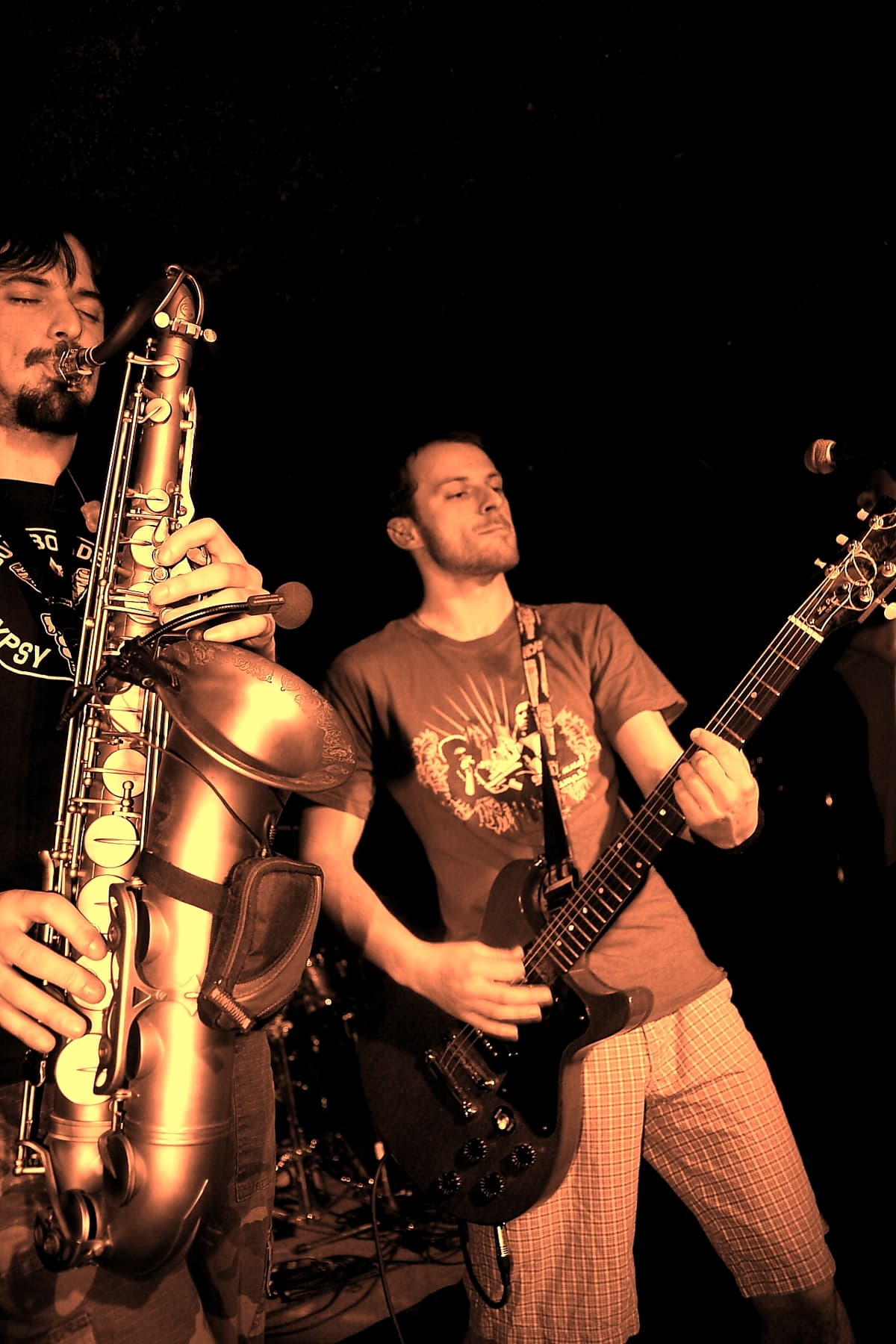
Talco
High-velocity Italian ska-punk fused with Balkan folk melodies. Aggressive, brass-heavy anthems for the front lines and the football terraces.
High-velocity Italian ska-punk fused with Balkan folk melodies. Aggressive, brass-heavy anthems for the front lines and the football terraces.
Talco sounds like a riot that accidentally became a wedding celebration. Their music is a relentless collision of distorted punk guitars and a hyperactive horn section that draws as much from Balkan folk and Italian 'patchanka' as it does from third-wave ska. It is dense, fast, and physically demanding music that refuses to let the listener stand still, characterized by a distinct Mediterranean warmth even at its most aggressive.
What sets them apart is the seamless integration of traditional folk structures into a hardcore punk framework. While many ska-punk bands rely on simple off-beat rhythms, Talco incorporates complex melodic runs on the trumpet and saxophone that feel like traditional village music played at 200 beats per minute. Their lyrics are unapologetically political, delivered with a raspy, communal urgency that makes every chorus feel like a call to action.
Start with Combat Circus to hear the band at their most raw and foundational. It captures the transition from local Venetian activists to international ska-punk heavyweights, featuring the high-energy brass hooks and anti-capitalist fervor that defined their career. For a more polished but equally intense experience, move to Gran Galà.
Talco is an Italian ska punk band and alternative band from Marghera, Venice. Musically the group combines the horns and rhythms of ska-punk with Italian folk music. Their lyrics reflect the band's support for left-wing politics and often include anti-fascist, anti-capitalist, and anti-imperialist themes. Musical influences include The Clash, Ska-P, Modena City Ramblers and especially Mano Negra, often describing their sound as "patchanka" after Mano Negra's first album. In 2009 the group wrote the song "St. Pauli" about the cult German football club FC St. Pauli. The team has since used the song as an anthem and Talco has played a number of concerts at Millerntor-Stadion in Hamburg, Germany.
Cassette uses generative AI to enrich its catalog. How we use AI →


