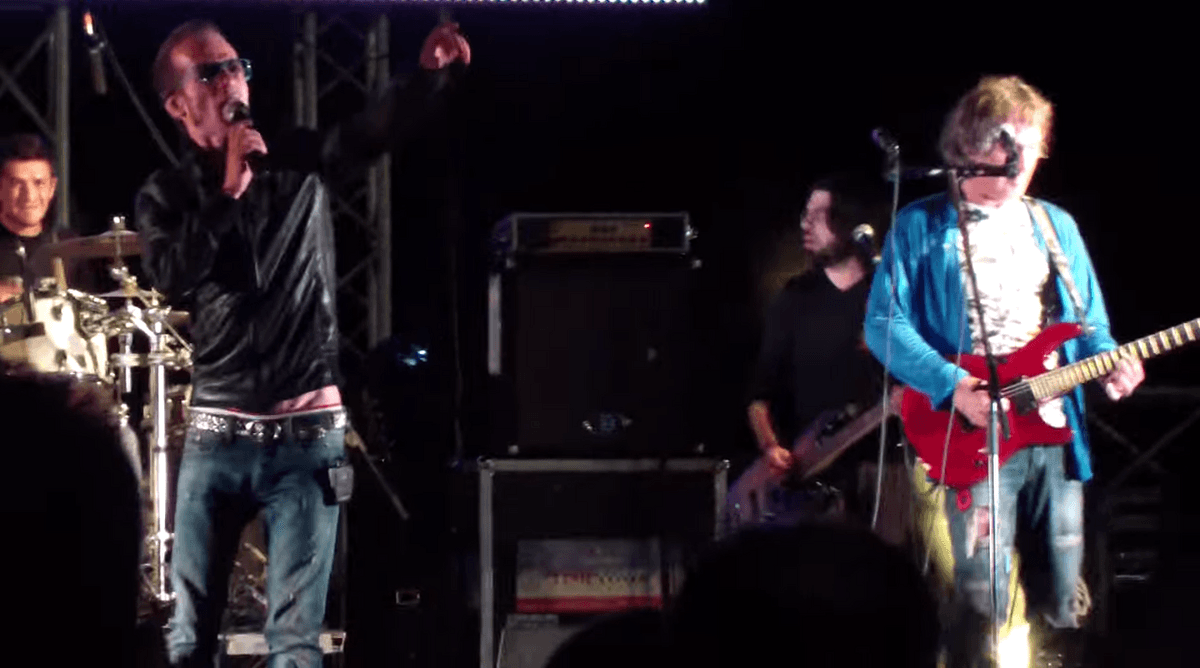
Tazenda
Powerful Sardinian vocals meet shimmering 90s rock. Anthemic, deeply rooted, and emotionally soaring music that feels like a Mediterranean sunrise.
Powerful Sardinian vocals meet shimmering 90s rock. Anthemic, deeply rooted, and emotionally soaring music that feels like a Mediterranean sunrise.
Tazenda sounds like the intersection of ancient Mediterranean tradition and modern stadium rock. Their music is defined by the incredible vocal range of the late Andrea Parodi and the intricate polyphonic harmonies that mirror the 'cantu a tenore' tradition of their native Sardinia. It is big, expansive music that uses electric guitars and synthesizers not to replace tradition, but to amplify it, creating a sound that is both earthy and ethereal.
What makes them truly distinctive is their commitment to the Logudorese dialect and the integration of traditional instruments like the launeddas (a triple-pipe reed instrument) into a pop-rock framework. This isn't just 'world music' for a museum; it is living, breathing rock music that carries the weight of thousands of years of history. The production often leans into the lush, polished aesthetics of the late 80s and early 90s, giving the songs a cinematic, widescreen quality.
Start with the album 'Murales' or the iconic track 'Spunta la Luna dal Monte'. These recordings capture the band at their commercial and creative peak, showcasing how they managed to bring the specific, rugged beauty of Sardinian culture to a massive national audience without losing their soul.
Tazenda is a Sardinian ethnic pop-rock band. The group was formed in Sardinia in 1988 by Andrea Parodi, Gigi Camedda and Gino Marielli. The group's music is characterized by the influence from traditional Sardinian music; the lyrics of most of their songs are in Sardinian language, especially in its Logudorese variety. The name of the band was taken from Second Foundation, a novel of the Foundation series by Isaac Asimov. In the novel the planet "Tazenda" (the name of which comes from the English expression "Star's End") plays an important role. The choice, according to Tazenda, of this name was because of an assonance with their own language.
Cassette uses generative AI to enrich its catalog. How we use AI →


