The Beat
High-velocity ska rhythms meeting sophisticated pop melodies. It is the sound of 1980s Birmingham: politically sharp, rhythmically relentless, and impossible to sit still to.
High-velocity ska rhythms meeting sophisticated pop melodies. It is the sound of 1980s Birmingham: politically sharp, rhythmically relentless, and impossible to sit still to.
The Beat sounds like a high-speed chase through a rainy British city. It is built on a foundation of 'Two-Tone' ska, characterized by that signature 'skank' guitar upstroke, but it is far more musically diverse than its peers. You will hear the deep, thumping pulse of reggae, the frantic energy of punk, and the smooth, melodic sensibilities of Motown soul all colliding in a single three-minute single.
What truly sets them apart is the dual-vocal attack of Dave Wakeling and Ranking Roger. Wakeling provides the melodic, often melancholic lead, while Roger interjects with rhythmic 'toasting' and high-energy hype, creating a constant tension and release. This is bolstered by Saxa, a veteran Jamaican saxophonist who brought a genuine jazz and bluebeat pedigree to their young, frantic sound, grounding their nervous energy in timeless soul.
Start with their debut album, 'I Just Can't Stop It'. It is a perfect document of their early power, featuring the paranoid masterpiece 'Mirror in the Bathroom'. From there, move to 'Special Beat Service' to hear how they evolved into a sophisticated pop machine capable of writing some of the most enduring melodies of the new wave era.
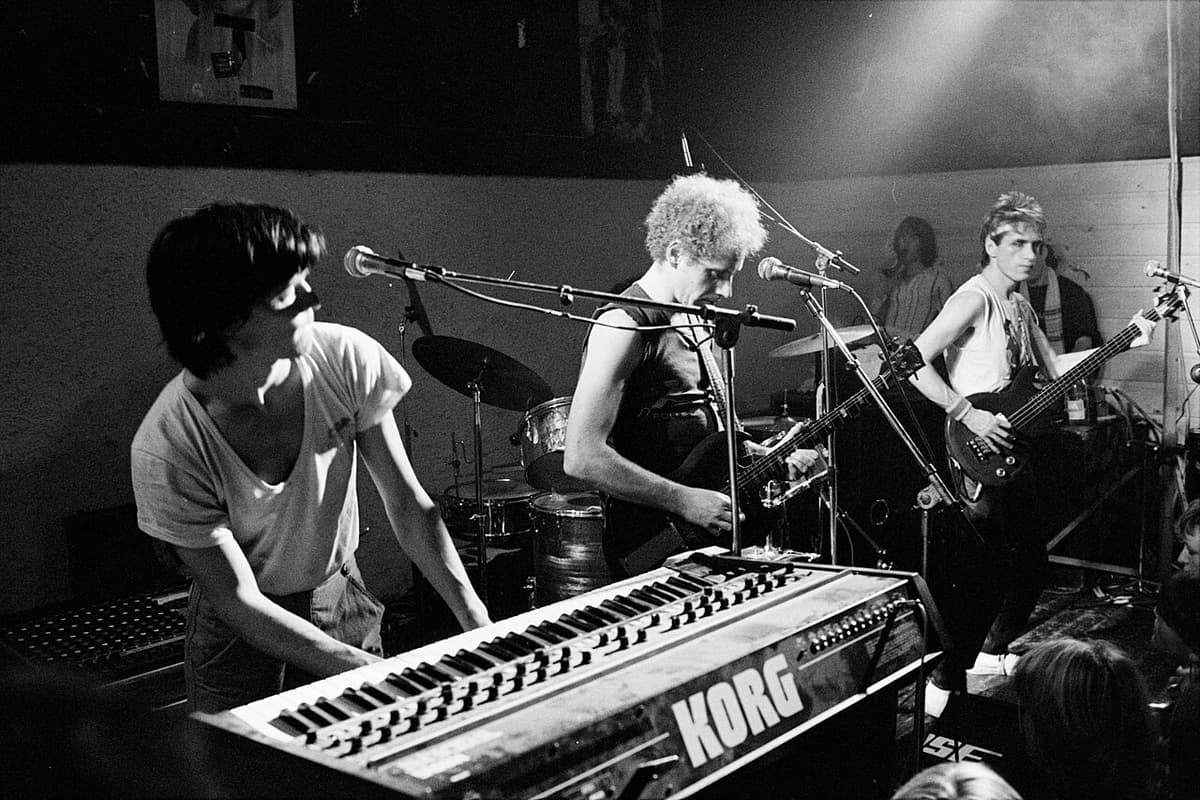
The Beat (known in the United States and Canada as the English Beat and in Australia as the British Beat) are an English band formed in Birmingham in 1978. Their music fuses Latin, ska, pop, soul, reggae and punk rock. The Beat, consisting of Dave Wakeling (vocals, guitar), Ranking Roger (vocals), Andy Cox (guitar), David Steele (bass), Everett Morton (drums) and Saxa a.k.a. Lionel Augustus Martin (saxophone), joined by keyboard player Dave "Blockhead" Wright in 1980, released three studio albums in the early 1980s: I Just Can't Stop It (1980), Wha'ppen? (1981) and Special Beat Service (1982), and a string of singles, including "Mirror in the Bathroom", "Save It for Later", "I Confess", "Too Nice to Talk To", "Can't Get Used to Losing You", "Hands Off...She's Mine" and "All Out to Get You".
Shares analog warmth, dry intimate, studio polished (production style); restless, anxious, energetic (moods)
Shares analog warmth, dry intimate, studio polished (production style); energetic, defiant, restless (moods)
Shares ska, reggae fusion, pop rock (subgenres); analog warmth, studio polished, hand played (production style)
Shares analog warmth, dry intimate, studio polished (production style); restless, playful, anxious (moods)
Shares analog warmth, dry intimate, studio polished (production style); urban night, basement show, festival (atmosphere)
Shares new wave, ska, pop rock (subgenres); analog warmth, studio polished, hand played (production style)
Shares ska, new wave, reggae fusion (subgenres); analog warmth, studio polished, hand played (production style)
Shares energetic, defiant, restless (moods); analog warmth, dry intimate, studio polished (production style)
Shares analog warmth, dry intimate, studio polished (production style); restless, energetic, playful (moods)
Cassette uses generative AI to enrich its catalog. How we use AI →