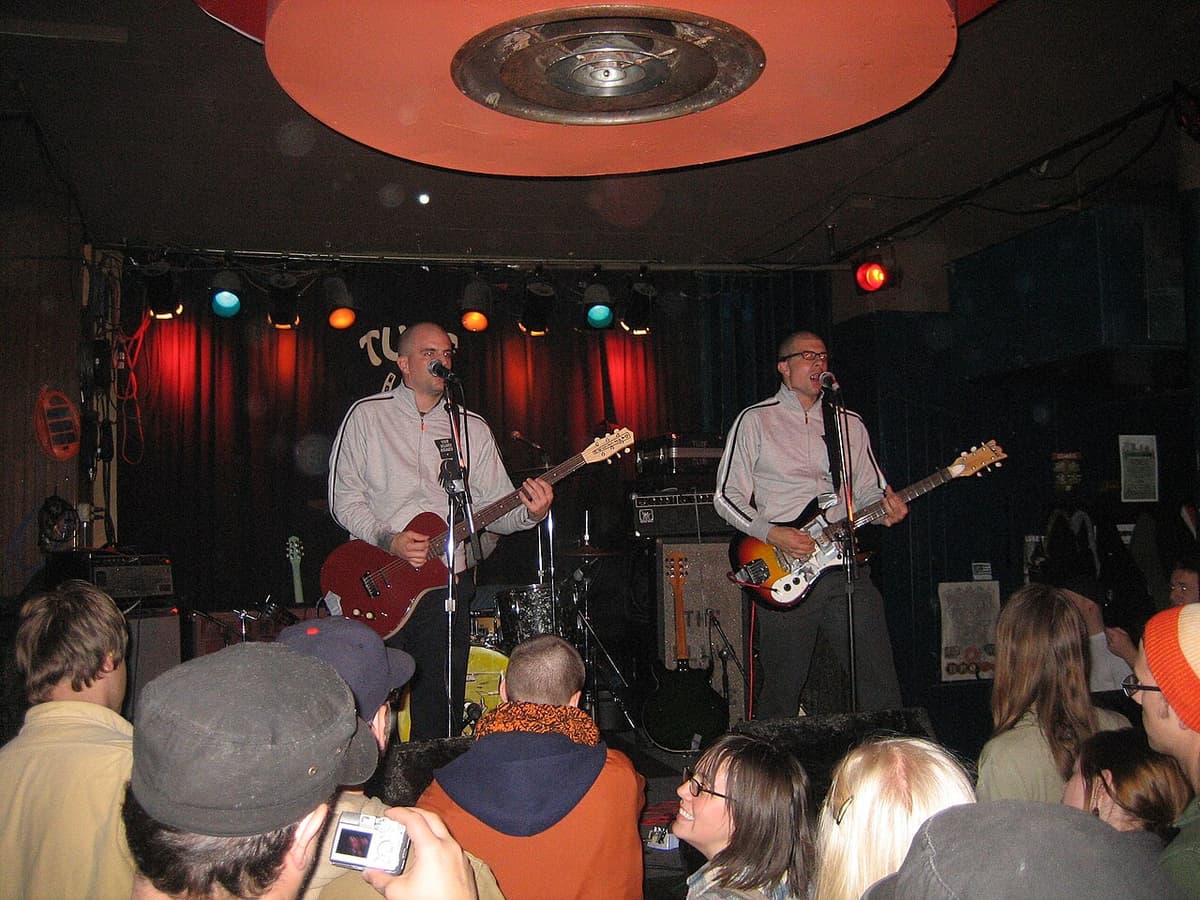
The Blind Shake
High-velocity garage punk driven by detuned baritone guitars and a relentless, stomping rhythm. Raw, muscular energy for basement shows and high-speed drives.
High-velocity garage punk driven by detuned baritone guitars and a relentless, stomping rhythm. Raw, muscular energy for basement shows and high-speed drives.
The Blind Shake sounds like a machine shop operating at double speed. It is a dense, physical wall of sound built on the unique interplay of standard and baritone guitars, creating a low-end rumble that most punk bands lack. The drums do not just keep time; they stomp with a primitive, tribal intensity that feels like it is trying to punch through the floor. It is music that prioritizes momentum and texture over melody, resulting in a gritty, overdriven experience.
What truly sets them apart is their disciplined aggression. While many garage bands lean into sloppiness, The Blind Shake are remarkably precise. Their riffs are interlocking and rhythmic, often feeling more like a percussive force than a melodic one. The vocals are shouted with a raw, unvarnished urgency that matches the detuned, metallic clang of their instruments. It is a sound that feels both futuristic and ancient, like a psychedelic noise experiment performed by a street gang.
Start with 'Breakfast of Failures' to hear their most focused and punchy songwriting. If you want to experience the full, unhinged weight of their sonic identity, 'Celebrate Your Worth' captures the band at their most muscular and relentless. It is the perfect entry point for anyone who finds standard garage rock too thin and craves something with more low-end gravity.
The Blind Shake are an American punk rock band formed in Minneapolis by brothers Jim (vocals/guitar) and Mike Blaha (vocals/guitar), with Dave Roper on drums. They have released four albums and featured as a backing band for a number of artists, including John Reis and Michael Yonkers.
Cassette uses generative AI to enrich its catalog. How we use AI →


