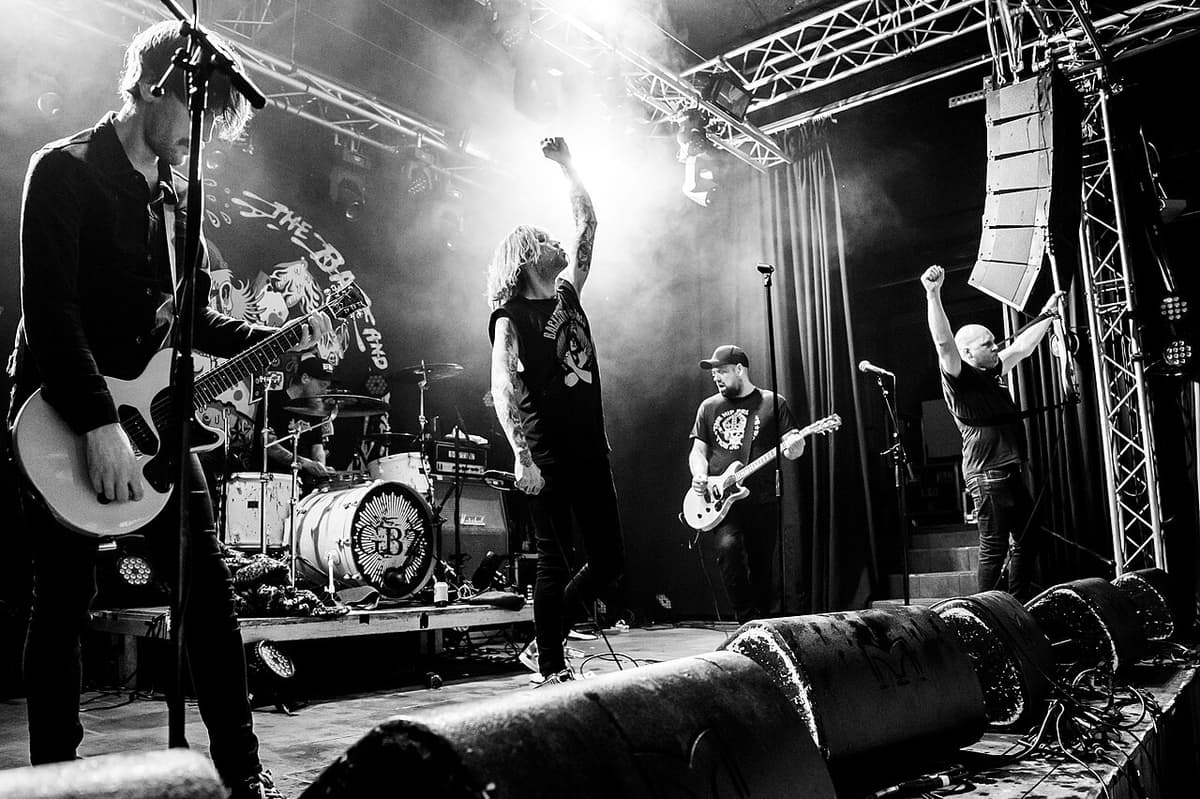
The Good the Bad and the Zugly
Aggressive, hook-heavy Norwegian punk that balances misanthropic wit with high-octane riffs. Perfect for high-energy defiance and basement-show intensity.
Aggressive, hook-heavy Norwegian punk that balances misanthropic wit with high-octane riffs. Perfect for high-energy defiance and basement-show intensity.
The Good the Bad and the Zugly deliver a masterclass in what has been dubbed 'Scandi-punk' or 'deathpunk,' a style that marries the raw speed of hardcore with the massive, melodic hooks of classic rock. Their sound is thick, humid, and relentlessly propulsive, characterized by dual-guitar interplay that feels both chaotic and surgically precise. It is the sound of a band that has spent years in cramped rehearsal spaces and even tighter tour vans, honing a chemistry that allows them to pivot from a breakneck d-beat to a stadium-sized anthem without losing an ounce of grit.
What truly sets them apart is their lyrical perspective. While many punk bands lean into earnest political sloganeering, 'The Zugly' opt for a biting, satirical misanthropy. They target the mundane frustrations of modern life, suburban boredom, and the absurdities of the music industry with a cynical wit that is uniquely Norwegian. The vocals, particularly since Ivar Nikolaisen took over, are delivered with a sandpaper intensity that feels like a desperate, joyful scream against the void.
For those new to the Hadeland legends, start with 'Algorithm & Blues' or 'Misanthropical House.' These albums showcase their ability to write genuine earworms that still feel dangerous. It is music for people who want their punk rock to have actual riffs, a sense of humor, and enough velocity to make your heart rate spike before the first chorus even hits.
The Good The Bad and The Zugly is a Norwegian punk rock band from Hadeland formed in 2011. It consists of members Eirik Melstrøm (guitar), Kim Skaug (guitar), Magne Vannebo (drums), Lars Gulbrandsen (bass) and Ivar Nikolaisen (vocals), who is also the lead vocalist for Kvelertak. The band won the Spellemannprisen in 2018 in the rock category with their album Misanthropical House. They have were also nominated for the same award in 2015 for Hadeland Hardcore, in 2020 2020 for Algorithm & Blues and in 2022 for Research and Destroy.
Cassette uses generative AI to enrich its catalog. How we use AI →


