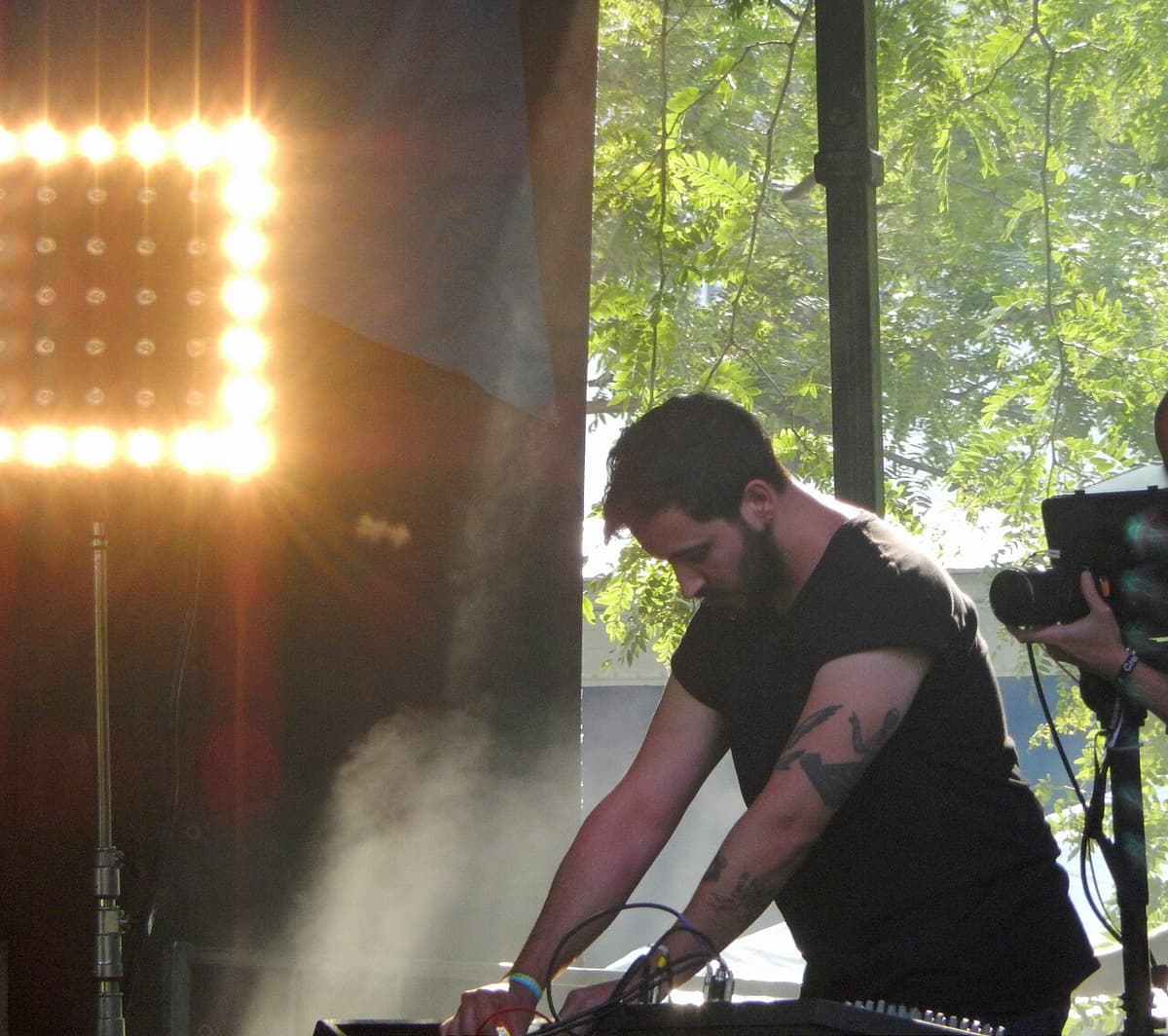
The Haxan Cloak
Submerged, cavernous soundscapes that feel like the physical weight of shadow. Dark ambient with a terrifying, cinematic depth for deep isolation.
Submerged, cavernous soundscapes that feel like the physical weight of shadow. Dark ambient with a terrifying, cinematic depth for deep isolation.
Listening to The Haxan Cloak is a physical experience as much as an auditory one. The music occupies a space between the living and the dead, characterized by massive, earth-shaking sub-bass that feels like it's vibrating your internal organs. It is murky, dense, and unapologetically dark, yet there is a profound beauty in its decay. The sound is often built from organic instruments like cellos and violins, but they are processed until they sound like ancient machinery or ghosts trapped in a digital void.
What sets Bobby Krlic apart is his mastery of space and tension. He doesn't rely on jump scares or cheap noise; instead, he builds a suffocating atmosphere through slow, deliberate pacing and cavernous reverb. The percussion, when it arrives, sounds like it's coming from three floors below, muffled by concrete and earth. It is the sound of the afterlife as imagined by a modern minimalist, stripping away the light to see what remains in the dark.
Start with the album Excavation. It is a landmark of 2010s electronic music that redefined what 'dark' could sound like by focusing on the low-end frequencies. It's the perfect entry point for anyone who wants to hear how ambient music can be as heavy and intimidating as the most extreme metal, without ever needing a distorted guitar.
Bobby Krlic (born 20 December 1985), known by his stage name The Haxan Cloak, is a British composer, artist, music producer and musician. He has released two full-length albums (2011's The Haxan Cloak and 2013's Excavation). As a producer, Krlic has worked with artists including Björk, Father John Misty, Khalid, Troye Sivan, Goldfrapp, serpentwithfeet and The Body. He has also composed several soundtracks, credited under his real name, including Ari Aster's films Midsommar, Beau Is Afraid and Eddington, and the television series Beef, Snowpiercer, Angel of Darkness and Reprisal.
Cassette uses generative AI to enrich its catalog. How we use AI →

