The Yellow Monkey sounds like a glitter-streaked night in a 1970s London club transported to the neon-lit streets of 1990s Tokyo. It is music built on the foundations of classic rock and roll, but infused with a specifically Japanese sense of melody and melancholy. The guitars are thick and bluesy, the rhythms are driving, and the overall production has a warm, analog richness that feels lived-in and authentic.
What truly sets them apart is the androgynous, theatrical charisma of frontman Kazuya Yoshii. His baritone delivery moves from a seductive croon to an explosive roar, embodying a decadent 'eros' that was rare in the J-rock scene of their era. They managed to take the DNA of David Bowie and T. Rex and mutate it into something that felt entirely local, using ironic subversion to claim their place in rock history.
Start with the album 'Sicks' or 'Four Seasons' to hear them at their commercial and creative peak. These records capture the perfect balance between their gritty hard rock roots and the massive, stadium-sized hooks that made them legends. It is the ideal soundtrack for anyone who wants their rock music to have a little bit of dirt under its fingernails and a lot of soul in its heart.
The Yellow Monkey, sometimes abbreviated as Yemon (Japanese: イエモン, Hepburn: Iemon), is a Japanese rock band originally active from 1988 to 2001, before officially disbanding in 2004. They announced their reformation in 2016. The band's name was derived from the ethnic slur that Japanese people look like monkeys, and that Asian people are said to be "yellow" in skin color. The Yellow Monkey is considered an important Japanese rock group, having achieved major success selling 10 million records, including 6.2 million singles. The group has had three consecutive number one albums, 18 top ten singles and in 2003 were ranked number 81 on HMV's list of the 100 most important Japanese pop acts. Outside Japan the band is best known for their song "Tactics", one of the many ending themes of the Rurouni Kenshin anime.



Shares hard rock, alternative rock, psychedelic rock (subgenres); studio polished, analog warmth, layered dense (production style)

Shares hard rock, alternative rock, art rock (subgenres); analog warmth, studio polished, layered dense (production style)

Shares hard rock, alternative rock, art rock (subgenres); studio polished, analog warmth, layered dense (production style)
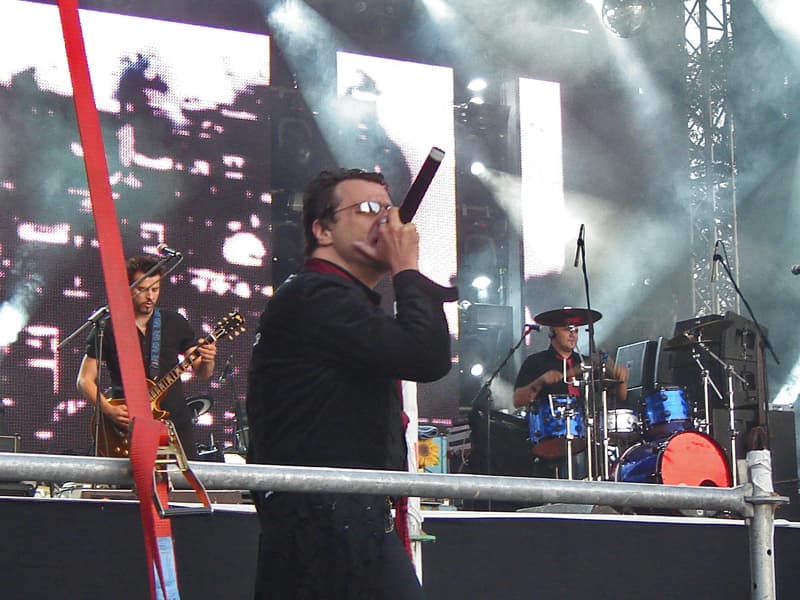
Shares hard rock, alternative rock, art rock (subgenres); studio polished, analog warmth, layered dense (production style)

Shares alternative rock, psychedelic rock, art rock (subgenres); studio polished, analog warmth, layered dense (production style)
Shares hard rock, alternative rock, art rock (subgenres); studio polished, layered dense, analog warmth (production style)
Shares studio polished, analog warmth, layered dense (production style); art rock, alternative rock (subgenres)
Shares hard rock, alternative rock, art rock (subgenres); studio polished, analog warmth, layered dense (production style)

Shares defiant, melancholic, triumphant (moods); studio polished, wall of sound, layered dense (production style)
Shares studio polished, analog warmth, layered dense (production style); alternative rock, hard rock (subgenres)
Shares baritone, art rock, alternative rock, crooning (signature)
Cassette uses generative AI to enrich its catalog. How we use AI →