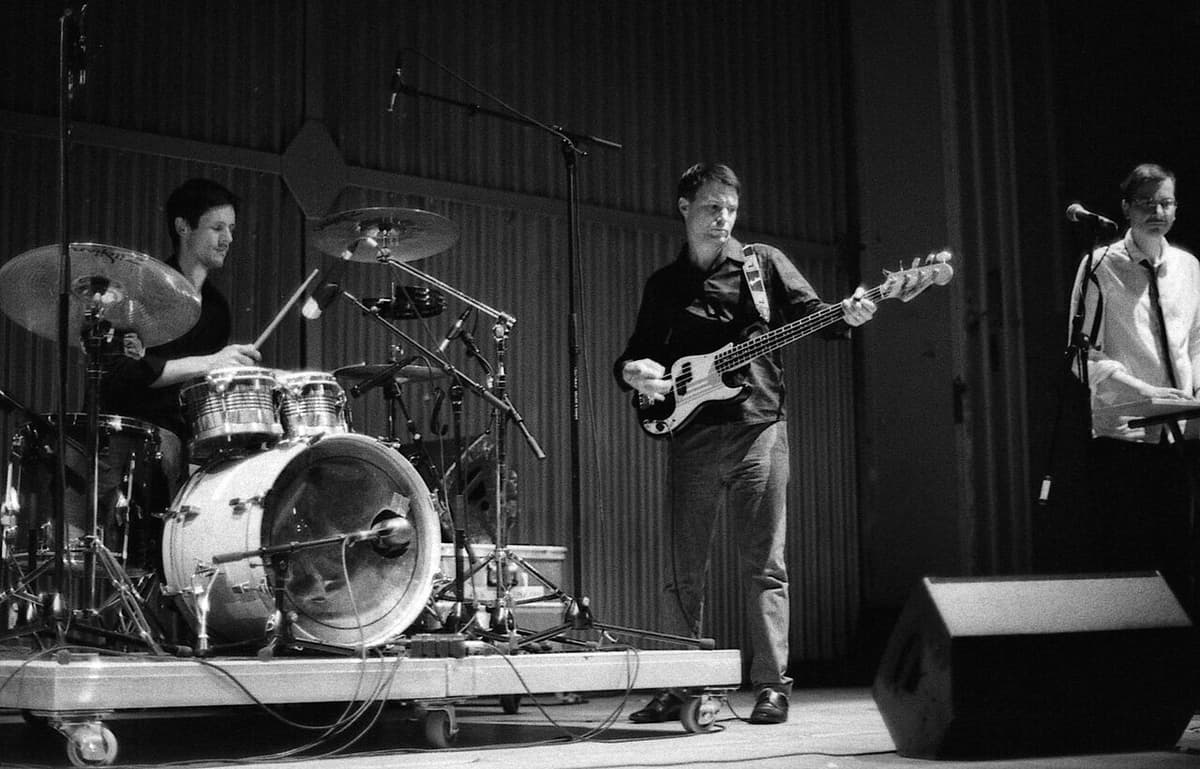
To Rococo Rot was a seminal Berlin-based trio consisting of bassist Stefan Schneider and brothers Robert and Ronald Lippok. Formed in 1995, they became central figures in the 'Clicks & Cuts' era and the broader European post-rock movement, though they eschewed the dramatic crescendos of their peers in favor of minimalist, interlocking grooves.
Their sound identity is defined by a hybrid of live instrumentation (bass and drums) and digital processing, creating a bridge between the krautrock legacy of Neu! and the emerging IDM scene of the late 90s. Throughout their career on labels like City Slang and Mute, they maintained a reputation for 'humanized' electronic music. Critical consensus highlights their influence on the 'Indietronica' subgenre, noting their ability to make repetitive structures feel emotionally resonant. They disbanded in 2014, leaving a legacy of eight albums that remain benchmarks for sophisticated, instrumental electronic composition.


Shares absent, instrumental_only (vocal style); contemplative, mysterious, restless (moods)
Shares post-rock, downtempo, minimalism (subgenres); absent, instrumental_only (vocal style)
Shares contemplative, serene, restless (moods); absent, instrumental_only (vocal style)
Shares contemplative, serene, restless (moods); idm, downtempo, ambient techno (subgenres)
Shares contemplative, serene, mysterious (moods); absent, instrumental_only (vocal style)
Shares absent, instrumental_only (vocal style); contemplative, serene, mysterious (moods)
Shares contemplative, serene, restless (moods); ambient techno, post-rock, minimalism (subgenres)
Shares contemplative, serene, mysterious (moods); absent, instrumental_only (vocal style)
Shares contemplative, serene, restless (moods); absent, instrumental_only (vocal style)
Shares minimalism, train_ride, post-rock, library (subgenre)
Cassette uses generative AI to enrich its catalog. How we use AI →