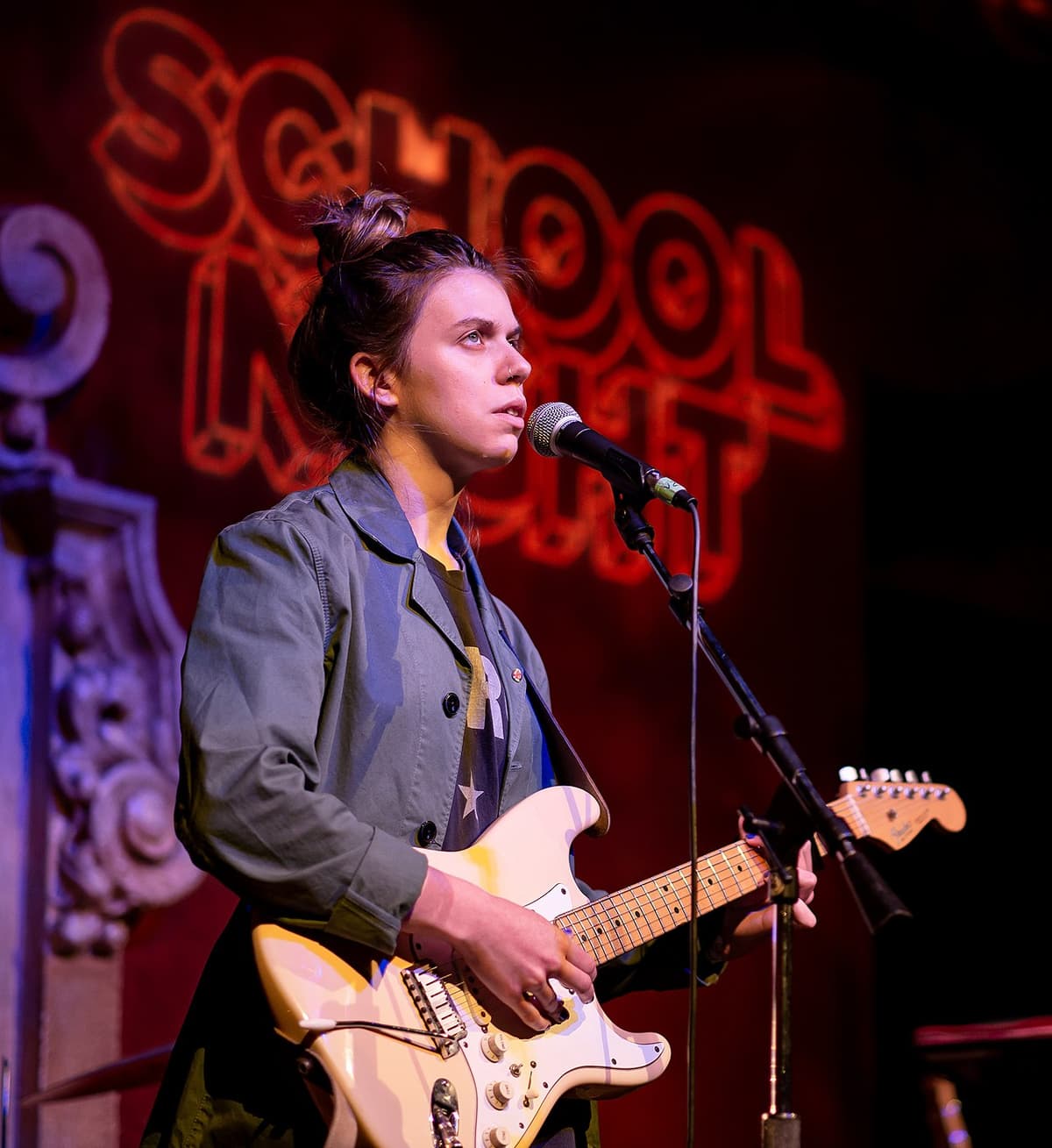
Tomberlin
Fragile, unhurried folk that feels like a shared secret. Breath-close vocals and skeletal arrangements for moments of deep, quiet self-reflection.
Fragile, unhurried folk that feels like a shared secret. Breath-close vocals and skeletal arrangements for moments of deep, quiet self-reflection.
Tomberlin (Sarah Beth Tomberlin) is a pivotal figure in the contemporary 'sad girl' indie folk movement, though her work is defined more by spiritual deconstruction and existential inquiry than simple melancholy. Emerging from a strict Baptist background in southern Illinois, her music serves as a vessel for navigating the loss of faith and the reconstruction of identity.
Her 2018 debut, At Weddings, released via Saddle Creek, established her sound: minimalist, reverb-soaked folk with a focus on lyrical clarity and vocal intimacy. Her evolution, particularly on 2022's 'i don’t know who needs to hear this...' , shows an expansion into chamber-pop and slowcore territories, utilizing collaborators like Felix Walworth (Florist) and Cass McCombs to add textural depth without sacrificing her signature stillness. Critically, she is praised for her 'unflinching' lyrical honesty and her ability to command attention through silence and restraint. She occupies a similar cultural space to artists like Julien Baker and Phoebe Bridgers but maintains a more pastoral, unhurried aesthetic that leans into the 'nothingness' of rural isolation.
Shares slowcore, intimate_close_mic, solitude, chamber folk (subgenre)
Shares intimate_close_mic, solitude, chamber folk, cabin_in_woods (signature)
Shares intimate_close_mic, solitude, chamber folk, acoustic folk (signature)
Shares intimate_close_mic, solitude, chamber folk, cabin_in_woods (signature)
Shares intimate_close_mic, solitude, chamber folk, cabin_in_woods (signature)
Shares whispered double-tracking, slowcore, intimate_close_mic, chamber folk (detail)
Shares intimate_close_mic, chamber folk, cabin_in_woods, acoustic folk (signature)
Shares spirituality, intimate_close_mic, chamber folk, acoustic folk (signature)
Shares sparse_bare, solitude, chamber folk, cabin_in_woods (production)
Cassette uses generative AI to enrich its catalog. How we use AI →