Hideaki Tokunaga is the undisputed master of the Japanese ballad, possessing a voice that feels like a warm, slightly frayed silk ribbon. His sound is defined by a unique breathiness and a high, almost androgynous register that allows him to convey vulnerability without ever sounding weak. It is music that occupies the quiet spaces of life, favoring elegant piano melodies and sweeping string sections that swell with cinematic emotion.
What truly sets Tokunaga apart is his 'Vocalist' era, where he reimagined classic songs originally sung by women. By applying his signature hushed delivery to these tracks, he revealed new layers of heartbreak and resilience. His production is consistently high-fidelity and polished, yet it retains a human warmth that makes it feel intimate rather than sterile. He captures the specific 'City Pop' transition into mature adult contemporary music.
Start with 'Kowarekake no Radio' to hear his songwriting peak, then move into the 'Vocalist' series to experience his interpretive genius. It is the perfect discography for anyone who finds beauty in sadness and prefers their pop music with a sophisticated, jazzy edge.
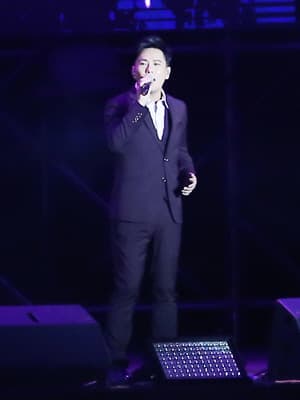
Hideaki Tokunaga (德永 英明, Tokunaga Hideaki; born February 27, 1961 in Yanagawa, Fukuoka) is a Japanese pop singer-songwriter and actor. Although Tokunaga failed to pass the test of Star Tanjō! in 1982, he debuted as a recording singer in 1986. After he released hit songs such as "Yume o Shinjite" (the first ending theme of the anime series Dragon Quest) and "Kowarekake no Radio" in 1990, his single "Wednesday Moon" reached No. 1 on Oricon weekly charts in 1991. He was also known for Vocalist album series, comprising his covers of female songs. Vocalist, Vocalist 2, Vocalist 3 and Vocalist 4 were released in 2005, 2006, 2007 and 2010 respectively. Tokunaga is the first male artist to have at least one album to reach the number-one position on the Japanese Oricon weekly charts for four decades (1980s, 1990s, 2000s and 2010s). Tokunaga also composed other singers' songs such as KinKi Kids' "Eien Ni" (from their 2007 album Phi). Tokunaga gained high popularity in Hong Kong due to huge number of songs covered in Cantonese version by superstars such as Alan Tam, Leslie Cheung, Jackie Cheung, and Leon Lai.


Shares studio polished, orchestral arrangement, hi fi (production style); traditional pop, soft rock, chamber pop (subgenres)

Shares studio polished, orchestral arrangement, hi fi (production style); traditional pop, soft rock, chamber pop (subgenres)
Shares studio polished, orchestral arrangement, hi fi (production style); traditional pop, soft rock (subgenres)
Shares traditional pop, soft rock, vocal jazz (subgenres); studio polished, orchestral arrangement, hi fi (production style)

Shares studio polished, orchestral arrangement, hi fi (production style); traditional pop, chamber pop, soft rock (subgenres)
Shares traditional pop, soft rock, chamber pop (subgenres); studio polished, orchestral arrangement, analog warmth (production style)
Shares traditional pop, chamber pop, soft rock (subgenres); studio polished, analog warmth, orchestral arrangement (production style)
Shares studio polished, orchestral arrangement, hi fi (production style); traditional pop, soft rock, vocal jazz (subgenres)

Shares traditional pop, soft rock, vocal jazz (subgenres); studio polished, orchestral arrangement, hi fi (production style)


Cassette uses generative AI to enrich its catalog. How we use AI →