Алексей Вишня
High-pitched, androgynous vocals floating over murky Soviet synth-pop. It is the sound of a 1980s Leningrad bedroom studio dreaming of a neon-lit dance floor.
High-pitched, androgynous vocals floating over murky Soviet synth-pop. It is the sound of a 1980s Leningrad bedroom studio dreaming of a neon-lit dance floor.
Aleksey Vishnya sounds like a transmission from a parallel-universe Soviet Union where the underground was obsessed with both high-fashion synth-pop and gritty tape experimentation. His music is defined by a distinctive, almost childlike falsetto that glides over chunky drum machine patterns and warm, slightly unstable synthesizer melodies. There is a persistent sense of 'Red Disco' - a specific blend of danceable rhythms and a uniquely Russian brand of melancholic irony.
What makes Vishnya truly stand out is his dual role as a master sound engineer and a pop eccentric. Having learned from the legendary Andrei Tropillo, he brought a level of sonic sophistication to the bedroom-pop aesthetic long before it was a global trend. His tracks often feel intimate and claustrophobic yet possess a strange, wide-eyed melodicism that makes them stick in your head like a half-remembered dream from a late-night radio broadcast.
Start with 'Tantsy na bitom stekle' (Dancing on Broken Glass). It perfectly captures his ability to turn skeletal electronic arrangements into something deeply emotive and danceable. It is the essential entry point for anyone wanting to understand the bridge between the Leningrad Rock Club's intensity and the electronic pop of the early 90s.
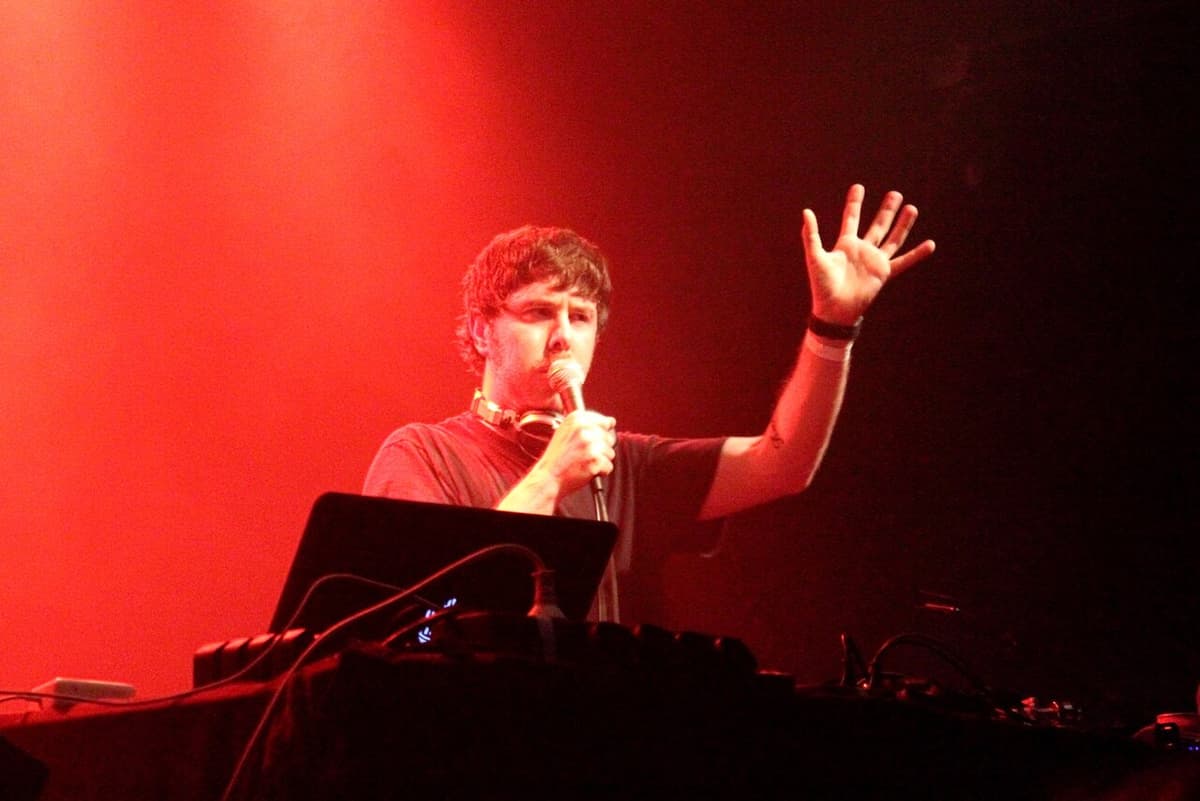
Alexey Fyodorovich Vishnya (Russian: Алексе́й Фёдорович Ви́шня; September 18, 1964, in Leningrad) is a musician, vocalist, poet, songwriter and sound engineer. Alexey Vishnya was born in Leningrad. His parents from the late 1950s to the early 1960s worked in Latin America, from where they brought an extensive collection of records, and later encouraged their son's passion for music by buying him equipment. At the age of 12, Vishnya became interested in cinema, as a result of which he enrolled in courses for projectionists and photojournalists at the House of Technology and Career Guidance, while attending an acoustics and sound recording circle, whose teacher was Andrei Tropillo in the spring of 1980. He made his debut as an independent sound engineer under the supervision of Tropillo at the turn of the 80s. He assisted Tropillo and Boris Grebenshchikov on the recording of the album 45.
Shares synth-pop, new wave, post-punk (subgenres); lo fi, analog warmth, bedroom production (production style)
Shares lo fi, analog warmth, drum machine (production style); urban night, late night, basement show (atmosphere)
Shares synth-pop, new wave (subgenres); breathy, deadpan, androgynous (vocal style)
Shares synth-pop, new wave, post-punk (subgenres); lo fi, analog warmth, bedroom production (production style)
Shares lo fi, analog warmth, bedroom production (production style); urban night, late night, basement show (atmosphere)
Shares synth-pop, new wave (subgenres); lo fi, analog warmth, bedroom production (production style)
Shares synth-pop, new wave (subgenres); urban night, late night, basement show (atmosphere)
Shares post-punk, synth-pop, new wave (subgenres); lo fi, analog warmth, tape saturation (production style)
Shares synth-pop, disco, new wave (subgenres); playful, mysterious, wistful (moods)
Shares androgynous, synth-pop, new wave, post-punk (signature)
Cassette uses generative AI to enrich its catalog. How we use AI →