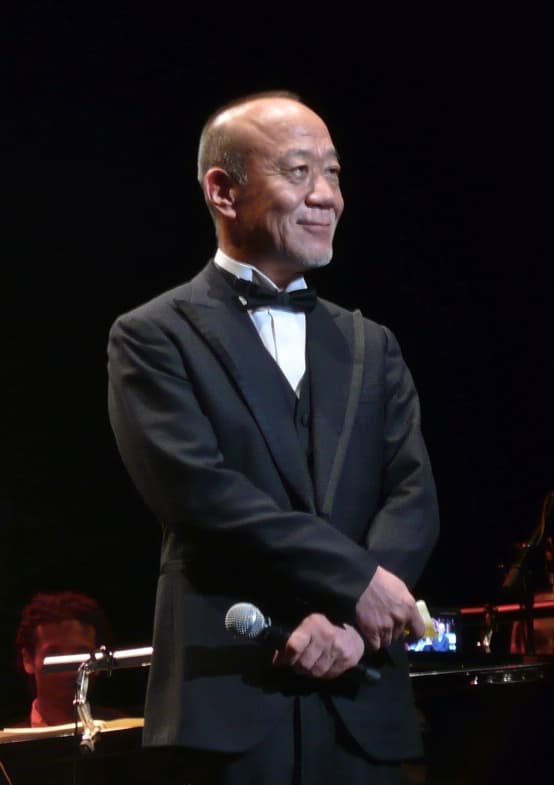
久石譲
Sweeping orchestral themes and delicate piano melodies that evoke a deep sense of wonder. The sound of childhood memories and cinematic magic.
Sweeping orchestral themes and delicate piano melodies that evoke a deep sense of wonder. The sound of childhood memories and cinematic magic.
Joe Hisaishi creates music that feels like a universal language of emotion. His sound is defined by a rare ability to balance grand, cinematic orchestration with moments of profound, solitary intimacy. Whether it is a soaring string section or a single, lonely piano line, his work carries a weight of 'mono no aware', a Japanese term for the pathos of things and the beauty of transience.
What truly distinguishes Hisaishi is his mastery of the pentatonic scale and minimalist structures. He takes the repetitive, hypnotic DNA of Western minimalism and infuses it with the melodic warmth of Japanese folk and European Romanticism. This creates a sound that is technically rigorous yet deeply accessible, capable of making a simple three-note motif feel like a life-changing revelation.
For those new to his work, the best entry point is his solo piano arrangements of his most famous film themes. These recordings strip away the orchestral grandeur to reveal the skeletal beauty of his compositions. It is the perfect soundtrack for reflection, creative work, or any moment where you need the world to feel a little more magical than it actually is.
Mamoru Fujisawa (Japanese: 藤澤 守, Hepburn: Fujisawa Mamoru; born December 6, 1950), known professionally as Joe Hisaishi (久石 譲, Hisaishi Jō), is a Japanese composer, musical director, conductor and pianist, known for over 100 film scores and solo albums dating back to 1981. Hisaishi's music has been known to explore and incorporate different genres, including minimalist, experimental electronic, Western classical, and Japanese classical. He has also worked as a music engraver and arranger. He has been associated with director and animator Hayao Miyazaki since 1984, having written scores for all but one of Miyazaki's films. He is also recognized for his music for filmmaker 'Beat' Takeshi Kitano, including A Scene at the Sea (1991), Sonatine (1993), Kids Return (1996), Hana-bi (1997), Kikujiro (1999), Brother (2000), and Dolls (2002), and for the video game series Ni no Kuni. He composed the score for the Oscar-winning film Departures (2008). He was a student of anime composer Takeo Watanabe.
Cassette uses generative AI to enrich its catalog. How we use AI →


