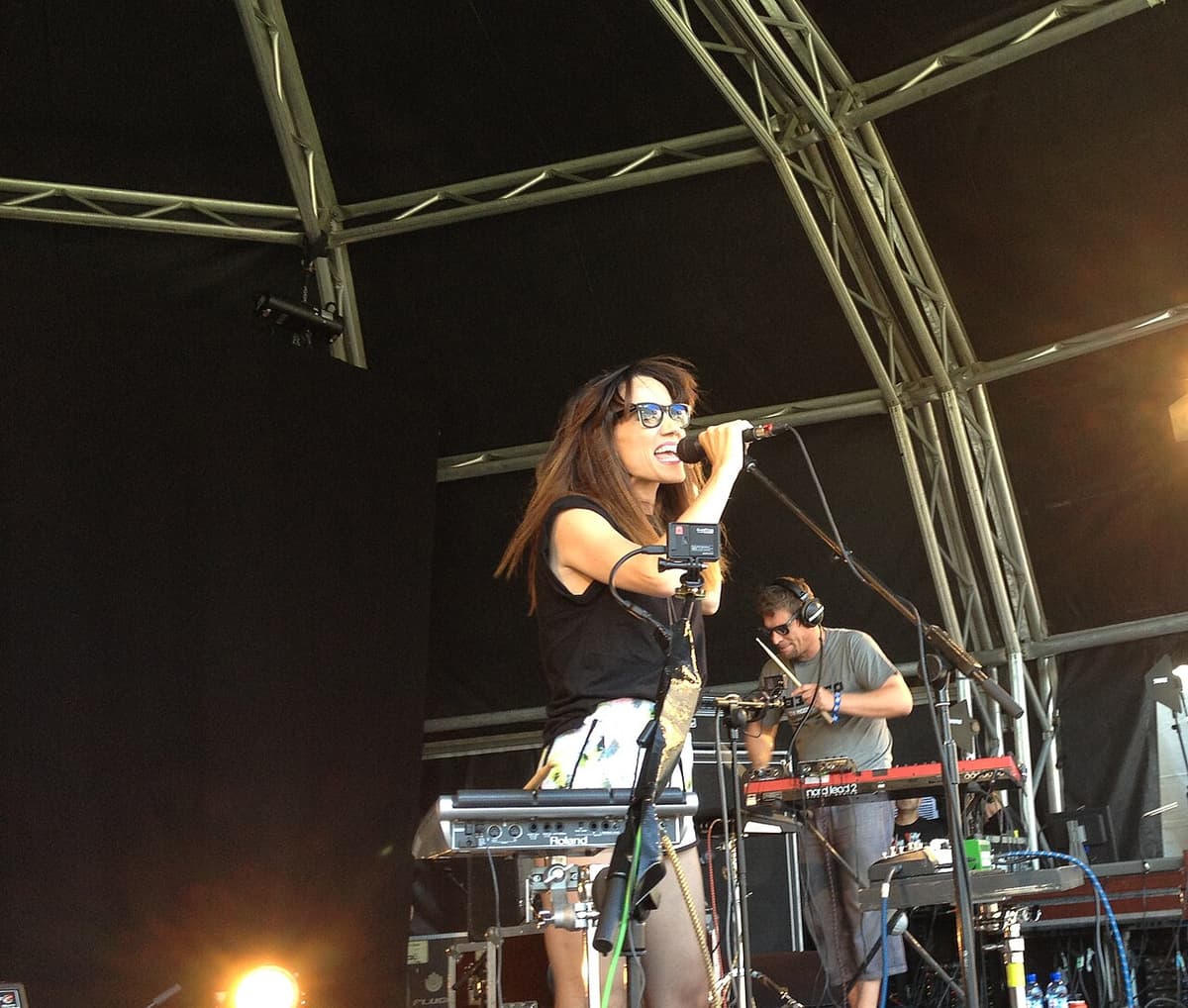
Zahara
Vibrant Spanish art-pop that shifts from delicate acoustic intimacy to aggressive, club-ready electronic catharsis. Raw, honest, and deeply atmospheric.
Vibrant Spanish art-pop that shifts from delicate acoustic intimacy to aggressive, club-ready electronic catharsis. Raw, honest, and deeply atmospheric.
Zahara’s music is a masterclass in emotional architecture, moving from the fragile whisper of a singer-songwriter to the crushing weight of industrial techno. Her sound is defined by a constant tension between the organic and the synthetic, where shimmering synths often mask lyrics of profound discomfort and radical honesty. It feels like a private conversation held in the middle of a crowded dancefloor.
What sets her apart is her fearless evolution. While her early work leaned into the 'indie-pop' label with acoustic guitars and sweet melodies, her recent output has embraced a darker, more abrasive palette. She uses electronic production not just as a backdrop, but as a weapon to emphasize themes of trauma, identity, and social critique, creating a sonic space that is both claustrophobic and liberating.
Start with the album 'PUTA' to experience her most potent and transformative work. It is a visceral journey that redefined her career, perfect for listeners who want their pop music to have teeth and a soul. If you prefer something more melodic and space-themed, 'Astronauta' offers a more accessible but equally polished entry point into her universe.
María Zahara Gordillo Campos (born 10 September 1983), better known simply as Zahara, is a Spanish singer-songwriter.
Shares indie pop, art pop, synth-pop (subgenres); vulnerable, defiant, brooding (moods)
Shares indie pop, art pop, synth-pop (subgenres); layered dense, studio polished (production style)
Shares vulnerable, defiant, brooding (moods); late night, urban night, solitude (atmosphere)
Shares indie pop, art pop, synth-pop (subgenres); layered dense, studio polished (production style)

Shares indie pop, art pop, chamber pop (subgenres); keys/synth, drum machine, acoustic guitar (instrumentation)
Shares art pop, chamber pop, synth-pop, whispered (signature)
Cassette uses generative AI to enrich its catalog. How we use AI →