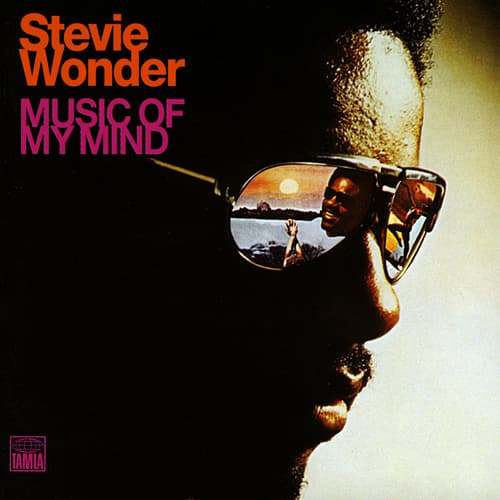
Music of My Mind
Stevie Wonder's breakthrough of total artistic freedom, built on pioneering TONTO synthesizer grooves, intimate multi-tracked vocals, and brilliant, lonely soul experiments.
Stevie Wonder's breakthrough of total artistic freedom, built on pioneering TONTO synthesizer grooves, intimate multi-tracked vocals, and brilliant, lonely soul experiments.
Creative liberation
A buzzing, hand-wired wall of synthesizers replaces the polished Motown house band, marking the exact boundary where a child prodigy became an independent auteur. By taking total control of the studio, he turned these early electronic experiments into deeply personal, multi-tracked soliloquies. You can feel the isolation in the warm, eccentric keyboard grooves, a solitary genius talking to himself through patch cables and clavinet keys. It is a loose, sometimes messy blueprint that traded radio-ready singles for a singular, psychedelic soul vision, permanently rewriting the rules of what a modern R&B album could dare to be.
A profound sense of solitude hangs over the entire performance, wrapping the listener in a solitary, self-contained space where the music feels like a private conversation with oneself.
Critics were largely positive, with a few more measured assessments.
Cassette uses generative AI to enrich its catalog. How we use AI →