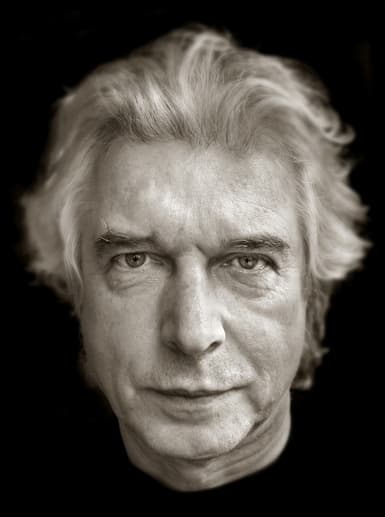
Boudewijn de Groot
Literary Dutch folk that moves from protest anthems to psychedelic dreamscapes. Rich baritone vocals wrapped in lush, baroque orchestral arrangements.
Literary Dutch folk that moves from protest anthems to psychedelic dreamscapes. Rich baritone vocals wrapped in lush, baroque orchestral arrangements.
Boudewijn de Groot is the definitive architect of the Dutch-language singer-songwriter tradition (Kleinkunst). Born in a concentration camp in 1944, his early life was marked by tragedy and displacement, themes that subtly inform the gravitas of his work.
Emerging in the mid-1960s, he initially channeled the French chanson style of Jacques Brel before evolving into a sophisticated folk-rock artist. His creative partnership with lyricist Lennaert Nijgh is legendary, comparable to the collaboration between Elton John and Bernie Taupin, where Nijgh provided the surreal, literary, and often provocative texts that De Groot set to music. His 1967 album 'Picknick' is a landmark of European psychedelia, while his 1970s work solidified his status as a national icon. Critically, he is revered for proving that the Dutch language could be used for complex, poetic pop music. His influence is foundational for every Dutch artist who followed, from the theatrical pop of Ramses Shaffy to the modern folk-pop of Acda en de Munnik. Even in his later years, he remained a vital force, transitioning into theater and literary translation while maintaining a catalog that remains a permanent fixture in the Dutch cultural consciousness.
Cassette uses generative AI to enrich its catalog. How we use AI →