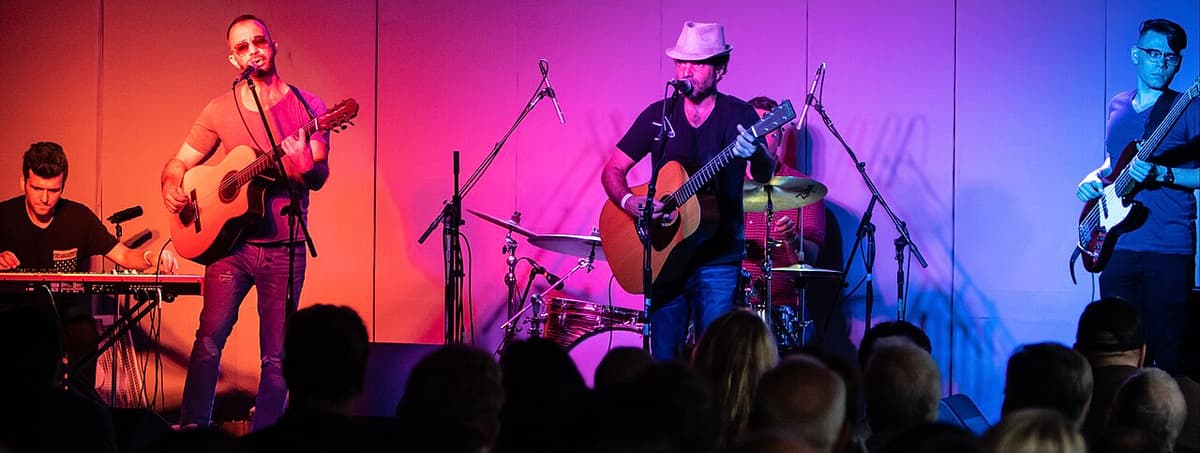
Burlap to Cashmere
High-velocity acoustic guitars meet Mediterranean folk rhythms. It is spiritual, kinetic, and deeply organic music for open roads and crowded rooms.
High-velocity acoustic guitars meet Mediterranean folk rhythms. It is spiritual, kinetic, and deeply organic music for open roads and crowded rooms.
Burlap to Cashmere sounds like a high-speed collision between a Greenwich Village folk circle and a Greek wedding celebration. The music is defined by a frantic, percussive energy that feels both ancient and immediate, anchored by acoustic guitars played with such intensity they sound like they might catch fire. There is a dusty, sun-drenched quality to the production that suggests a band playing in a room together, capturing a lightning-in-a-bottle chemistry that most studio acts lack.
What truly sets them apart is their rhythmic vocabulary. While their peers in the 90s contemporary Christian scene were leaning into post-grunge or polished pop, Burlap to Cashmere looked toward their heritage, incorporating complex flamenco-style flourishes and Mediterranean time signatures. Steven Delopoulos’s vocals carry a distinctive, slightly nasal grit reminiscent of a young Bob Dylan, but the harmonic arrangements and worldbeat percussion elevate the sound into something far more expansive and cinematic.
Start with their 1998 debut, 'Anybody Out There?'. It captures the band at their most explosive, blending spiritual yearning with technical virtuosity. It is the perfect entry point for anyone who loves the intimacy of folk but craves the rhythmic complexity of world music and the raw energy of a live performance.
Burlap to Cashmere is a contemporary Christian world music band formed in the 1990s by John Philippidis and Steven Delopoulos. Their music draws heavily on folk and world music influences, especially Greek folk music.
Shares chamber folk, folk rock, americana, bonfire (subgenre)
Shares folk rock, hand played, americana, bonfire (subgenre)
Shares folk rock, hand played, americana, bonfire (subgenre)
Shares mandolin, open field, folk rock, hand played (instrumentation)
Shares mandolin, open field, chamber folk, folk rock (instrumentation)
Cassette uses generative AI to enrich its catalog. How we use AI →