Cactus
High-octane blues rock with a sledgehammer rhythm section. Aggressive, overdriven, and loud enough to rattle the floorboards. For fans of heavy 70s grooves.
High-octane blues rock with a sledgehammer rhythm section. Aggressive, overdriven, and loud enough to rattle the floorboards. For fans of heavy 70s grooves.
Cactus sounds like a blues band that was fed a steady diet of jet fuel and heavy machinery. It is the sound of the 1970s transition from psychedelic blues into the raw power of heavy metal. The music is dominated by a rhythm section that refuses to stay in the background, featuring thunderous, distorted bass lines and aggressive, complex drumming that feels like it's constantly threatening to derail the song in the best way possible.
What truly distinguishes Cactus is their sheer velocity and muscularity. While their peers in the British blues boom often leaned into soul or psychedelia, Cactus doubled down on the 'hard' in hard rock. The interplay between Jim McCarty’s lightning-fast guitar work and Carmine Appice’s pioneering double-bass drumming created a template for what would eventually become speed metal and stoner rock, all while keeping one foot firmly in a greasy, boogie-woogie groove.
Start with their self-titled 1970 debut. It captures the original 'supergroup' lineup at their most feral, particularly on tracks like 'Parchman Farm' where the tempo is pushed to a breaking point. It is the essential document of a band that was too heavy for the hippies and too bluesy for the punks, occupying a singular space in rock history.
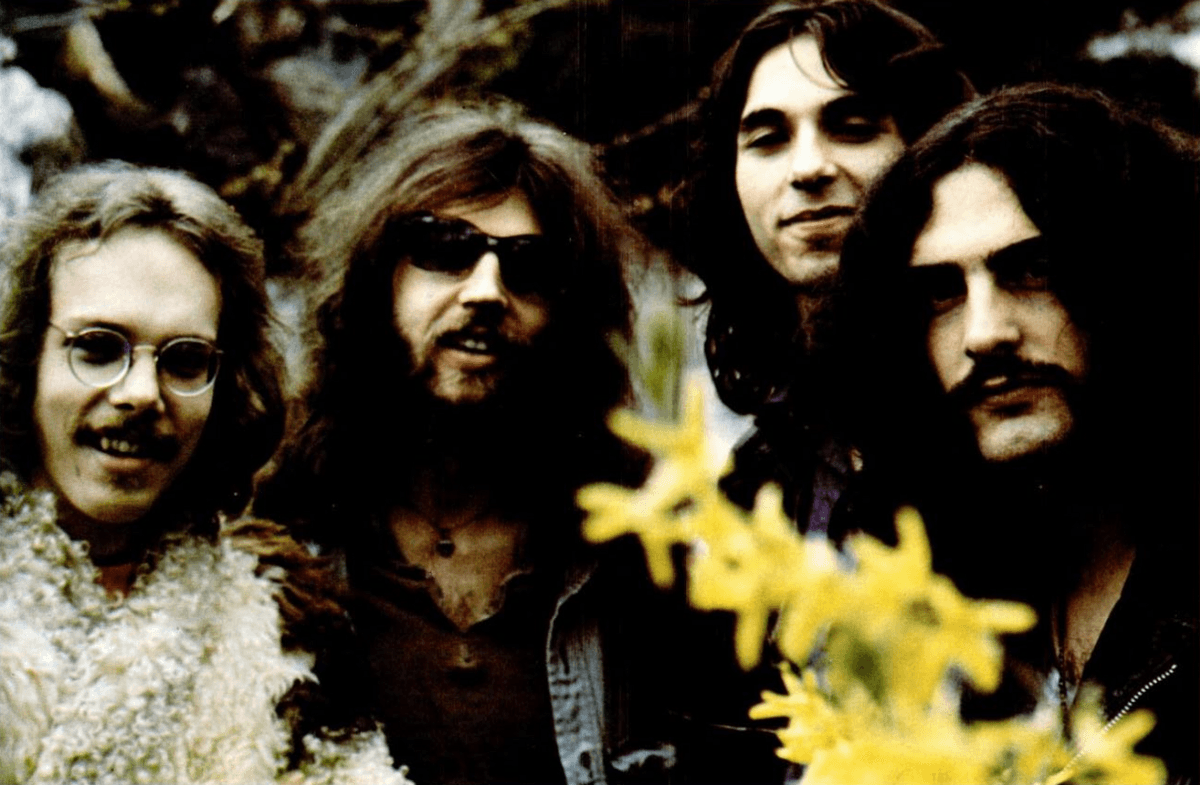
Cactus is an American rock band formed in 1969. The lineup of 1970 and 1971, consisting of bassist Tim Bogert, drummer Carmine Appice, guitarist Jim McCarty and singer Rusty Day, released three albums. A new lineup of Bogert, Appice, guitarist Werner Fritzschings, keyboardist Duane Hitchings on keyboards and singer Peter French released the band's fourth album in 1972. The band currently comprises Jimmy Kunes as lead singer, guitarist Paul Warren, drummer Appice, bassist Jimmy Caputo and Randy Pratt on harmonica.
Shares blues rock, hard rock, classic rock (subgenres); analog warmth, live recording, compressed loud (production style)
Shares blues rock, hard rock, classic rock (subgenres); analog warmth, live recording, compressed loud (production style)
Shares blues rock, hard rock, classic rock (subgenres); dive bar, basement show, road trip (atmosphere)
Shares blues rock, hard rock, classic rock (subgenres); energetic, rebellious, confident (moods)
Shares hard rock, blues rock, classic rock (subgenres); analog warmth, live recording, compressed loud (production style)
Shares blues rock, hard rock, classic rock (subgenres); dive bar, road trip, basement show (atmosphere)
Shares blues rock, hard rock, classic rock (subgenres); analog warmth, live recording, compressed loud (production style)
Shares blues rock, hard rock, classic rock (subgenres); dive bar, basement show, road trip (atmosphere)
Shares analog warmth, live recording, compressed loud (production style); raspy, intense, belting (vocal style)
Shares hard rock, blues rock, boogie-woogie (subgenres); raspy, intense, belting (vocal style)
Cassette uses generative AI to enrich its catalog. How we use AI →