Cradle of Filth
Theatrical extreme metal dripping with Victorian horror and cinematic orchestration. High-pitched screams meet lush gothic textures for a dark, operatic experience.
Theatrical extreme metal dripping with Victorian horror and cinematic orchestration. High-pitched screams meet lush gothic textures for a dark, operatic experience.
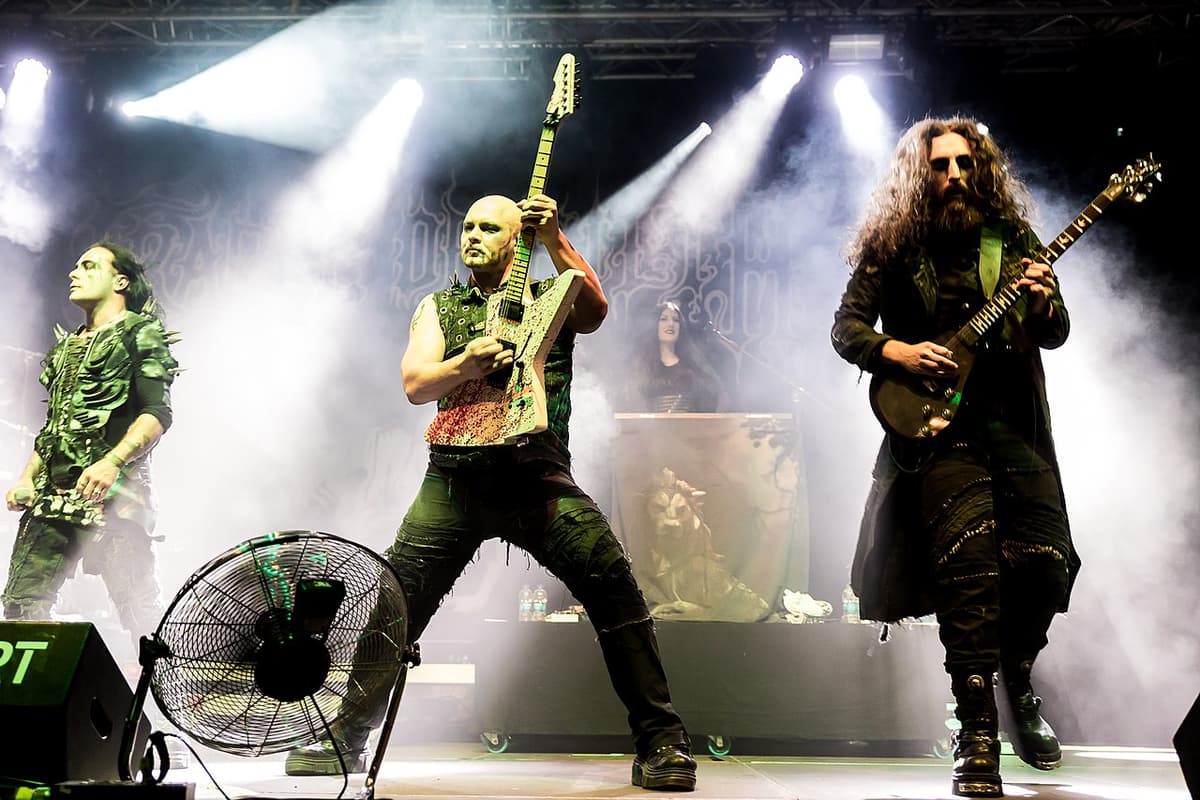
Cradle of Filth occupies a unique position as the primary bridge between underground extreme metal and mainstream gothic culture. Formed in 1991 in Suffolk, England, the band initially emerged from the second wave of black metal but quickly diverged by incorporating high-fidelity production, literary themes, and symphonic elements.
Their sound identity is defined by Dani Filth's distinctive vocal gymnastics, ranging from deep gutturals to piercing high-frequency shrieks, supported by complex, narrative-driven songwriting. Musically, they utilize a 'wall of sound' approach that layers blast beats and tremolo picking with cinematic keyboards and female backing vocals. Their career arc saw them peak in cultural visibility during the late 90s and early 2000s, moving from the raw 'The Principle of Evil Made Flesh' to the highly produced 'Nymphetamine'. Critically, they are often debated for their departure from 'true' black metal, yet they are respected for their technical proficiency and consistent commitment to a specific, high-concept aesthetic. They have influenced a generation of symphonic and gothic metal acts by proving that extreme music could possess a theatrical, commercial appeal without losing its dark core.
Shares cathedral, death metal, maximalist, choir/choral (signature)
Shares death metal, cathedral, forest, gravelly (subgenre)
Shares storytelling, falsetto, narrating, cathedral (signature)
Shares cathedral, death metal, choir/choral, gravelly (signature)
Shares cathedral, maximalist, choir/choral, midnight (signature)
Shares cathedral, maximalist, choir/choral, forest (signature)
Shares death metal, gravelly, midnight, fog (subgenre)
Cassette uses generative AI to enrich its catalog. How we use AI →