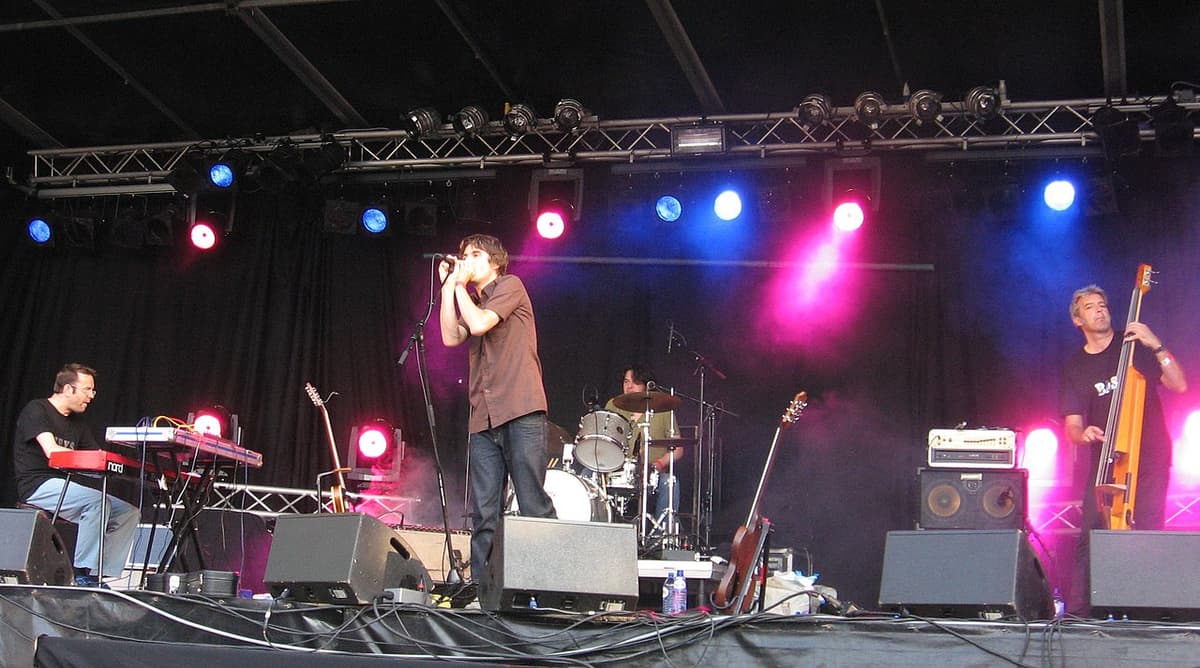
Destroyer
Destroyer, led by Dan Bejar, crafts sophisticated indie rock and chamber pop with abstract, poetic lyrics and an ever-evolving sound. His idiosyncratic vocals deliver enigmatic narratives over lush, d
Destroyer, led by Dan Bejar, crafts sophisticated indie rock and chamber pop with abstract, poetic lyrics and an ever-evolving sound. His idiosyncratic vocals deliver enigmatic narratives over lush, d
Destroyer, the project of Canadian songwriter Dan Bejar, is characterized by its fluid genre boundaries, predominantly rooted in indie rock and chamber pop, but frequently incorporating elements of art rock, synth-pop, and lo-fi. The core sonic signature is Bejar's idiosyncratic, often crooning or spoken-word vocals, delivering abstract, poetic, and highly literary lyrics.
Musically, the sound ranges from sparse, piano-driven ballads to lush, layered arrangements featuring prominent keys, guitars, bass, drums, and often a distinctive trumpet. Production varies significantly across albums, from early lo-fi recordings to later studio-polished, dynamic productions. Formed in 1995, Destroyer's career began with lo-fi home recordings like *We'll Build Them a Golden Bridge* (1996). The sound gradually evolved, incorporating a full backing band and studio production with *City of Daughters* (1998) and *Thief* (2000), which saw Bejar 'matching his grandiose, idiosyncratic vision to a showier sound.' Albums like *Destroyer's Rubies* (2006) solidified his indie rock standing, while *Kaputt* (2011) marked a significant stylistic shift towards sophisticated, '80s-inspired synth-pop and soft rock, achieving critical acclaim and broader recognition. Subsequent albums have continued this pattern of reinvention, from the more direct *Poison Season* (2015) to the synth-heavy *Have We Met* (2020) and *Labyrinthitis* (2022), demonstrating Bejar's stated goal to 'start from scratch every time.' Destroyer occupies a unique space within indie music, often seen as a 'musician's musician' due to Bejar's complex songwriting and artistic integrity. While originating from the Vancouver indie scene, his work transcends regional labels, aligning more broadly with artists known for lyrical depth and musical adventurousness. He is also a member of The New Pornographers, which offers a more accessible, power-pop counterpoint to his main project. Destroyer's influence is more subtle than overt, inspiring artists who prioritize lyrical sophistication and a willingness to experiment with genre. Bejar's lyrical style draws comparisons to poets and literary figures as much as to fellow songwriters. Musically, his work has been likened to David Bowie's chameleonic shifts, Scott Walker's dramatic crooning, and the sophisticated arrangements of '70s art rock and '80s new wave. Contemporaries like Stephen Malkmus (Pavement) share a similar wry, intellectual approach to indie rock, while artists like The Divine Comedy or Belle and Sebastian might share some chamber pop sensibilities. Critically, Destroyer is highly regarded for Bejar's distinctive songwriting, lyrical prowess, and consistent artistic evolution. Albums frequently receive high praise for their ambition, wit, and musical craftsmanship. While some early work was noted for its deliberate lo-fi aesthetic, later albums are lauded for their refined production and intricate arrangements. Bejar's 'idiosyncratic vocals' are often cited as a defining, if sometimes polarizing, characteristic. Destroyer's discography is a treasure trove for collectors due to its breadth and stylistic shifts. Early, limited releases, especially the cassette *Ideas for Songs*, are highly sought after. Vinyl pressings of critically acclaimed albums like *Kaputt* and *Destroyer's Rubies* are popular. The consistent reinvention means each album offers a distinct sonic experience, making a complete collection a journey through a singular artist's evolving vision.
Cassette uses generative AI to enrich its catalog. How we use AI →