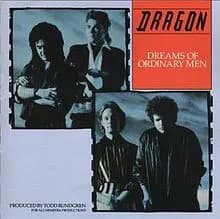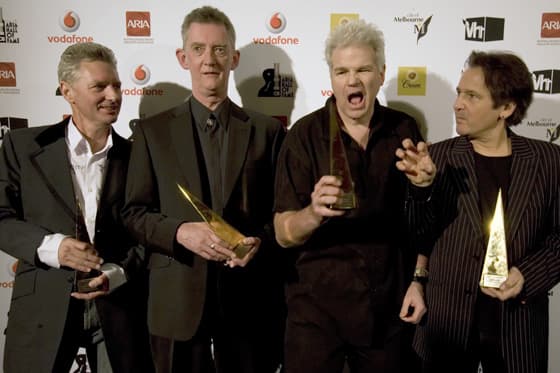
Dragon
Sun-soaked Australasian rock with shimmering synths and anthemic hooks. The sound of a coastal road trip and the lingering heat of a summer night.
Sun-soaked Australasian rock with shimmering synths and anthemic hooks. The sound of a coastal road trip and the lingering heat of a summer night.
Dragon captures the quintessential spirit of Australasian rock, blending the grit of the pub circuit with a sophisticated pop sensibility. Their music feels like a long summer afternoon that refuses to end, characterized by Marc Hunter's charismatic, slightly dangerous vocal delivery and Paul Hewson's melodic keyboard textures. It is music that is equally at home on a stadium stage or a car radio during a beach run.
What truly sets them apart is their ability to pivot from the progressive, experimental leanings of their early New Zealand days into the tight, new wave-influenced pop of the 1980s. They mastered the art of the 'dark pop' song, where catchy, radio-friendly melodies often mask lyrics of longing, addiction, or urban restlessness. This tension gives their hits a lasting emotional weight that transcends simple nostalgia.
To understand their legacy, start with the 'Sunshine' or 'O Zambezi' albums for that classic 70s rock feel, then move to 'Body and the Beat' to hear their flawless transition into 80s synth-pop. Their catalog is a masterclass in evolution, surviving tragedy and changing trends while maintaining a core identity of melodic excellence.
Dragon are a New Zealand rock band which was formed in Auckland in January 1972, and, from 1975, based in Sydney, New South Wales, Australia. The band was originally fronted by singer Graeme Collins, but rose to fame with singer Marc Hunter and is currently led by his brother, bass player and co-founder Todd Hunter. Their name "Dragon" came from a consultation of I Ching cards by Collins. The group performed, and released material, under the name Hunter in Europe and the United States during 1987. Keyboard player Paul Hewson wrote or co-wrote most of the group's 1970s hits: "April Sun in Cuba" peaked at No. 9 in New Zealand and No. 2 in Australia; "Are You Old Enough?" reached No. 6 in New Zealand and No. 1 in Australia in 1978; and "Still in Love with You" reached No. 35 and No. 27 in each country respectively that same year. Later hits, from when the band re-grouped in the 1980s, were written by other band members, often working with outside associates: The Hunter brothers, with Todd's partner, Johanna Pigott, wrote "Rain", a No. 2 hit in 1983, while other, more minor hits were written by the Hunters and/or Alan Mansfield, frequently in collaboration with any combination of Pigott, Mansfield's partner Sharon O'Neill, Marc Hunter's partner Wendy Hunter, or producers Todd Rundgren and David Hirschfelder. Dragon has endured tragedy, adversity and notoriety, and three band members have died from drug-related causes. Problems began soon after the band's arrival in Sydney in late 1975, when all of their equipment was stolen. Several months later, in 1976, drummer Neil Storey died of a heroin overdose. The following decade, in 1985, Paul Hewson died from a drug overdose. Marc Hunter died from smoking-related throat cancer in 1998. Several members of the group including Hewson and Marc Hunter were heavy heroin users during the band's heyday and the Stewart Royal Commission (1980–1983) which investigated the Mr. Asia drug syndicate obtained evidence that Dragon members were clients. Two members were involved in a serious car crash in 1977, when Paul Hewson's neck was in a brace as well as having a broken arm and Robert Taylor needed plastic surgery, and Hewson also suffered from debilitating scoliosis and arthritis, the pain of which reportedly contributed to his heroin use. The band also undertook a famously disastrous 1978 tour of the US, supporting Johnny Winter, which ended when Marc Hunter abused a Texan audience as "faggots" and the band were pelted off stage, while Winter's band were said to have taken bets about how long it would be before Hunter was shot. On 1 July 2008, the Australian Recording Industry Association (ARIA) recognised the Auckland-formed band's iconic status in its country by inducting Dragon into the ARIA Hall of Fame.
Shares pop rock, new wave, art rock (subgenres); nostalgic, confident, bittersweet (moods)
Shares new wave, pop rock, art rock (subgenres); analog warmth, studio polished, reverb heavy (production style)
Shares analog warmth, studio polished, reverb heavy (production style); pop rock, new wave (subgenres)
Shares new wave, pop rock, progressive rock (subgenres); analog warmth, studio polished (production style)
Shares studio polished, analog warmth, layered dense (production style); pop rock, new wave, art rock (subgenres)
Shares pop rock, new wave, art rock (subgenres); studio polished, analog warmth, layered dense (production style)

Shares studio polished, analog warmth, layered dense (production style); pop rock, new wave, art rock (subgenres)
Shares art rock, pop rock, progressive rock (subgenres); studio polished, analog warmth, layered dense (production style)
Shares studio polished, analog warmth, layered dense (production style); pop rock, new wave (subgenres)
Shares analog warmth, studio polished, layered dense (production style); pop rock, new wave, art rock (subgenres)
Shares pop rock, summer, new wave, art rock (signature)
Cassette uses generative AI to enrich its catalog. How we use AI →