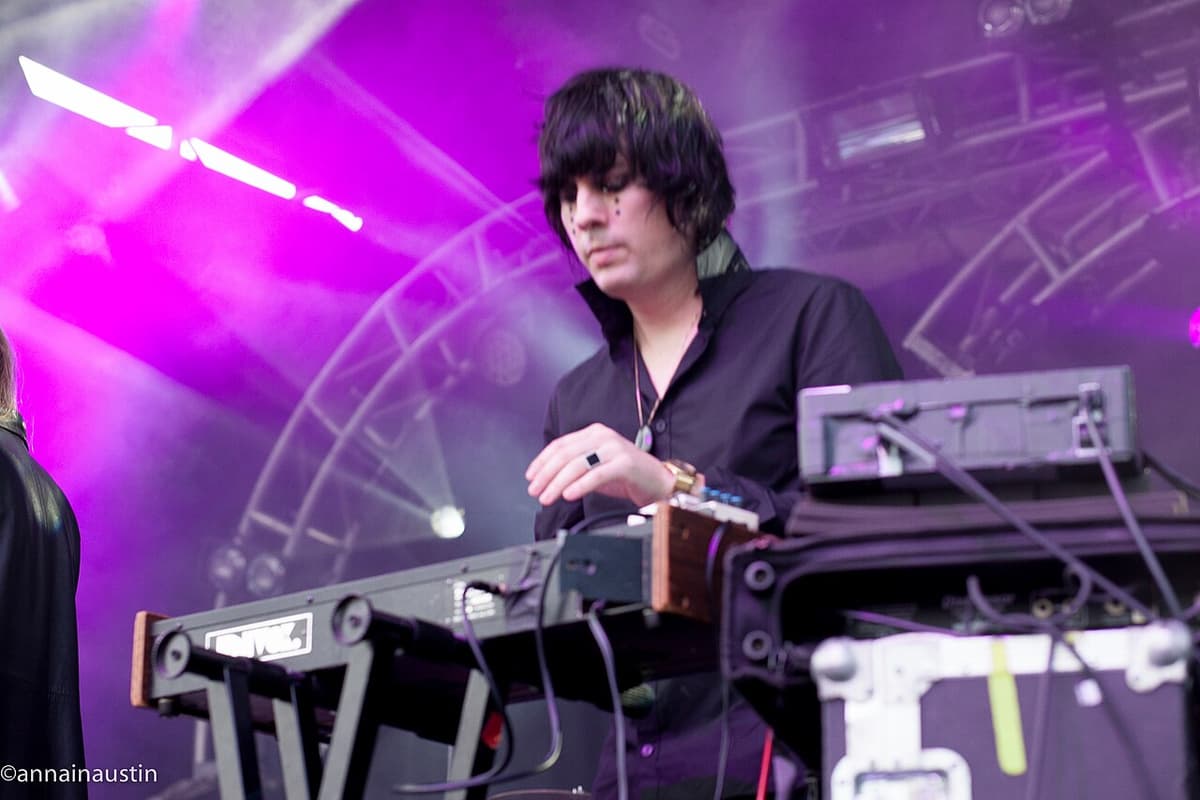
Johnny Jewel
Smeared analog synths and noir-soaked melodies that feel like a lonely drive through a neon-lit city. Pure cinematic atmosphere for late-night introspection.
Smeared analog synths and noir-soaked melodies that feel like a lonely drive through a neon-lit city. Pure cinematic atmosphere for late-night introspection.
Johnny Jewel creates music that feels like the memory of a film you never actually saw. It is deeply rooted in the aesthetic of 1980s synth-pop and Italian disco, but stripped of its dancefloor urgency and replaced with a heavy, humid sense of longing. The sound is defined by warm analog oscillators, drifting tape delays, and a pervasive sense of nocturnal mystery that suggests a world of rain-slicked streets and flickering neon.
What sets Jewel apart is his obsessive commitment to vintage hardware and the specific 'Italians Do It Better' production house style. He favors imperfection, allowing the natural hiss of tape and the slight tuning drifts of old synthesizers to provide a tactile, human quality to electronic music. His work often blurs the line between a pop song and a film score, focusing on mood and texture over traditional structure.
Start with 'Digital Rain' for a masterclass in his solo ambient-electronic style, or dive into 'Windswept' to hear the jazzier, more Lynchian side of his compositions. These albums serve as the perfect entry point for anyone who loves the atmospheric tension of modern noir cinema.
Johnny Jewel (born John David Padgett; May 31, 1974) is an American musician, record producer, composer, and visual artist. He is a multi-instrumentalist who is known for using all-analog equipment. Jewel has been recording and releasing material since the mid-1990s. Born in Houston, Jewel mainly began recording music in Portland, Oregon in 1996 after forming the band Glass Candy with vocalist Ida No. Initially boasting a no wave-influenced sound, the band evolved into an electronic-based duo featuring elements of Italo disco. In 2006, Jewel founded the independent Portland-based record label Italians Do It Better, which features an array of artists and groups that produce similar disco, electronic, and synth-based music. Among the label's artists are Glass Candy, Chromatics and Desire, all of whom Jewel wrote, recorded, and performed with. With Jewel's involvement, Chromatics achieved considerable commercial success with the album Night Drive (2007), and their music was later featured in Nicolas Winding Refn's film Drive (2011). In addition to Drive, Jewel also scored Refn's film Bronson (2008), as well as Ryan Gosling's directorial debut, Lost River (2015). Additionally, between 2014 and 2018, Jewel released three solo albums, largely consisting of instrumental material.
Shares synthwave, ambient techno, downtempo (subgenres); analog warmth, reverb heavy, minimalist (production style)
Shares synthwave, ambient techno, downtempo (subgenres); analog warmth, minimalist, reverb heavy (production style)
Shares synthwave, downtempo, ambient techno (subgenres); mysterious, melancholic, nostalgic (moods)
Shares synthwave, darkwave, downtempo (subgenres); urban night, rainy day, fog (atmosphere)
Shares darkwave, synthwave, downtempo (subgenres); mysterious, melancholic, nostalgic (moods)
Shares synthwave, downtempo, ambient techno (subgenres); mysterious, melancholic, nostalgic (moods)
Shares ambient techno, downtempo, darkwave (subgenres); absent, whispered, processed (vocal style)
Shares absent, whispered, processed (vocal style); downtempo, ambient techno, synthwave (subgenres)
Shares synthwave, ambient techno, downtempo (subgenres); analog warmth, minimalist, tape saturation (production style)
Shares synthwave, downtempo, ambient techno (subgenres); analog warmth, reverb heavy, tape saturation (production style)
Shares synthwave, nostalgic, tape saturation, ambient techno (subgenre)
Shares synthwave, darkwave, tape saturation, ambient techno (subgenre)
Cassette uses generative AI to enrich its catalog. How we use AI →


