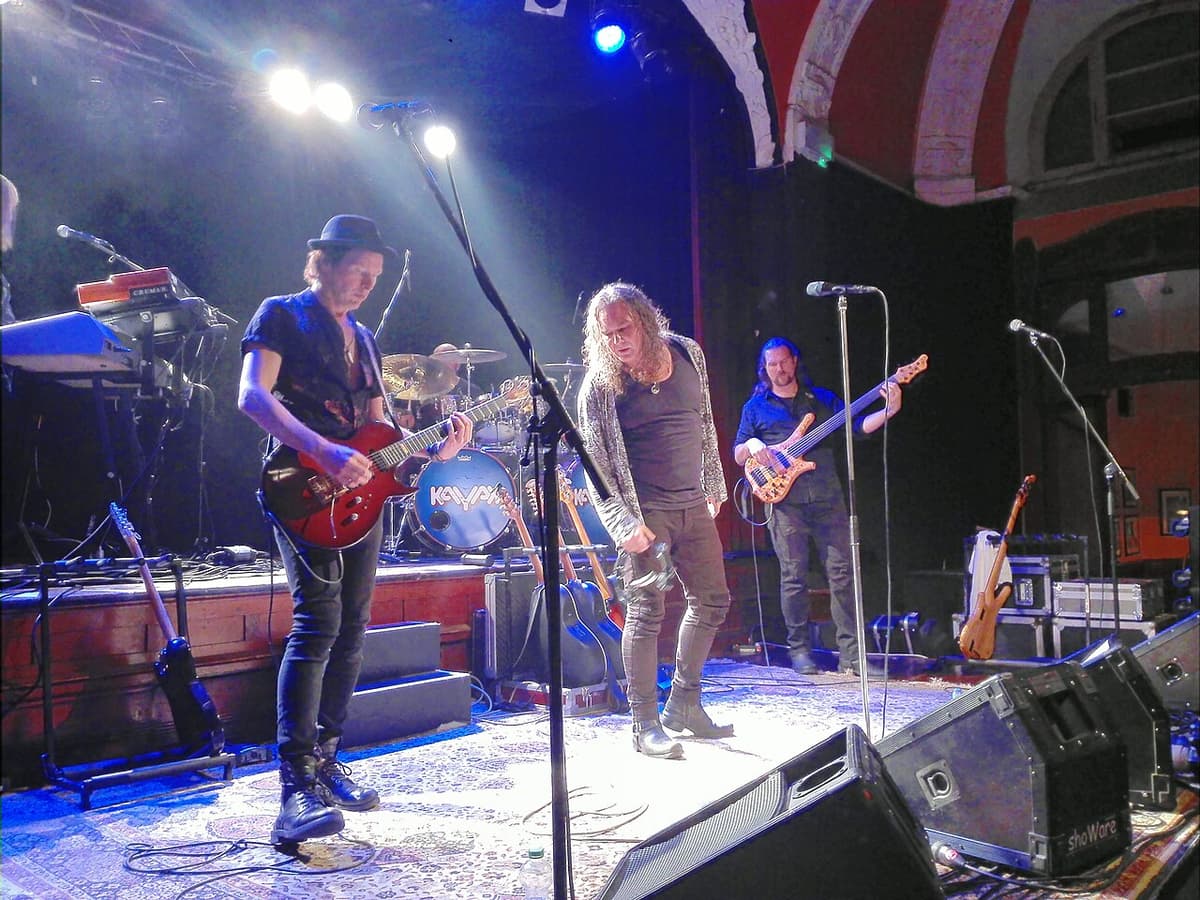
Kayak
Orchestral rock with a theatrical heart and a pop sensibility. Melodic, keyboard-driven Dutch prog that balances grand concept albums with soaring, radio-ready hooks.
Orchestral rock with a theatrical heart and a pop sensibility. Melodic, keyboard-driven Dutch prog that balances grand concept albums with soaring, radio-ready hooks.
Kayak sounds like the intersection of a classical conservatory and a 1970s rock arena. Their music is defined by the elegant, piano-led compositions of Ton Scherpenzeel, which provide a sophisticated foundation for soaring electric guitar leads and lush, multi-layered vocal harmonies. It is music that feels expensive and meticulously crafted, favoring melodic clarity over the chaotic experimentation often found in their prog-rock peers.
What truly sets them apart is their ability to pivot between sprawling rock operas about Merlin or Nostradamus and perfectly polished pop-rock gems. There is a distinct European stateliness to their sound, a certain 'Dutch school' of symphonic rock that feels warmer and more accessible than the brittle complexity of British counterparts. The interplay between the keyboards and the drums creates a rhythmic drive that feels purposeful and narrative, as if every song is a scene in a larger play.
Start with 'Phantom of the Night' to hear them at their commercial and melodic peak, then dive into 'Merlin' or 'Close to the Fire' for the full-scale symphonic experience. It is the perfect discovery for listeners who want the grandeur of Genesis or Alan Parsons Project but with a stronger emphasis on classical piano and theatrical storytelling.
Kayak was a Dutch rock band formed by Ton Scherpenzeel and Pim Koopman in Hilversum in 1972. In 1973, their debut album See See the Sun was released, including three hit singles. Their popularity was mainly in the Netherlands, with their top hit "Ruthless Queen" reaching No. 6 on the Dutch charts in March 1979. They disbanded in 1982 after releasing nine albums. In 1999, the band was asked to perform on the TV show De Vrienden van Amstel Live. After this performance, they decided to reform, and released nine further studio albums and three live albums.
Shares triumphant, melancholic, contemplative (moods); progressive rock, art rock (subgenres)
Shares progressive rock, art rock (subgenres); orchestral arrangement, studio polished, layered dense (production style)
Shares progressive rock, art rock (subgenres); harmonized, gentle (vocal style)
Shares progressive rock, art rock (subgenres); orchestral arrangement, studio polished, layered dense (production style)
Shares orchestral arrangement, studio polished, layered dense (production style); progressive rock, art rock (subgenres)
Shares triumphant, melancholic, contemplative (moods); orchestral arrangement, studio polished, layered dense (production style)
Shares progressive rock, art rock, pop rock (subgenres); orchestral arrangement, studio polished, layered dense (production style)
Shares progressive rock, art rock, baroque pop (subgenres); orchestral arrangement, studio polished, layered dense (production style)
Shares orchestral arrangement, studio polished, layered dense (production style); triumphant, melancholic, contemplative (moods)
Shares progressive rock, art rock (subgenres); harmonized, gentle (vocal style)
Shares symphonic rock, progressive rock, library, cathedral (signature)
Shares piano, baroque pop, progressive rock, library (signature)
Cassette uses generative AI to enrich its catalog. How we use AI →


