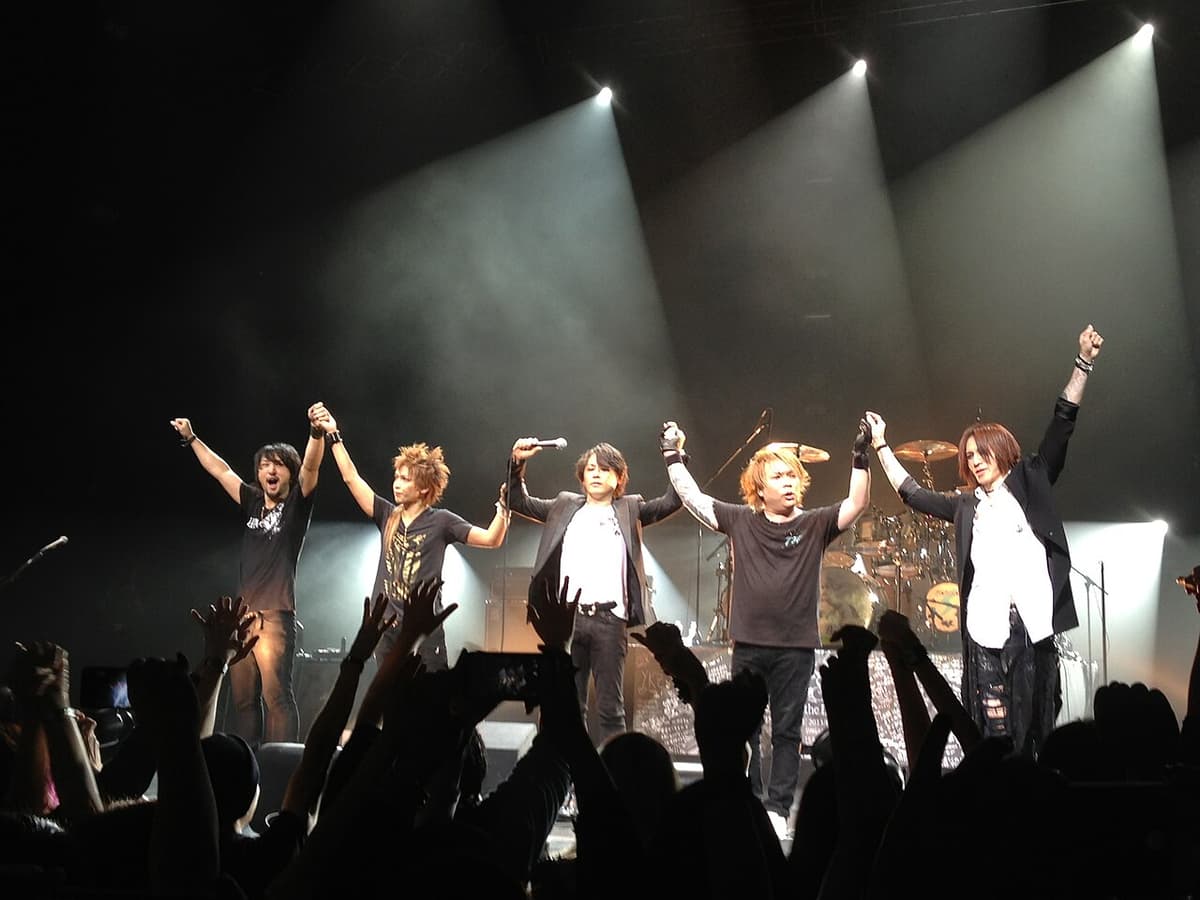
LUNA SEA
Theatrical vocals meet interlocking guitar textures and a locked-in rhythm section. High-drama Japanese rock that masters the space between silence and explosion.
Theatrical vocals meet interlocking guitar textures and a locked-in rhythm section. High-drama Japanese rock that masters the space between silence and explosion.
Luna Sea sounds like the intersection of gothic romance and technical precision. Their music is built on a foundation of driving, melodic basslines and a dual-guitar attack that favors intricate, shimmering arpeggios over simple power chords. The vocals are undeniably operatic, characterized by a rich vibrato and a dramatic delivery that can shift from a gentle whisper to an arena-filling belt in a single breath.
What truly sets them apart is their command of dynamics. They are masters of the 'stop-start' technique, using sudden silences to create a sense of tension and mystery before launching into soaring, melodic choruses. Unlike many of their contemporaries who relied on raw aggression, Luna Sea brought a sophisticated, almost progressive sensibility to rock, incorporating violins and complex chord voicings that give their sound a 'fantastical' or 'lunar' quality.
For those new to the band, Mother is the essential starting point. It perfectly captures their peak mid-90s sound, balancing dark, atmospheric textures with some of the most iconic melodies in Japanese rock history. It is an album that feels both massive and intimate, ideal for late-night listening when you want music that feels as large as the night sky.
Luna Sea (stylized as LUNA SEA) is a Japanese rock band formed in Kanagawa Prefecture in 1986. Due to the use of makeup and costumes early in their career and their widespread popularity, they are considered one of the most successful and influential bands in the visual kei movement. Throughout the mid-1990s they used significantly less makeup, and after a one-year break in 1997, came back with a more mainstream alternative rock style and toned down their on-stage attire. They disbanded in 2000. In 2003, HMV ranked Luna Sea at number 90 on their list of the 100 most important Japanese pop acts. Initially founded in 1986, by bassist J and rhythm guitarist Inoran while in high school, the band was originally called Lunacy. In 1989 they recruited lead guitarist Sugizo, drummer Shinya and vocalist Ryuichi, a lineup that remained the same until Shinya's death in February 2026. They released a few demo tapes prior to renaming themselves Luna Sea and releasing their self-titled debut album in 1991. The band achieved their breakthrough success with a sold-out tour in 1991, which helped them get a contract with MCA Victor, and with the release of their second album Image (1992), which reached number nine on the Oricon music chart. Following the critically acclaimed albums Eden (1993), Mother (1994) and Style (1996), the band switched to Universal in 1998 and released their best-selling studio album, Shine. In late 2000, after their seventh studio album Lunacy, Luna Sea disbanded. Luna Sea reunited for a one-off reunion concert in 2007 at the Tokyo Dome, and again in 2008 for the hide memorial summit. In 2010 the group officially reunited and held a world tour. Three years later they released their first new album in thirteen years, A Will. Their ninth album, Luv, followed four years later in 2017. At the end of 2019, their tenth album Cross, co-produced by Steve Lillywhite, became their first to top Billboard Japan.
Shares alternative rock, hard rock, post-punk (subgenres); layered dense, reverb heavy, studio polished (production style)
Shares alternative rock, progressive rock, art rock (subgenres); reverb heavy, layered dense, studio polished (production style)
Shares alternative rock, progressive rock, hard rock (subgenres); layered dense, dynamic range, studio polished (production style)
Shares alternative rock, progressive rock, art rock (subgenres); mysterious, intense, melancholic (moods)
Shares layered dense, reverb heavy, dynamic range (production style); alternative rock, progressive rock, art rock (subgenres)
Shares alternative rock, progressive rock, hard rock (subgenres); layered dense, dynamic range, studio polished (production style)
Shares alternative rock, hard rock, art rock (subgenres); studio polished, reverb heavy, layered dense (production style)
Shares layered dense, reverb heavy, dynamic range (production style); alternative rock, progressive rock, art rock (subgenres)
Shares alternative rock, progressive rock, hard rock (subgenres); layered dense, reverb heavy, studio polished (production style)
Shares alternative rock, art rock, progressive rock (subgenres); studio polished, dynamic range, layered dense (production style)
Shares progressive rock, dynamic range, hard rock, art rock (subgenre)
Shares progressive rock, electric guitar, dynamic range, hard rock (subgenre)
Cassette uses generative AI to enrich its catalog. How we use AI →


