Organectomy is a cornerstone of the modern Slamming Brutal Death Metal (SBDM) movement, originating from Christchurch, New Zealand. Formed in 2010, they have evolved from a regional act into an international representative of the 'Slam' subgenre, known for integrating high-production values with extreme sonic aggression.
Their sound identity is defined by 'the slam' - a mid-tempo, chromatic, palm-muted riffing style - interspersed with technical death metal flourishes and ultra-low guttural vocals. Unlike the raw, lo-fi origins of the genre, Organectomy utilizes a 'hi-fi' approach, with triggered drums and compressed, high-gain guitar tones that emphasize clarity and impact. Their career arc shows a steady progression toward conceptual depth, particularly on 'Existential Disconnect,' which moved away from standard gore tropes toward cosmic and philosophical nihilism. They occupy a vital space in the 'Slam Worldwide' era, bridging the gap between the underground brutality of bands like Abominable Putridity and the more structured, professional touring acts of the death metal mainstream. Critical consensus highlights their rhythmic tightness and the sheer physical power of their live performances.


Shares gravelly, sludge metal, death metal, explosive_bursts (signature)
Shares gravelly, sludge metal, compressed_loud, death metal (signature)
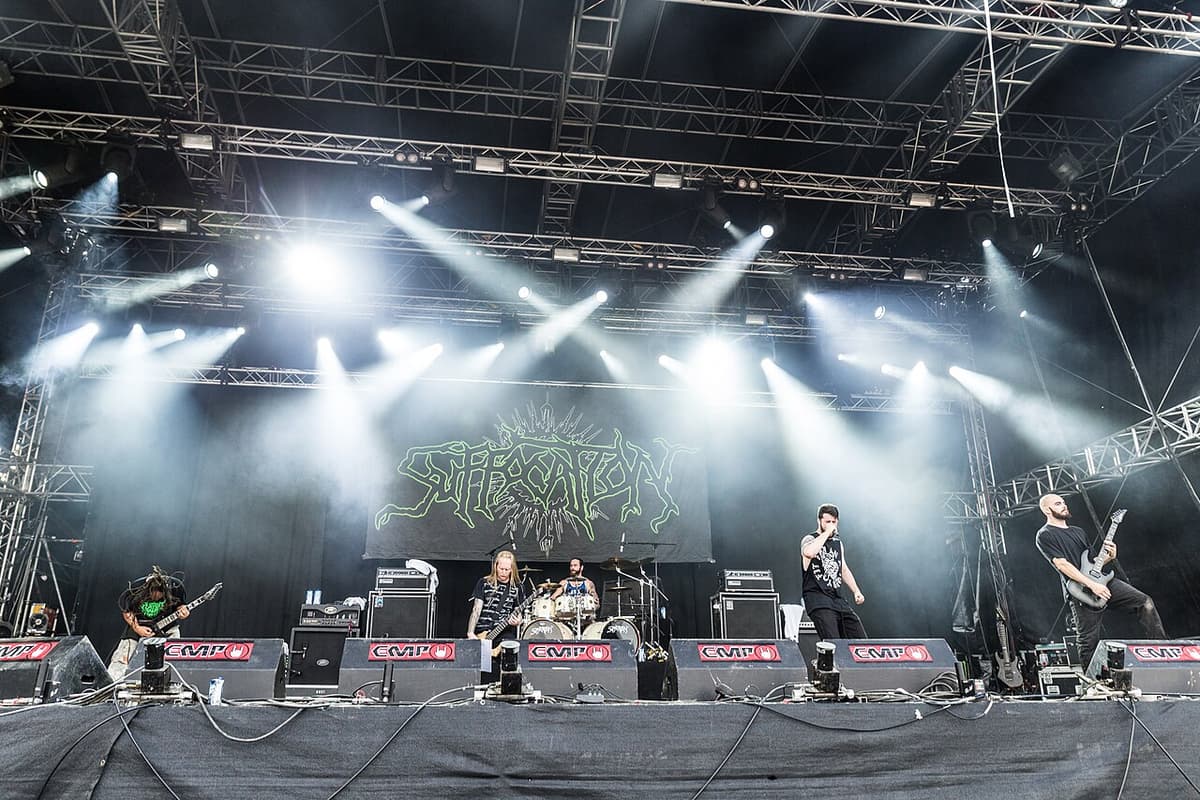
Shares sludge metal, death metal, explosive_bursts, gravelly (subgenre)
Shares sludge metal, death metal, explosive_bursts, gravelly (subgenre)
Shares sludge metal, death metal, explosive_bursts, forest (subgenre)
Shares gravelly, sludge metal, death metal, explosive_bursts (signature)
Shares death metal, explosive_bursts, gravelly, aggressive (subgenre)
Shares sludge metal, death metal, explosive_bursts, gravelly (subgenre)
Shares visceral, sludge metal, death metal, forest (signature)
Cassette uses generative AI to enrich its catalog. How we use AI →