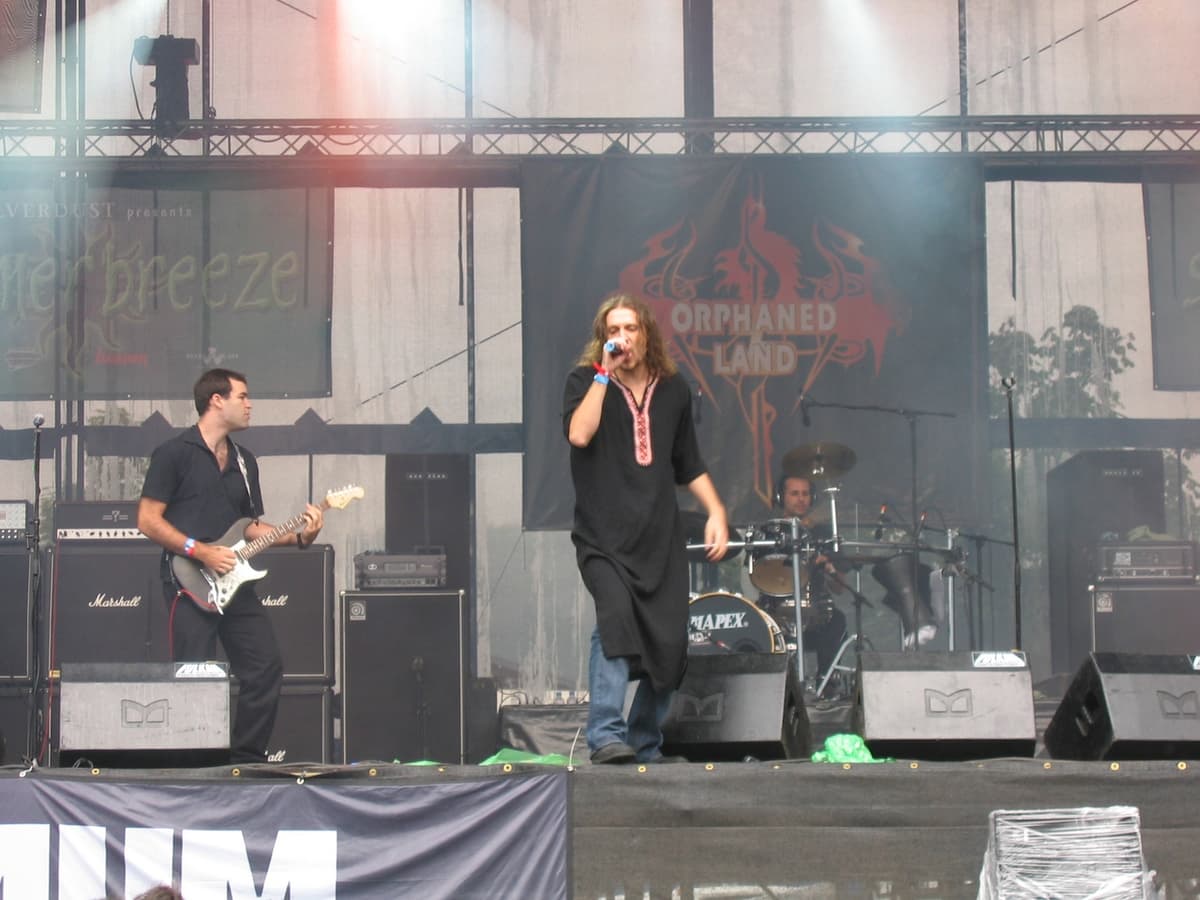
Orphaned Land
Heavy metal meeting Middle Eastern folk in a grand, cinematic collision. Intricate bouzouki melodies and choral chants built for unity and epic storytelling.
Heavy metal meeting Middle Eastern folk in a grand, cinematic collision. Intricate bouzouki melodies and choral chants built for unity and epic storytelling.
Orphaned Land sounds like a massive, ancient tapestry being rewoven with electric cables. It is a dense, sun-drenched collision of heavy metal thunder and the intricate, microtonal melodies of the Middle East. You will hear the crunch of distorted guitars alongside the bright, percussive snap of the bouzouki and saz, all underpinned by a rhythm section that feels as much like a tribal celebration as it does a headbanging metal show.
What makes them truly distinctive is their commitment to cultural synthesis. They don't just 'add' folk instruments; they build their entire harmonic language around Mizrahi and Maghrebi traditions. The vocals shift seamlessly between Kobi Farhi's warm, narrating baritone, traditional Hebrew piyyutim, and the soaring, ethereal ululations of guest female vocalists. It is music that feels deeply rooted in the earth and the sand, yet aims for something celestial and universal.
Start with 'All Is One' for their most polished and anthemic work, where the message of peace is most direct. If you want to hear the raw, progressive complexity that defined their rise, dive into 'Mabool', a concept album that remains a high-water mark for the 'Oriental Metal' subgenre they helped invent.
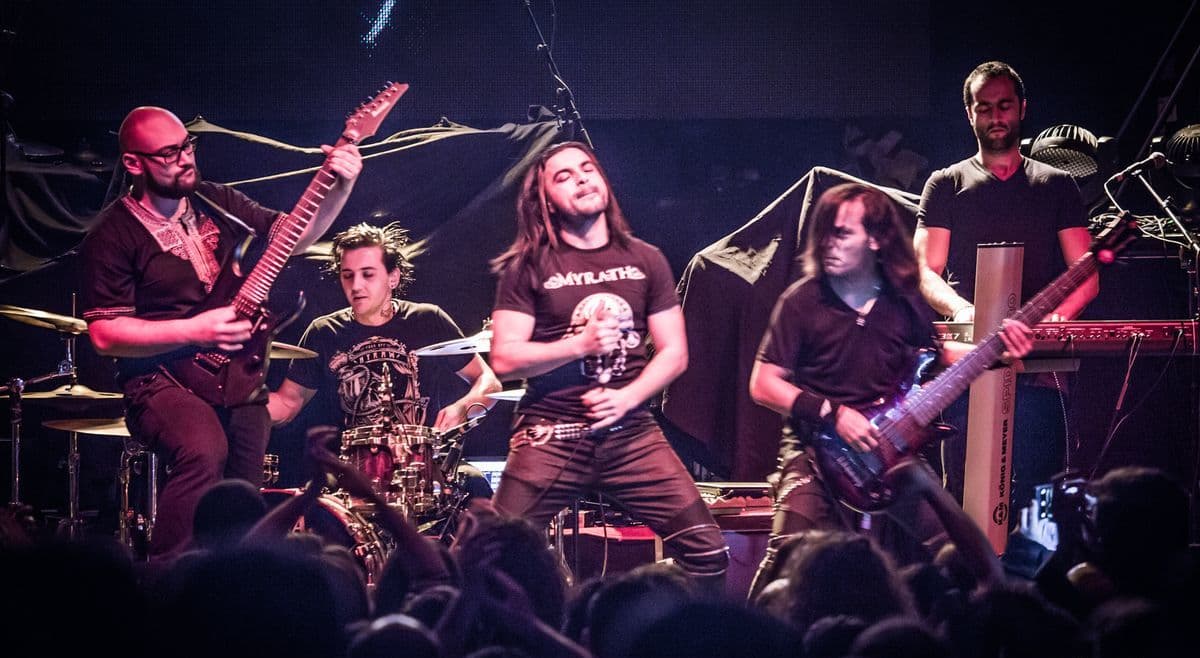
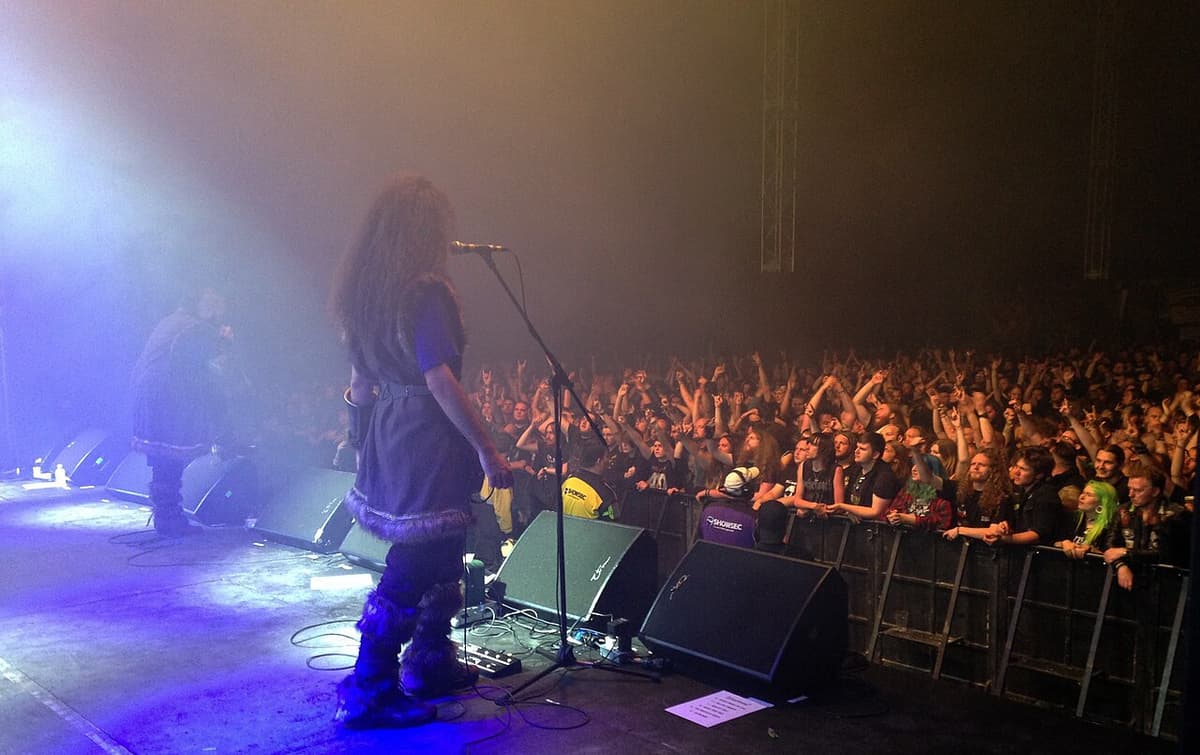
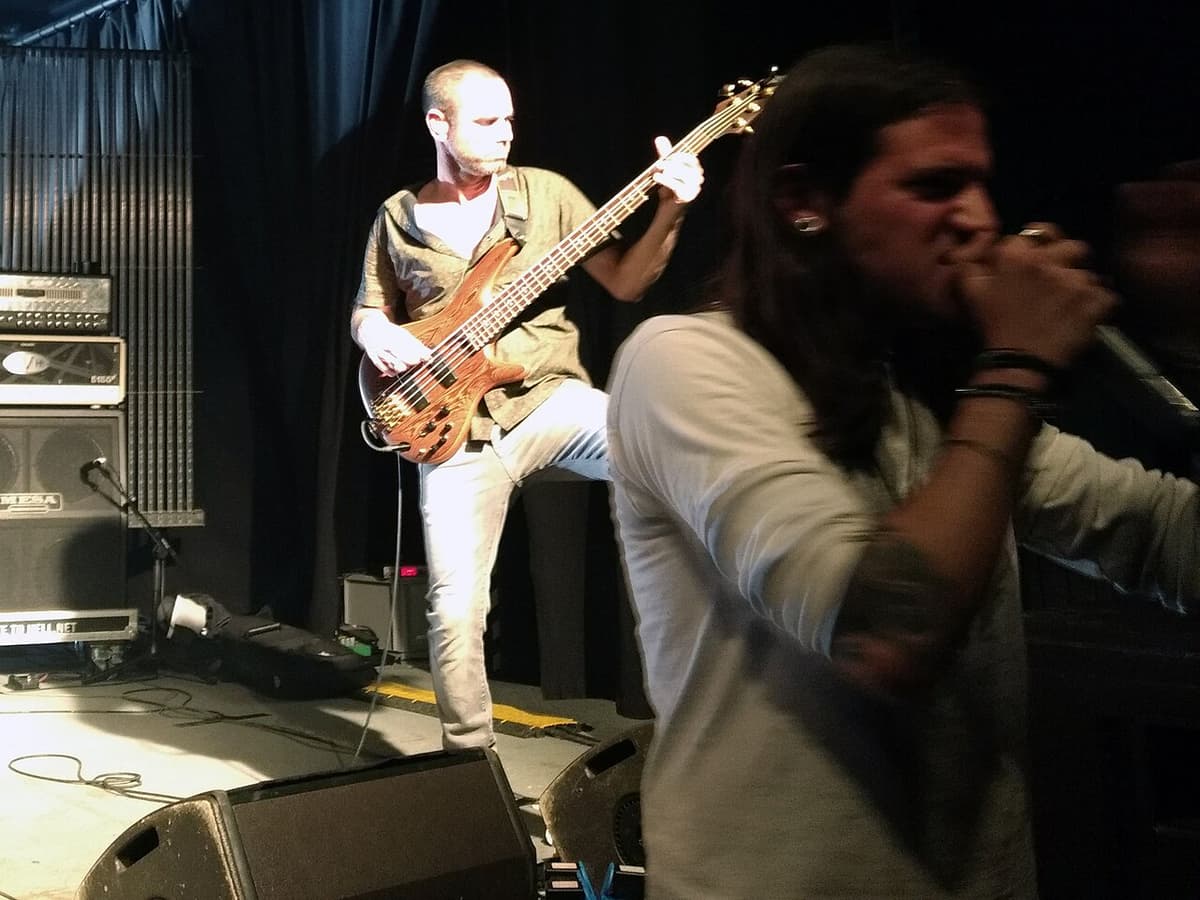
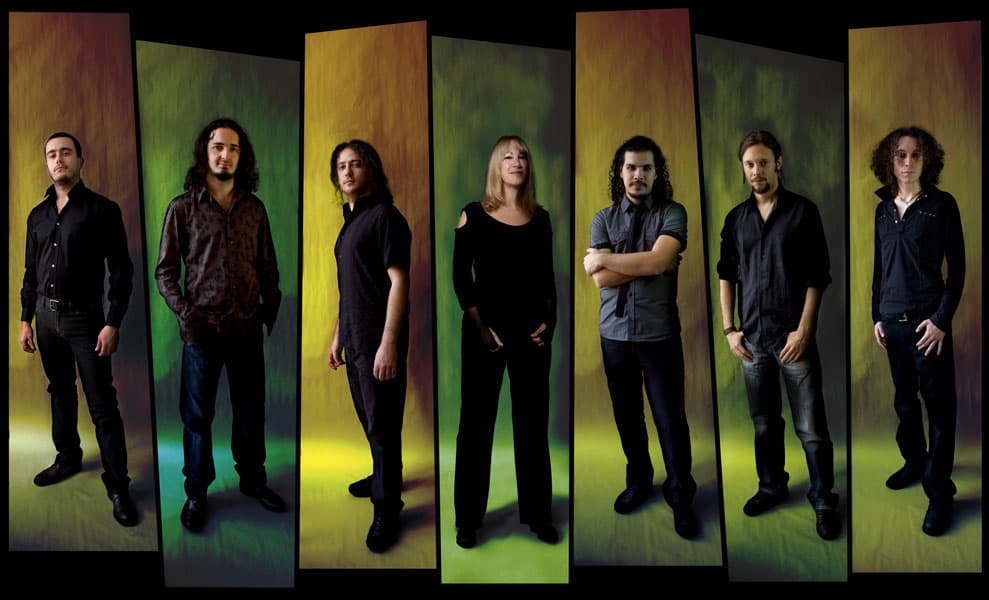
Orphaned Land is an Israeli heavy metal band formed in 1991. They combine Mizrahi and Maghrebi Jewish, Arabic, Turkish, and other Middle Eastern and North African musical elements, with metal (with particular influence from Yemenite Jewish and, in their early years, Moroccan Jewish music), as well as from Sephardic music, and other sounds from the Mediterranean Region. They have also included "metalized" versions of various piyyutim in all of their albums since El Norra Alila. The band are considered pioneers of oriental metal. Orphaned Land have gone through several lineup changes over the years, but have retained two founding members of the band, Kobi Farhi (vocals) and Uri Zelcha (bass). Other members are Matan Shmuely (drums), Chen Balbus (guitars/saz) who replaced co-founding member Matti Svatizky in 2011, and Idan Amsalem (guitars/bouzouki) who replaced co-founding member Yossi Sassi in early 2014. Their lyrics promote a message of peace and unity, particularly between the three main Abrahamic religions (Judaism, Christianity, and Islam). The name "Orphaned Land" comes from the lyrics of a Yehuda Poliker song and reflects "a paradox" to the term "Holy Land". Four of their six albums are concept albums relating to the concept of light and darkness. Despite Orphaned Land's songs drawing on biblical themes, the band have said that they are not religious, with the majority of the band members identifying as atheist or agnostic, and ambivalent towards organized religion, blaming it as the cause of bloodshed and hatred. Orphaned Land's frontman Kobi Farhi claims that metal is a kind of "religion". Orphaned Land has developed a large following across the Middle East and North Africa as well as Iran, and have been described as "ambassadors of peace" for their message of unity, despite the heavy metal genre being considered taboo in, and with the State of Israel being considered an enemy of many of these countries. In 2013, Orphaned Land toured Europe with the Palestinian band Khalas which Farhi claims proved that Jewish-Muslim coexistence is possible. The two bands issued a split album with each other in 2021, entitled The Peace Series Vol. 1.
Shares oriental metal, folk metal, symphonic metal, desert (signature)
Shares oriental metal, folk metal, symphonic metal, desert (signature)
Shares oriental metal, folk metal, desert, death metal (signature)
Shares folk metal, progressive metal, mountain, cathedral (subgenre)
Shares folk metal, symphonic metal, choir/choral, progressive metal (subgenre)
Shares spirituality, symphonic metal, choir/choral, progressive metal (signature)
Cassette uses generative AI to enrich its catalog. How we use AI →