The Belmonts represent the quintessential sound of a New York summer evening in the late 1950s. Their music is built on the foundation of tight, multi-part vocal harmonies that feel both effortless and mathematically precise. There is a specific warmth to their recordings - a product of the era's analog technology - that makes the listener feel as though they are standing on a Bronx street corner hearing the echoes bounce off brick walls.
What truly distinguishes them is the interplay between the soaring falsetto and the grounding bass vocals. While many of their contemporaries leaned into a softer, more polished pop sound, The Belmonts maintained a rhythmic, almost percussive vocal style that betrayed their street-corner roots. Their phrasing carries a distinct Italian-American swagger, blending the romanticism of traditional pop with the burgeoning energy of rock and roll.
To understand their legacy, one should look past the hits with Dion and explore their independent work. Start with their early Mohawk singles to hear the raw, unvarnished talent of the original trio. It is music for quiet reflections, late-night drives, or any moment where you want to feel the weight and beauty of a bygone era's optimism.
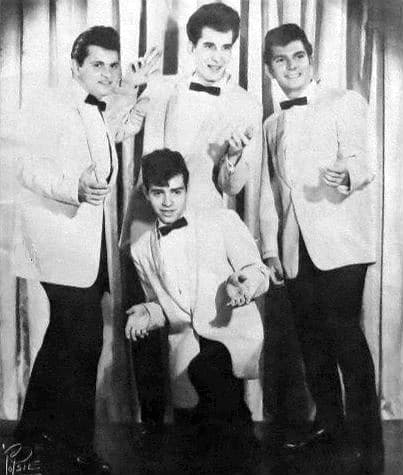
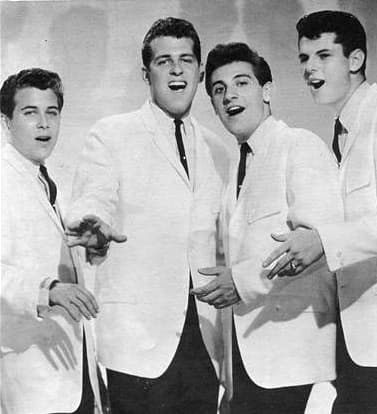
The Belmonts were an American doo-wop group from the Bronx, New York, that originated in the mid-1950s. The original group consisted of Angelo D'Aleo (born February 3, 1940), Carlo Mastrangelo (October 5, 1937 – April 4, 2016), and Fred Milano (August 26, 1939 – January 1, 2012). They took their name from Belmont, the Bronx street in which Mastrangelo lived, known as the Little Italy of the Bronx. From 1958 to 1960 the group performed with Dion DiMucci (born July 18, 1939) as Dion and the Belmonts. At this time Mastrangelo sang the bass parts, Milano the second tenor, D'Aleo the falsetto (first tenor), and DiMucci did lead vocals. Mastrangelo was replaced in 1962 by Frank Lyndon and Warren Gradus, but the original group reunited in 1966, and thereafter performed together in numerous reunions over the years. They occasionally recorded new singles into the 1980s and performed live until the death of Milano in 2011. Gradus continued, performing live under the moniker until his death in October 2023.


Shares rockabilly, traditional pop, bonfire, soul (subgenre)
Shares rockabilly, traditional pop, bonfire, soul (subgenre)
Shares rockabilly, traditional pop, bonfire, soul (subgenre)
Shares rockabilly, traditional pop, soul, saxophone (subgenre)
Shares rockabilly, traditional pop, bonfire, upright bass (subgenre)
Shares rockabilly, traditional pop, bonfire, soul (subgenre)
Cassette uses generative AI to enrich its catalog. How we use AI →