The Crazy World of Arthur Brown
High-octane psychedelic soul led by a screaming operatic firebrand. Theatrical, organ-drenched rock that birthed the shock rock aesthetic.
High-octane psychedelic soul led by a screaming operatic firebrand. Theatrical, organ-drenched rock that birthed the shock rock aesthetic.
Imagine a soul revue that took a wrong turn into a medieval occult ritual. The sound is dominated by Vincent Crane's aggressive, swirling Hammond organ and a rhythm section that hits with the force of a jazz band on amphetamines. It is heavy, brassy, and deeply rooted in the blues, yet it feels entirely unhinged from reality. There is a palpable sense of danger and heat in the recording, as if the studio itself might catch fire at any moment.
Arthur Brown is the undisputed center of gravity here. His voice is a freak of nature, leaping from a rich, soulful baritone to a glass-shattering operatic shriek without warning. He does not just sing; he preaches, screams, and narrates a world of hellfire and surrealist visions. This is the missing link between the psychedelic 60s and the theatrical heavy metal that would follow, stripping away the flower-power peace for something much more visceral and primal.
Start with their 1968 self-titled debut. It is a masterpiece of sequencing, moving from the iconic explosion of Fire into deep, moody organ explorations. It captures a specific moment in London's underground where the blues was being melted down and reshaped into something loud, strange, and undeniably spectacular.
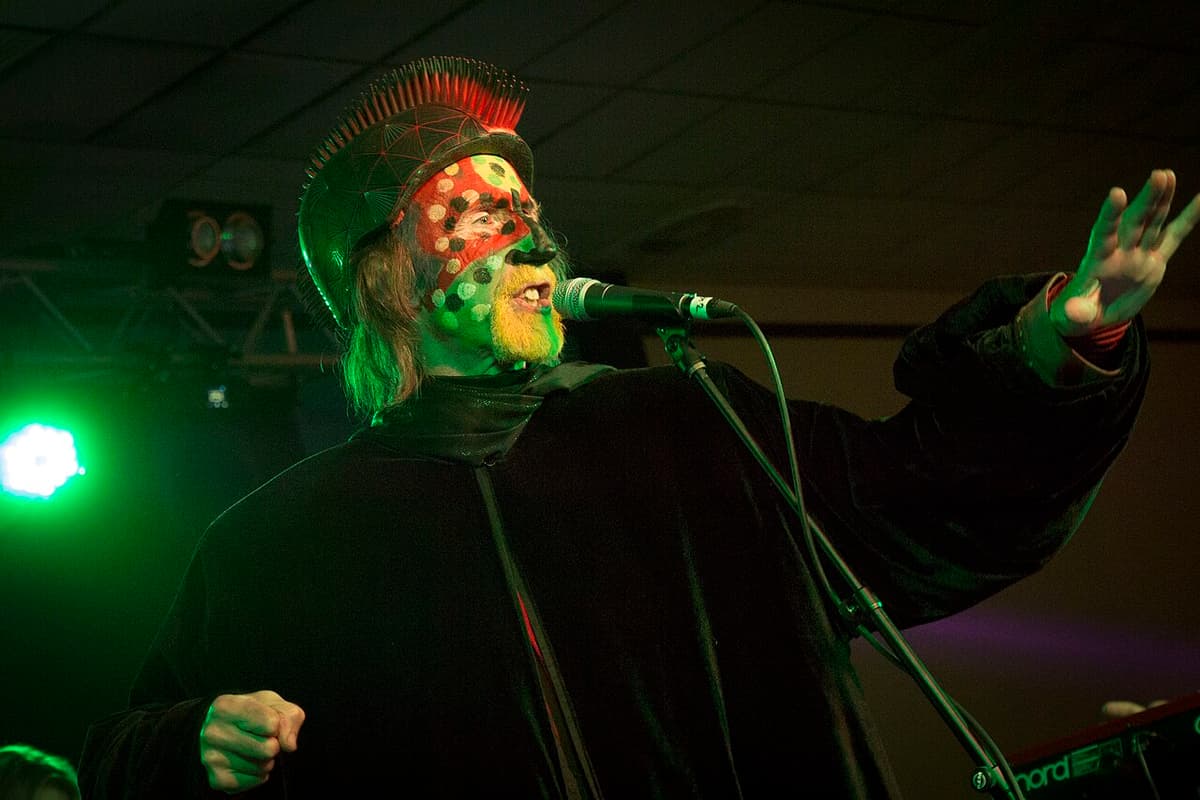
The Crazy World of Arthur Brown are an English rock band formed by singer Arthur Brown in 1967. The original band included Vincent Crane (Hammond organ and piano), Drachen Theaker (drums), and Nick Greenwood (bass). This early incarnation were noted for Crane's organ and brass arrangements and Brown's powerful, wide-ranging operatic voice. Brown is notable for his unique stage persona, featuring extreme facepaint, movement, dance, costume changes and a burning helmet. Their song "Fire" (released in 1968 as a single) sold more than one million copies, and was awarded a gold disc reaching number one in the UK Singles Chart and Canada, and number two on the US Billboard Hot 100 as well as its parent album The Crazy World of Arthur Brown which reached number 2 on the UK album charts, number 6 in Canada, and number 7 in the US. Following the success of "Fire", the press would often refer to Brown as "The God of Hellfire", in reference to the opening shouted line of the song, a moniker that exists to this day. In the late 1960s, the Crazy World of Arthur Brown's popularity was such that the group shared bills with the Who, Jimi Hendrix, the Mothers of Invention, the Doors, the Small Faces, and Joe Cocker, among others. However, the band's second studio album, Strangelands, although set to be released in 1969, was shelved by the band's record label due to lacking sales potential (although it would later be released in 1988). The band would soon break up a year later, in 1970, with Crane and fellow member Carl Palmer forming Atomic Rooster, Theaker joining the band Love, and Brown joining the group Kingdom Come. Palmer would later co-found Emerson, Lake & Palmer and Asia. Since then, the lineup has seen several changes. There were further studio and live releases in 1970, 1993 (Live album), 2000, 2003, 2011 (live album), 2013 and 2019. As of 2025, the lineup consists of Brown, Jim Mortimore, Sam Walker, and Dan Smith. Although the band only had one major hit, they would be incredibly influential in innovating the shock rock genre and the freak scene aesthetic, and numerous shock rock artists, such as Kiss, Alice Cooper and Marilyn Manson, alongside other musicians like David Bowie and Peter Gabriel (of Genesis) would be heavily influenced by the group, and Brown would take part in numerous notable projects, including playing a character in the film adaptation of The Who's Tommy.
Shares psychedelic rock, art rock, progressive rock (subgenres); intense, rebellious, mysterious (moods)
Shares psychedelic rock, art rock, progressive rock (subgenres); analog warmth, live recording (production style)
Shares psychedelic rock, art rock, progressive rock (subgenres); analog warmth, live recording (production style)
Shares psychedelic rock, art rock, progressive rock (subgenres); analog warmth, live recording (production style)
Shares psychedelic rock, progressive rock, art rock (subgenres); mysterious, intense, haunting (moods)
Shares psychedelic rock, progressive rock, blues rock (subgenres); analog warmth, live recording (production style)
Shares psychedelic rock, art rock, progressive rock (subgenres); organ, drums, bass (instrumentation)
Shares psychedelic rock, progressive rock, art rock (subgenres); analog warmth, live recording (production style)
Shares psychedelic rock, art rock, progressive rock (subgenres); mysterious, intense, haunting (moods)
Shares psychedelic rock, art rock, blues rock (subgenres); mysterious, intense, rebellious (moods)
Shares organ, intense, progressive rock, psychedelic rock (signature)
Cassette uses generative AI to enrich its catalog. How we use AI →