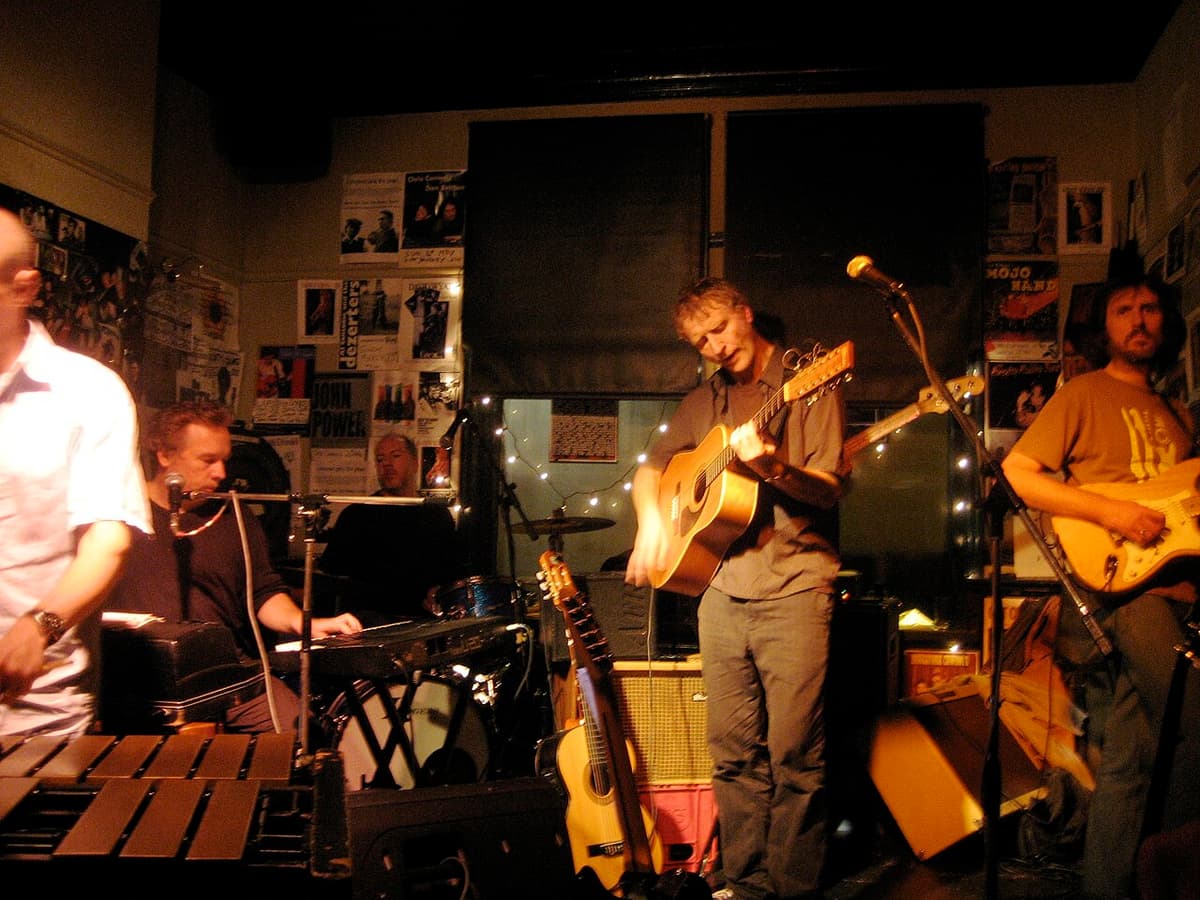
The High Llamas
Intricate, sun-drenched chamber pop featuring marimbas, vintage synths, and lush orchestral layers. Perfect for quiet afternoons and deep focus.
Intricate, sun-drenched chamber pop featuring marimbas, vintage synths, and lush orchestral layers. Perfect for quiet afternoons and deep focus.
The High Llamas create a world that feels like a meticulously curated museum of 20th-century pop aesthetics. Their sound is a warm, analog embrace, blending the harmonic sophistication of Brian Wilson with the breezy elegance of Brazilian bossa nova and the playful experimentation of 1960s film scores. It is music that prioritizes texture and arrangement, where a marimba line or a bubbling synth flourish carries as much emotional weight as a lyric.
What truly sets them apart is Sean O'Hagan's obsession with 'the bounce.' There is a specific rhythmic buoyancy to their work, often achieved through the use of tack pianos and modular synthesizers that mimic natural sounds like bird calls or water droplets. While their peers in the 90s were leaning into grit, the High Llamas leaned into grace, creating expansive, cinematic landscapes that feel both futuristic and deeply nostalgic.
Start with 'Hawaii' for the full, widescreen experience of their orchestral ambitions, or 'Cold and Bouncy' if you want to hear how they integrate quirky electronic textures into their sophisticated pop structures. It is music for people who love to get lost in the details of a mix.
The High Llamas are an Anglo-Irish chamber pop band formed in London circa 1991. They were founded by singer-songwriter Sean O'Hagan, formerly of Microdisney, with drummer Rob Allum and ex-Microdisney bassist Jon Fell. O'Hagan has led the group since its formation. Their music is often compared to the Beach Boys, a band he acknowledges as an influence, although more prominent influences were drawn from bossa nova and European film soundtracks. O'Hagan formed the High Llamas after the breakup of his group Microdisney. The band initially played in a more conventional acoustic indie pop style, but after he joined Stereolab as a keyboardist, he was inspired to revamp the High Llamas' style closer to the electronic and orchestral sound he preferred. Their second album, Gideon Gaye (1994), anticipated the mid 1990s easy-listening revivalist movement, and its follow-up Hawaii (1996) nearly led to a collaboration with the Beach Boys.
Shares chamber pop, indie pop, baroque pop (subgenres); orchestral arrangement, studio polished, analog warmth (production style)
Shares chamber pop, baroque pop, indie pop (subgenres); orchestral arrangement, studio polished, analog warmth (production style)
Shares chamber pop, baroque pop, indie pop (subgenres); orchestral arrangement, analog warmth, layered dense (production style)
Shares chamber pop, baroque pop, indie pop (subgenres); analog warmth, orchestral arrangement, studio polished (production style)
Shares chamber pop, indie pop, art pop (subgenres); studio polished, analog warmth, orchestral arrangement (production style)
Shares baroque pop, chamber pop, indie pop (subgenres); orchestral arrangement, analog warmth, layered dense (production style)
Shares chamber pop, baroque pop, indie pop (subgenres); orchestral arrangement, analog warmth, layered dense (production style)
Shares chamber pop, baroque pop, indie pop (subgenres); orchestral arrangement, analog warmth, layered dense (production style)
Shares chamber pop, baroque pop, indie pop (subgenres); orchestral arrangement, analog warmth, layered dense (production style)
Shares chamber pop, baroque pop, indie pop (subgenres); orchestral arrangement, analog warmth, layered dense (production style)
Shares orchestral arrangement, baroque pop, library, cello (signature)
Shares chamber pop, orchestral arrangement, baroque pop, library (signature)
Cassette uses generative AI to enrich its catalog. How we use AI →


