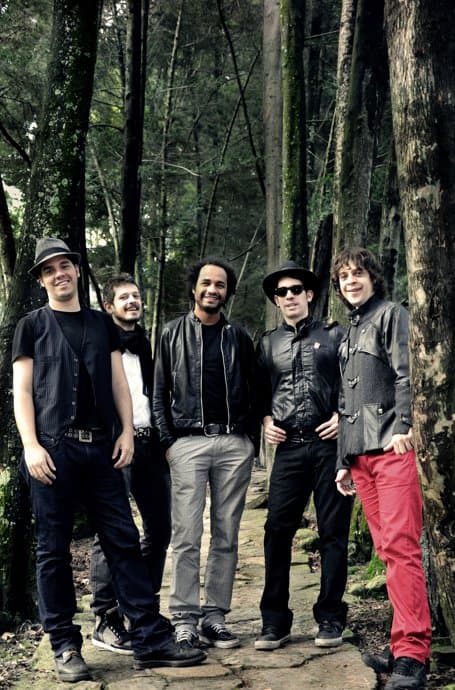
Curumin
Gritty samba-funk grooves meet dusty hip-hop production and breathy vocals. A soulful, rhythmic exploration of modern São Paulo that feels both vintage and futuristic.
Gritty samba-funk grooves meet dusty hip-hop production and breathy vocals. A soulful, rhythmic exploration of modern São Paulo that feels both vintage and futuristic.
Curumin sounds like a late-night radio broadcast from a São Paulo basement where the record collection is split evenly between 70s Jorge Ben and 90s J Dilla. It is music that prioritizes the 'swing' - that specific Brazilian ginga - but filters it through a lens of urban grit and electronic curiosity. The percussion is crisp and organic, often layered with the warm hiss of analog synths and deep, dubby basslines that feel like they are vibrating through the floorboards.
What truly distinguishes Curumin is his restraint. Despite being a master multi-instrumentalist, he never over-plays. His vocals are often delivered in a soft, almost whispered croon that sits tucked inside the groove rather than floating on top of it. This creates an intimate, slightly mysterious atmosphere where the rhythm does the heavy lifting while the melodies provide a hazy, psychedelic backdrop. It is a sophisticated blend of heritage and experimentation that avoids the cliches of 'world music' in favor of something much more personal and street-level.
Start with JapanPopShow for the most vibrant distillation of his sound. It captures the perfect intersection of his Japanese-Spanish heritage and Brazilian upbringing, moving effortlessly from upbeat funk to submerged, trippy soul. It is the ideal gateway for anyone who loves the rhythmic complexity of Brazilian music but wants the sonic edge of modern independent production.
Luciano Nakata Albuquerque (born 28 July 1976), known professionally as Curumin, is a Brazilian singer, songwriter, multi-instrumentalist and record producer. Emerging from São Paulo’s independent music scene in the mid-2000s, he became known for blending samba, funk, jazz, hip hop and electronic music within the framework of Música Popular Brasileira (MPB). His work has received international press coverage and distribution in the United States, Europe and Japan.
Cassette uses generative AI to enrich its catalog. How we use AI →