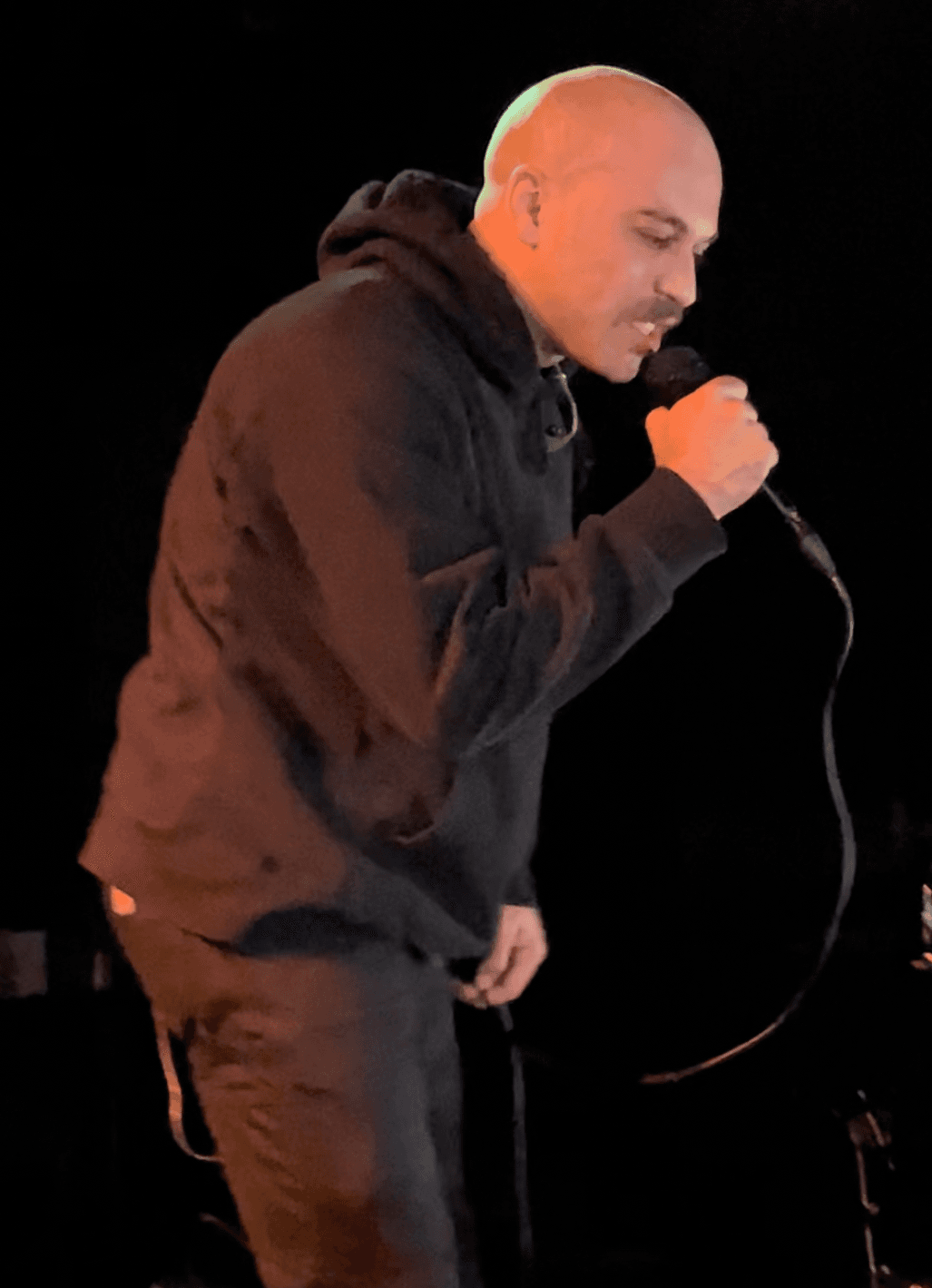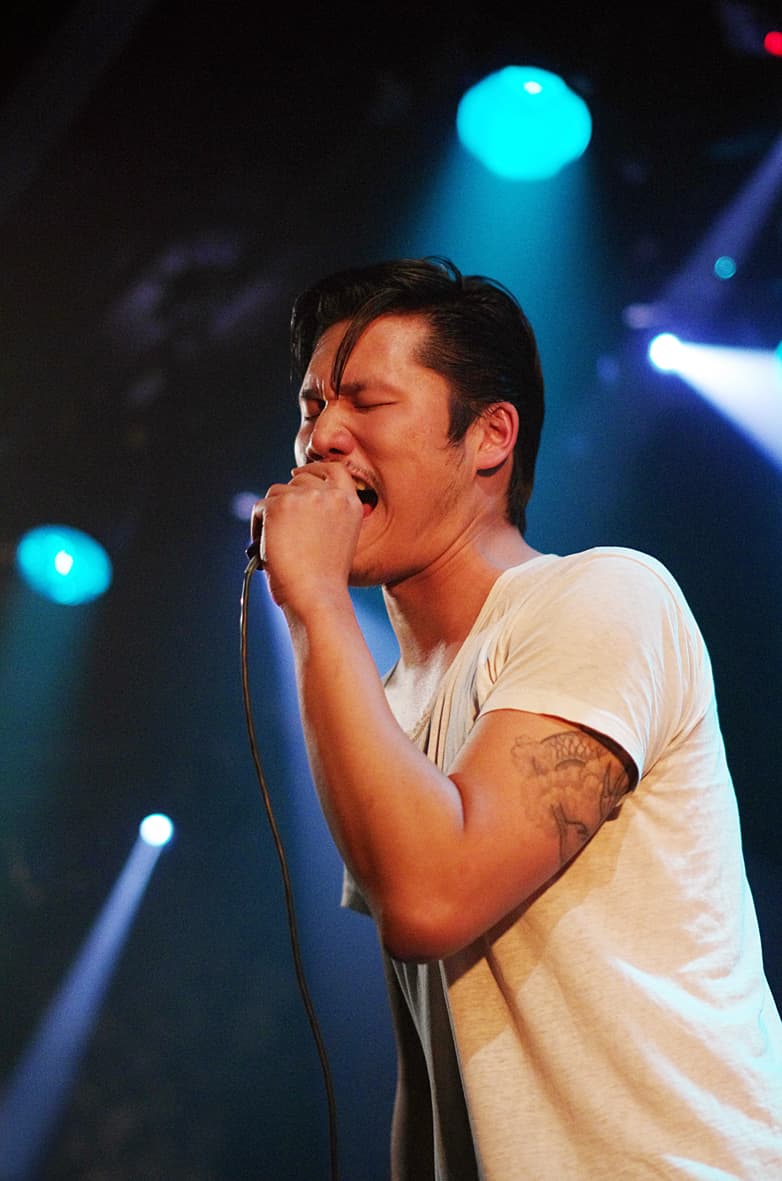
Dirty Beaches
Dusty rockabilly loops and ghostly crooning that feel like a lost noir film. Lo-fi, hypnotic, and deeply cinematic music for late-night solitude.
Dusty rockabilly loops and ghostly crooning that feel like a lost noir film. Lo-fi, hypnotic, and deeply cinematic music for late-night solitude.
Dirty Beaches sounds like a transmission from a 1950s radio station that has been buried in the desert for fifty years. It is a haunting mix of Elvis-style baritone crooning, skeletal drum machine loops, and thick layers of tape hiss that create a sense of profound displacement. The music is slow, repetitive, and deeply atmospheric, evoking images of empty highways and flickering neon lights.
What makes Alex Zhang Hungtai's work distinctive is his ability to turn nostalgia into something eerie and avant-garde. By sampling old rockabilly records and looping them into hypnotic drones, he strips away the kitsch of the past to reveal a raw, lonely core. It is music that feels both vintage and futuristic, occupying a strange middle ground between a garage rock session and a dark ambient soundscape.
Start with the album Badlands for the most accessible entry into his haunted rockabilly world. If you prefer something more experimental and instrumental, move on to Drifters / Love Is The Devil, which expands the sound into sprawling no-wave and jazz-inflected textures.
Alex Zhang Hungtai is a Taiwanese-born Canadian musician and actor. In addition to his given name, he makes music under the names Last Lizard and Dirty Beaches. Zhang released several EPs and three albums as Dirty Beaches on cassette-only labels before releasing his fourth full-length album, Badlands, in March 2011. Unlike Zhang's earlier work, Badlands includes his vocals on most songs. The album was long-listed for the 2011 Polaris Music Prize. Drifters/Love Is The Devil followed in 2013, pushing further into no wave, electronic music, jazz and ambient territory. In 2014 Zhang ended the Dirty Beaches project after releasing the instrumental album Stateless, on which he played sax. As Last Lizard, he collaborated with jazz and improvisational musicians and released new solo pieces on SoundCloud, Vimeo and Vine. In 2016 Zhang released the instrumental piano album Knave of Hearts under his own name. Zhang has also recorded original film soundtracks for several documentaries, including Water Park (2012) and Who Is Arthur Chu? (2017), in addition to directing music videos for himself and others.
Shares brooding, haunting, nostalgic (moods); lo fi, reverb heavy, minimalist (production style)
Shares brooding, haunting, lonely (moods); baritone, processed, breathy (vocal style)
Shares crooning, baritone, processed (vocal style); brooding, haunting, mysterious (moods)
Shares brooding, haunting, nostalgic (moods); lo fi, tape saturation, reverb heavy (production style)
Shares urban night, dive bar, desert (atmosphere); brooding, haunting, mysterious (moods)
Shares lo fi, tape saturation, reverb heavy (production style); crooning, baritone, breathy (vocal style)
Shares brooding, haunting, mysterious (moods); lo fi, reverb heavy, minimalist (production style)
Shares lo fi, tape saturation, reverb heavy (production style); no wave, post-punk (subgenres)
Shares brooding, haunting, mysterious (moods); crooning, baritone, breathy (vocal style)
Shares brooding, haunting, mysterious (moods); urban night, fog, dive bar (atmosphere)
Cassette uses generative AI to enrich its catalog. How we use AI →