James Blood Ulmer
Jagged, stinging guitar lines meeting deep, ragged blues vocals. A masterclass in free-funk friction that feels like a midnight walk through a restless city.
Jagged, stinging guitar lines meeting deep, ragged blues vocals. A masterclass in free-funk friction that feels like a midnight walk through a restless city.
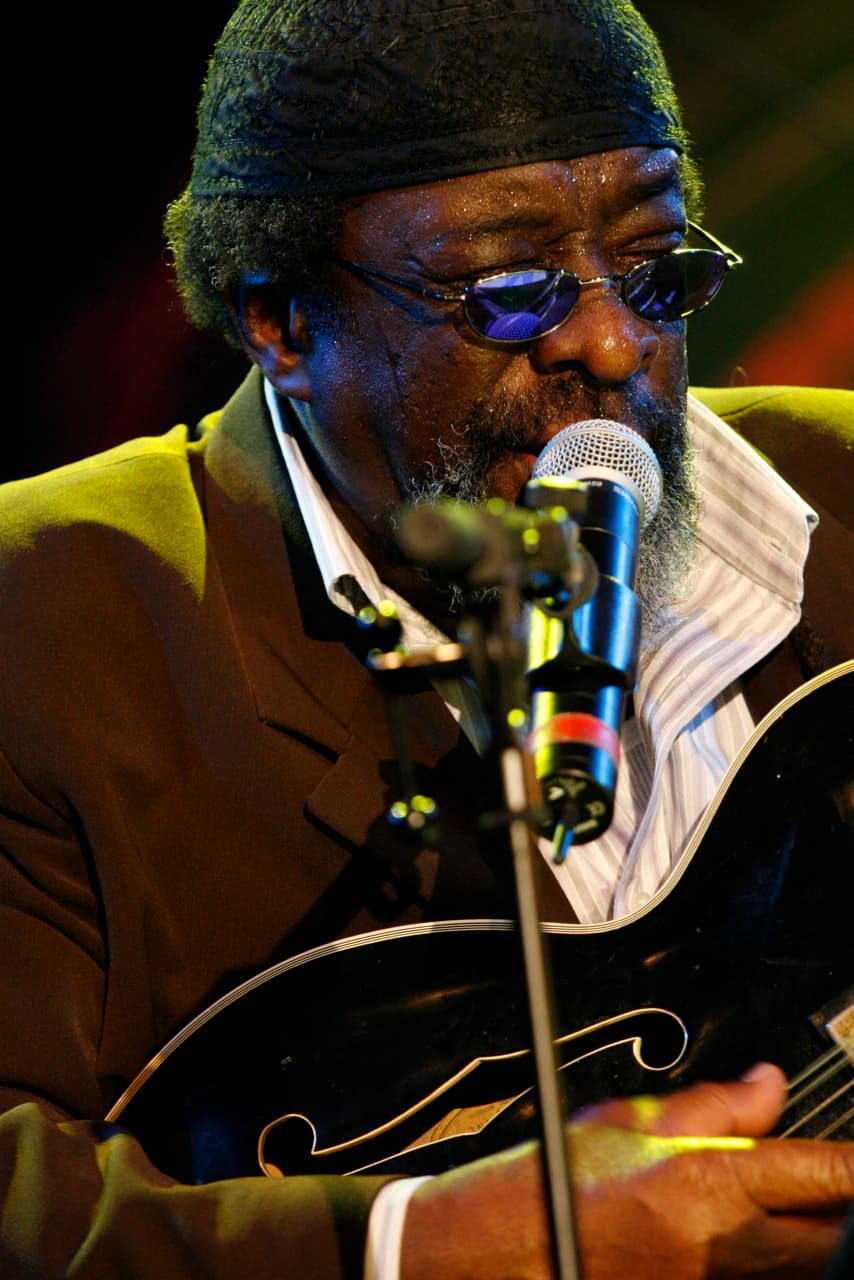
James 'Blood' Ulmer is a singular figure in American music, serving as the primary bridge between the harmolodic freedom of Ornette Coleman and the visceral power of electric blues and funk. Emerging from the soul-jazz scene of the late 1960s, Ulmer's career was transformed by his association with Coleman in the early 70s, where he became the first guitarist to fully internalize and translate Coleman's non-hierarchical approach to improvisation. His sound is defined by a Gibson Byrdland played with a biting, jagged tone and a idiosyncratic tuning (all strings to A) that eliminates traditional chord shapes in favor of a more linear, interval-based vocabulary.
Throughout the 1980s, Ulmer led the 'free funk' movement, blending the rhythmic drive of James Brown with the structural openness of the New York loft jazz scene. His work with the Music Revelation Ensemble and his solo records for Columbia and Rough Trade established him as a critical darling who defied easy categorization. In the 21st century, he has leaned further into his blues roots, collaborating with Vernon Reid to produce a series of raw, stripped-back albums that highlight his 'raggedly soulful' vocal delivery. He remains a towering influence on avant-garde guitarists, cited for his ability to maintain a deep, rhythmic 'pocket' while simultaneously exploring radical harmonic territory.
Shares free jazz, avant-garde jazz, thunderstorm, jazz fusion (subgenre)
Shares free jazz, avant-garde jazz, thunderstorm, jazz fusion (subgenre)
Shares free jazz, avant-garde jazz, thunderstorm, jazz fusion (subgenre)
Shares free jazz, avant-garde jazz, jazz fusion, live_recording (subgenre)
Shares free jazz, avant-garde jazz, dry_intimate, noise_textured (subgenre)
Shares free jazz, avant-garde jazz, noise_textured, live_recording (subgenre)
Cassette uses generative AI to enrich its catalog. How we use AI →