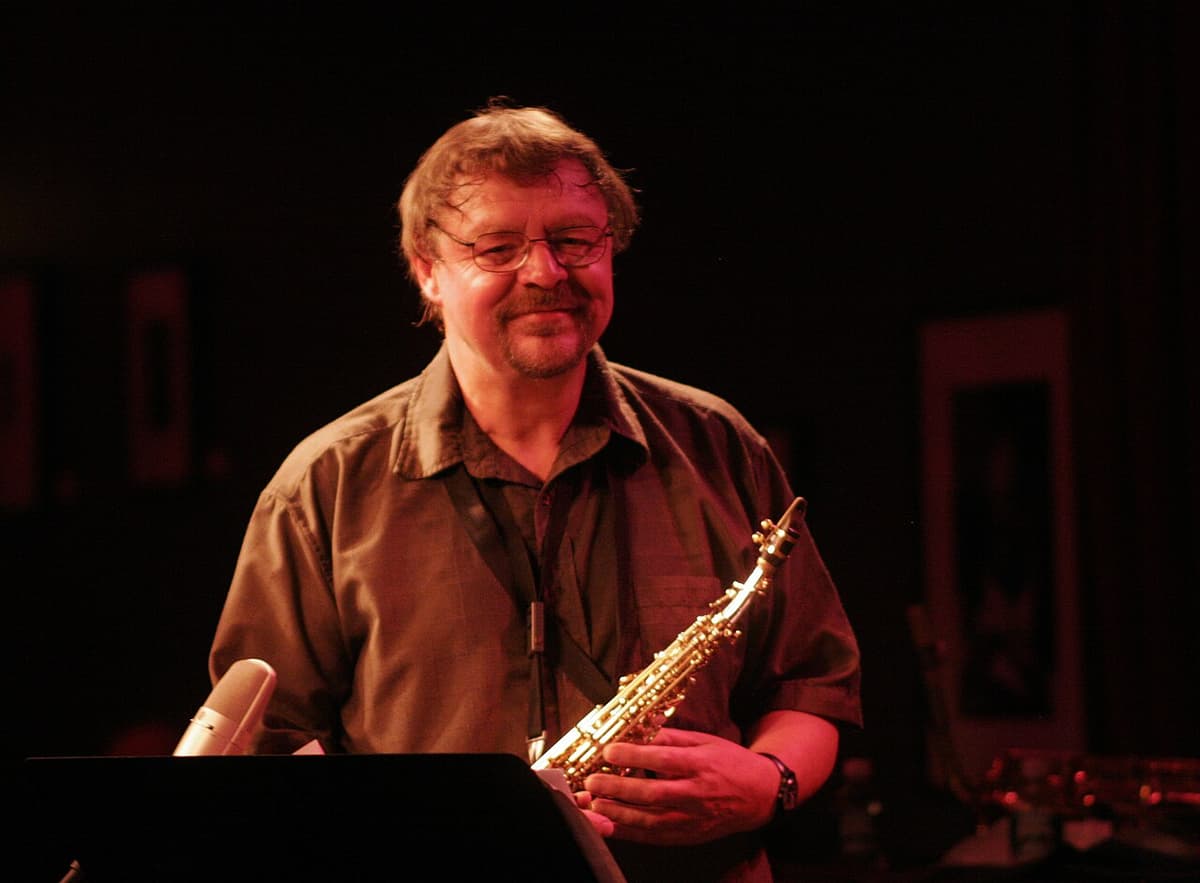
John Surman
Spacious, atmospheric jazz that feels like a lonely walk through a foggy moor. Baritone sax and synthesizers creating deep, resonant landscapes for quiet reflection.
Spacious, atmospheric jazz that feels like a lonely walk through a foggy moor. Baritone sax and synthesizers creating deep, resonant landscapes for quiet reflection.
John Surman is a foundational figure in European jazz, specifically the development of the 'Nordic' or 'ECM' aesthetic, despite his English origins. Emerging from the 1960s London scene, he transitioned from the fiery free jazz of the Mike Westbrook and Brotherhood of Breath circles to a more meditative, solo-oriented style.
His work is defined by a unique synthesis of baritone and soprano saxophones, bass clarinet, and early synthesizers. Surman was an early adopter of the sequencer, using it not for dance music, but to create modal, folk-influenced backdrops for his improvisations. His career arc moved from the rumbustious energy of 'The Trio' with Barre Phillips and Stu Martin toward the chamber-jazz elegance of his later ECM recordings. Critically, he is lauded for expanding the technical possibilities of the baritone saxophone, treating it with a lightness and melodicism usually reserved for smaller instruments. His influence is seen in the bridge he built between traditional folk motifs and avant-garde electronic experimentation, positioning him as a peer to Jan Garbarek and Terje Rypdal in defining a specifically European jazz identity.
Shares spiritual jazz, saxophone, avant-garde jazz, field_recordings (subgenre)
Shares nordic folk melodic phrasing, spiritual jazz, reverb_heavy, mountain (detail)
Shares spiritual jazz, avant-garde jazz, field_recordings, serene (subgenre)
Shares spiritual jazz, avant-garde jazz, serene, absent (subgenre)
Shares fog, reverb_heavy, field_recordings, ambient techno (signature)
Shares spiritual jazz, avant-garde jazz, field_recordings, saxophone (subgenre)
Cassette uses generative AI to enrich its catalog. How we use AI →