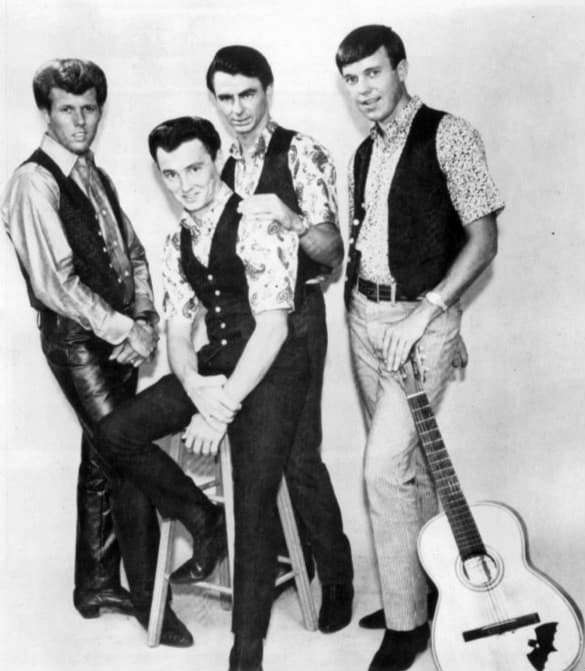
Justin Hayward
Lush, orchestral rock with a deep romantic ache. Elegant guitar melodies and breathy vocals that feel like a long walk through an autumn forest at dusk.
Lush, orchestral rock with a deep romantic ache. Elegant guitar melodies and breathy vocals that feel like a long walk through an autumn forest at dusk.
Justin Hayward’s music is the sonic equivalent of a faded photograph or a velvet jacket. It carries a specific kind of English melancholy that is both grand and deeply intimate. His sound is defined by the warm, singing sustain of his red Gibson 335 and a vocal delivery that feels like a confidential whisper shared in a cathedral. It is music that occupies the space between the psychedelic ambition of the late 60s and the polished, melodic sophistication of 70s adult contemporary.
What truly sets Hayward apart is his ability to marry existential yearning with lush, symphonic arrangements. Even in his solo work, there is a sense of 'cosmic' scale, yet it remains grounded by his folk-influenced acoustic guitar work and a penchant for minor-key melodies that tug at the heartstrings. He avoids the aggression of traditional rock, opting instead for a shimmering, reverb-heavy atmosphere that feels timelessly cinematic.
To understand his essence, start with the collaborative 'Blue Jays' album or his iconic contribution to 'The War of the Worlds.' These recordings showcase his gift for melody and that unmistakable, breathy vibrato. It is the perfect soundtrack for moments of reflection, transition, or simply sitting with the beauty of a disappearing day.
David Justin Hayward (born 14 October 1946) is an English musician. He was the guitarist and frontman of the rock band the Moody Blues from 1966 until its dissolution in 2018. He became the group's principal vocalist and its most prolific songwriter over the 1967–1974 period, and composed several international hit singles for the band. With John Lodge's death in 2025, Hayward is the last surviving member of the classic Moody Blues lineup. Singles written by Hayward for the Moody Blues include "Nights in White Satin", "Tuesday Afternoon", "Never Comes the Day", "Question", "The Voice", "I Know You're Out There Somewhere" and "English Sunset"; he wrote 20 of the group's 27 post-1967 singles. He also has a solo career. His first album outside the Moody Blues, Blue Jays, a collaboration with John Lodge, reached the UK top five in 1975. The single "Blue Guitar", recorded with 10cc as the backing band, reached the UK top ten in 1975, and his 1978 recording of "Forever Autumn" from Jeff Wayne's Musical Version of The War of the Worlds reached the UK top five. In 2018 Hayward was inducted into the Rock and Roll Hall of Fame as a member of the Moody Blues and in 2022 was appointed Officer of the Order of the British Empire (OBE) for services to the music industry.

Shares progressive rock, art rock, folk rock (subgenres); analog warmth, reverb heavy, studio polished (production style)
Shares art rock, folk rock, progressive rock (subgenres); analog warmth, reverb heavy, studio polished (production style)
Shares folk rock, progressive rock, art rock (subgenres); orchestral arrangement, analog warmth, studio polished (production style)
Shares art rock, progressive rock, soft rock (subgenres); orchestral arrangement, analog warmth, studio polished (production style)
Shares orchestral arrangement, analog warmth, reverb heavy (production style); progressive rock, art rock, baroque pop (subgenres)
Shares art rock, progressive rock, soft rock (subgenres); nostalgic, melancholic, wistful (moods)

Shares analog warmth, reverb heavy, studio polished (production style); folk rock, progressive rock (subgenres)
Shares progressive rock, art rock, baroque pop (subgenres); nostalgic, melancholic, wistful (moods)

Shares orchestral arrangement, analog warmth, reverb heavy (production style); soft rock, art rock, folk rock (subgenres)
Shares art rock, progressive rock (subgenres); analog warmth, reverb heavy, studio polished (production style)
Cassette uses generative AI to enrich its catalog. How we use AI →