Marshall Crenshaw
Effortless melodies and shimmering guitars that bridge the gap between 1950s rockabilly and 1980s new wave. Perfect for sunny drives and nostalgic afternoons.
Effortless melodies and shimmering guitars that bridge the gap between 1950s rockabilly and 1980s new wave. Perfect for sunny drives and nostalgic afternoons.
Marshall Crenshaw makes music that feels like a perfectly preserved memory of a summer evening. It is rooted in the DNA of early rock and roll, specifically the rhythmic hiccup of rockabilly and the melodic purity of the British Invasion, but it is polished with a sophisticated 1980s sheen. The sound is defined by clean, interlocking guitar parts and a vocal style that is both intimate and technically precise, avoiding the grit of blues-rock in favor of a bright, pop-focused clarity.
What truly sets Crenshaw apart is his ability to write songs that feel instantly familiar yet entirely original. While he is often grouped with power pop acts, his music lacks the frantic aggression sometimes found in that genre. Instead, he leans into a cool, composed elegance. His production, especially on albums like Field Day, experiments with massive drum sounds and layered textures that give his simple song structures a cinematic, larger-than-life quality without losing their emotional core.
Newcomers should start with his self-titled 1982 debut, an undisputed masterpiece of melodic songwriting. From there, move to Field Day to hear a more adventurous, sonically dense side of his craft. He is the ideal artist for anyone who loves the craftsmanship of Buddy Holly or The Beatles but wants it delivered with the stylish, slightly detached cool of the New York new wave scene.
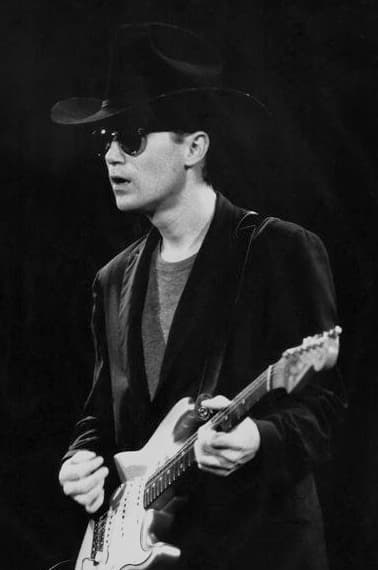
Marshall Howard Crenshaw (born November 11, 1953) is an American musician, singer, songwriter, and guitarist best known for hit songs such as "Someday, Someway", a US top 40 hit in 1982, "Cynical Girl", and "Whenever You're on My Mind". He is also the co-author of one of the biggest radio hits of the 1990s, Gin Blossoms's "Til I Hear It from You". His music has roots in classic soul music and Buddy Holly, to whom Crenshaw was often compared in the early days of his career, and whom he portrayed in the 1987 film La Bamba. Born in Detroit, Crenshaw performed in the musical Beatlemania before releasing his self-titled album in 1982. Crenshaw could not replicate the commercial success of Marshall Crenshaw and follow-up Field Day (1983) with later albums. Crenshaw has also contributed songs to other artists, writing singles for Kirsty MacColl and Gin Blossoms. A quote from Trouser Press summed up Marshall Crenshaw's early career: "Although he was seen as a latter-day Buddy Holly at the outset, he soon proved too talented and original to be anyone but himself."
Shares nostalgic, wistful, hopeful (moods); new wave, indie pop, power pop (subgenres)
Shares power pop, new wave, indie pop (subgenres); crooning, gentle, harmonized (vocal style)
Shares analog warmth, studio polished, crisp clean (production style); power pop, indie pop (subgenres)
Shares analog warmth, studio polished, crisp clean (production style); nostalgic, wistful, bittersweet (moods)
Shares analog warmth, studio polished, reverb heavy (production style); nostalgic, wistful, bittersweet (moods)
Shares nostalgic, wistful, bittersweet (moods); analog warmth, studio polished, crisp clean (production style)
Shares nostalgic, wistful, bittersweet (moods); studio polished, analog warmth, reverb heavy (production style)
Shares analog warmth, studio polished, reverb heavy (production style); wistful, bittersweet, hopeful (moods)
Shares crooning, gentle, harmonized (vocal style); golden hour, sunday morning, coffee shop (atmosphere)
Shares crisp clean, power pop, electric guitar, sunday morning (production)
Cassette uses generative AI to enrich its catalog. How we use AI →