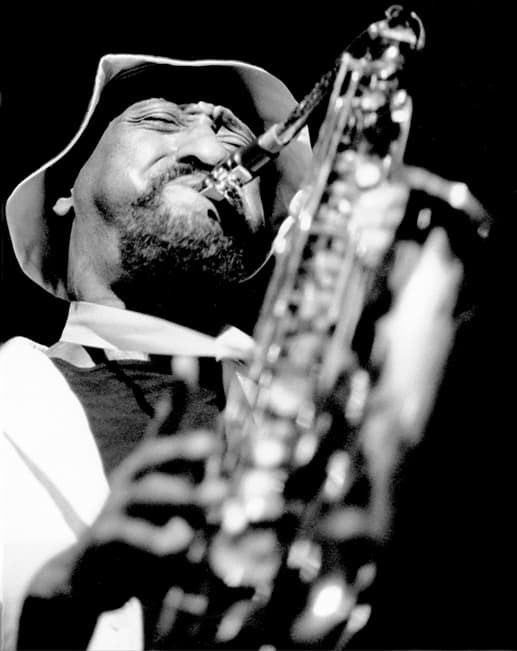
Sonny Rollins
Muscular, witty, and deeply human tenor saxophone. Hard bop that feels like a brilliant conversation with yourself. Perfect for focused work or late-night reflection.
Muscular, witty, and deeply human tenor saxophone. Hard bop that feels like a brilliant conversation with yourself. Perfect for focused work or late-night reflection.
Sonny Rollins is a foundational figure in jazz history, often cited alongside John Coltrane as the definitive tenor saxophonist of the post-war era. His sound identity is built on a 'biting and clear' tone that bridges the gap between the heavy vibrato of Coleman Hawkins and the light, airy phrasing of Lester Young.
Rollins is the primary architect of 'thematic improvisation,' a technique where the soloist develops a specific motif from the melody rather than just running scales over chord changes. His career is marked by several self-imposed 'sabbaticals' where he withdrew from public life to refine his technique, most notably his 1959-1961 retreat to the Williamsburg Bridge. Culturally, he represents the transition from the frantic energy of bebop to the more structured, blues-inflected Hard Bop movement. Critically, he is lauded for his rhythmic elasticity and his ability to maintain a 'strolling' trio format (tenor, bass, drums) which influenced generations of avant-garde and post-bop musicians. His influence web extends from contemporaries like Dexter Gordon to modern masters like Joe Henderson, cementing his status as the 'Saxophone Colossus.'
Shares bebop, post-bop, saxophone, upright bass (subgenre)
Shares hard bop, bebop, post-bop, saxophone (signature)
Shares bebop, post-bop, playful, saxophone (subgenre)
Shares bebop, post-bop, saxophone, upright bass (subgenre)
Shares hard bop, bebop, upright bass, instrumental_only (signature)
Shares bebop, post-bop, avant-garde jazz, playful (subgenre)
Cassette uses generative AI to enrich its catalog. How we use AI →